- Categories :
- More
Could You Have Sleep Apnea and Not Know It? 10 Early Warning Signs
By:
 Smiles by Dr. A - Tasnim Arsiwala, DMD
| Published 09/16/2026


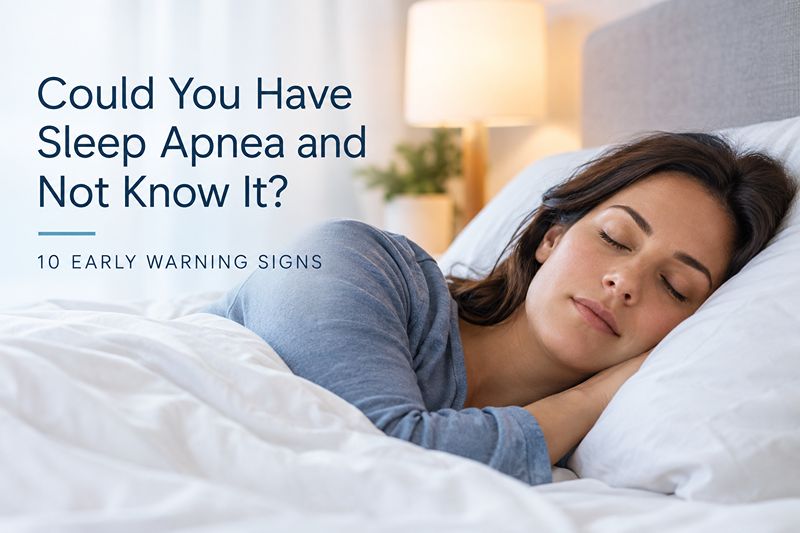
Could you have sleep apnea without realizing it?
Yes. Many people may have sleep apnea without recognizing the warning signs because the breathing problems happen while they are asleep.
You may believe you are simply tired, stressed, or not getting enough sleep. However, loud snoring, gasping for air, morning headaches, and ongoing daytime fatigue may point to a sleep-related breathing problem.
Sleep apnea causes breathing to stop and restart repeatedly during sleep. These interruptions may prevent the body from receiving enough oxygen and can interfere with restful sleep. [nhlbi.nih.gov]
Here are 10 warning signs you should not ignore.
1. Do you snore loudly or frequently?
Loud, frequent snoring is one of the most recognized warning signs of obstructive sleep apnea.
Not everyone who snores has sleep apnea, and not everyone with sleep apnea snores. Snoring becomes more concerning when it is interrupted by periods of silence, followed by gasping, choking, or snorting.
2. Has someone noticed that you stop breathing while sleeping?
A spouse or family member may notice pauses in your breathing before you recognize any symptoms yourself.
These pauses may be followed by a gasp, snort, or sudden movement as breathing resumes. Witnessed breathing interruptions should be discussed with a healthcare professional.
3. Do you wake up gasping or choking?
Waking suddenly while gasping or choking can be a warning that your airway became restricted during sleep.
Even if this happens only occasionally, it is worth discussing with an appropriate healthcare provider, especially when combined with snoring or daytime sleepiness.
4. Are you tired even after a full night of sleep?
Sleep apnea can repeatedly interrupt your sleep without fully waking you.
You may spend seven or eight hours in bed but still feel exhausted in the morning because your body did not receive consistent, restorative sleep.
5. Do you have morning headaches?
Frequent morning headaches can be a symptom of sleep apnea.
Morning headaches alone do not establish that you have sleep apnea, but they may become more meaningful when combined with snoring, dry mouth, poor sleep, or daytime fatigue. Morning headaches are among the symptoms identified by the National Heart, Lung, and Blood Institute. [mayoclinic.org]
6. Do you wake up with a dry mouth or sore throat?
Sleeping with your mouth open may cause you to wake with a dry mouth or uncomfortable throat.
Mouth breathing can have different causes, but persistent morning dryness combined with snoring or gasping may deserve further evaluation.
7. Are you having trouble concentrating?
Poor-quality sleep can make it difficult to focus, remember information, or make decisions.
If you frequently experience brain fog, particularly when combined with daytime tiredness, your sleep quality may be part of the problem. Untreated sleep apnea can contribute to problems with concentration, memory, decision-making, and behavior. [nhlbi.nih.gov]
8. Have you become more irritable?
Interrupted sleep can affect how you feel and function during the day.
You may feel impatient, easily frustrated, anxious, or emotionally drained. Family members may notice these changes before you connect them to poor sleep.
9. Do you wake up frequently during the night?
Repeated awakenings can prevent you from receiving enough restorative sleep.
You may wake without knowing why, need to use the bathroom several times, or have difficulty returning to sleep. Frequent nighttime urination can be one of the symptoms associated with sleep apnea.
10. Are you excessively sleepy during the day?
Excessive daytime sleepiness can affect your work, concentration, reaction time, and safety.
Feeling sleepy while driving or performing another activity that requires attention is especially concerning. If you are struggling to remain awake during normal daytime activities, speak with a healthcare professional.
When should you be evaluated for sleep apnea?
You should discuss sleep apnea with a healthcare professional when you have multiple warning signs, witnessed breathing pauses, or daytime sleepiness that affects your normal activities.
One symptom does not necessarily mean that you have sleep apnea. However, a repeated pattern of symptoms should not be ignored.
A healthcare provider may recommend a sleep study to determine whether sleep apnea is present. [nhlbi.nih.gov]
How can Woodlands Sleep Solutions help?
At Woodlands Sleep Solutions, we help patients recognize possible signs of sleep-disordered breathing and understand their next steps.
We can discuss your symptoms, examine relevant oral and dental factors, and help you understand how dental sleep medicine may fit into a physician-coordinated care plan. Screening does not replace a medical diagnosis, but it can be an important first step toward getting answers.
Take the next step
If you snore, wake up tired, experience morning headaches, or have been told that you stop breathing during sleep, consider speaking with an appropriate healthcare professional.
Contact Woodlands Sleep Solutions in The Woodlands, Texas, to learn more about sleep apnea screening and possible next steps.
Quick FAQs
Can you have sleep apnea without snoring?
Yes. Not everyone with sleep apnea snores. Daytime tiredness, morning headaches, gasping, breathing pauses, dry mouth, and poor concentration may also be warning signs.
Can sleep apnea make you tired all day?
Yes. Repeated interruptions in breathing can disrupt sleep and contribute to excessive daytime sleepiness. [nhlbi.nih.gov]
Who usually notices sleep apnea first?
A spouse or family member may notice loud snoring, gasping, or pauses in breathing before the affected person recognizes a problem.
This information is educational and does not replace medical diagnosis or treatment.