- Categories :
- More
What Happens When Sleep Apnea Goes Untreated?
By:
 Smiles by Dr. A - Tasnim Arsiwala, DMD
| Published 09/16/2026


Is untreated sleep apnea dangerous?
Sleep apnea can become a serious health concern when it remains undiagnosed or untreated.
Sleep apnea repeatedly interrupts breathing during sleep. These interruptions can reduce oxygen, disturb restorative sleep, and place stress on the body.
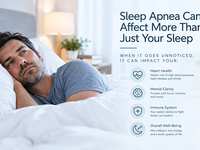
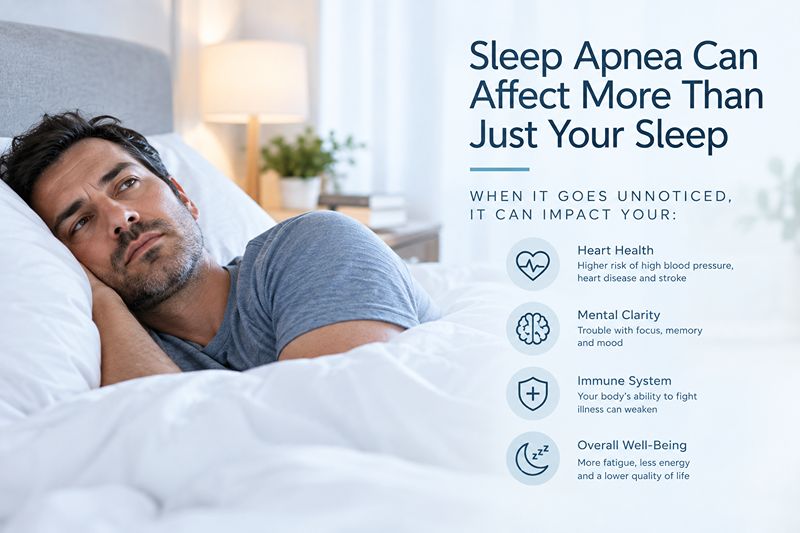
The National Heart, Lung, and Blood Institute states that untreated sleep apnea increases the risk of stroke, heart attack, and other serious problems. It may also contribute to problems with concentration, memory, decision-making, and behavior. [nhlbi.nih.gov]
How does sleep apnea affect the body?
When breathing stops or becomes restricted, the body must respond to restore airflow.
This cycle can happen repeatedly during the night. Even if you do not remember waking up, your sleep may be disrupted each time.
Over time, sleep apnea may affect how you feel during the day and may be associated with broader cardiovascular and health concerns.
Can sleep apnea cause high blood pressure?
Obstructive sleep apnea is linked to higher rates of high blood pressure.
Repeated sleep disruption and changes in oxygen levels can place added stress on the cardiovascular system. The American Heart Association identifies high blood pressure as one of the cardiovascular conditions linked to obstructive sleep apnea. [heart.org]
People with high blood pressure that is difficult to control should discuss possible sleep apnea with an appropriate healthcare provider.
Can sleep apnea affect your heart?
Yes. Obstructive sleep apnea has been linked to cardiovascular disease and worse cardiovascular outcomes.
The American Heart Association reports links between obstructive sleep apnea and higher rates of high blood pressure, coronary artery disease, and stroke. It also notes evidence connecting sleep apnea with changes that can increase heart failure risk. [heart.org]
Having sleep apnea does not mean that a person will develop every associated condition. However, the connection is important enough that symptoms should not be ignored.
Is sleep apnea connected to stroke?
Untreated sleep apnea is associated with an increased risk of stroke.
Both the National Heart, Lung, and Blood Institute and the American Heart Association identify stroke among the serious health concerns associated with sleep apnea. [nhlbi.nih.gov], [heart.org]
Anyone experiencing possible stroke symptoms should seek emergency medical help immediately.
Can sleep apnea affect memory and concentration?
Yes. Poor-quality sleep caused by repeated breathing interruptions can affect concentration, memory, and decision-making.
You may notice:
- Difficulty staying focused
- Forgetfulness
- Slower reaction time
- Trouble making decisions
- Reduced productivity
- A feeling of mental fog
These symptoms can be easy to blame on stress or a busy schedule. When they occur with snoring, gasping, morning headaches, or persistent fatigue, sleep apnea may be worth discussing with a healthcare professional.
Can sleep apnea affect your mood?
Sleep disruption may contribute to irritability and other changes in mood or behavior.
The American Heart Association lists irritability, anxiety, and depression among symptoms associated with sleep apnea. [heart.org]
Mood changes can have many causes. A complete healthcare evaluation is important rather than assuming that sleep apnea is the only explanation.
Can untreated sleep apnea affect daytime safety?
Yes. Excessive daytime sleepiness can affect concentration, reaction time, work performance, and driving safety.
Falling asleep while driving or while completing another activity that requires full attention can create an immediate danger.
If sleepiness is affecting your ability to drive safely, avoid driving and contact a healthcare professional promptly.
Can treating sleep apnea improve your health?
Appropriate treatment can help address breathing interruptions and improve sleep quality. The right treatment depends on the type and severity of sleep apnea, the individual’s health, and the recommendations of the diagnosing provider.
Treatment options may include positive airway pressure therapy, oral devices, healthy lifestyle changes, or other interventions. [nhlbi.nih.gov]
The first step is receiving an appropriate evaluation and diagnosis.
When should you seek help?
Consider speaking with a healthcare professional if you experience:
- Loud, frequent snoring
- Pauses in breathing during sleep
- Gasping or choking
- Persistent daytime sleepiness
- Morning headaches
- Poor concentration
- Unexplained irritability
- High blood pressure that is difficult to manage
- Sleepiness that affects driving or daily activities
How can Woodlands Sleep Solutions help?
At Woodlands Sleep Solutions, our goal is to help people in The Woodlands recognize the possible signs of sleep-disordered breathing earlier.
We provide education, screening, dental evaluation, and physician-coordinated oral appliance care for appropriate patients. We also help patients understand that sleep apnea treatment is not one-size-fits-all.
Do not ignore the warning signs
Snoring may sound like a nighttime inconvenience, but snoring accompanied by breathing pauses, gasping, or daytime exhaustion deserves attention.
Contact Woodlands Sleep Solutions to discuss your concerns and learn what your next step may be.
Quick FAQs
What is the biggest risk of untreated sleep apnea?
Untreated sleep apnea is associated with several serious concerns, including heart attack, stroke, high blood pressure, poor concentration, and excessive daytime sleepiness. [nhlbi.nih.gov], [heart.org]
Can sleep apnea affect people who are not overweight?
Yes. Body weight is only one possible risk factor. Symptoms such as breathing pauses, gasping, loud snoring, and daytime sleepiness should be evaluated regardless of body size.
Is snoring itself dangerous?
Snoring alone does not confirm sleep apnea. It becomes more concerning when accompanied by breathing pauses, gasping, choking, morning headaches, or daytime sleepiness.
This information is educational and does not replace medical diagnosis or treatment. Seek immediate medical attention for chest pain, severe breathing difficulty, stroke symptoms, loss of consciousness, or another emergency.