- Sections :
- Crime & Public Safety
- Restaurants & Food
- Sports
- More


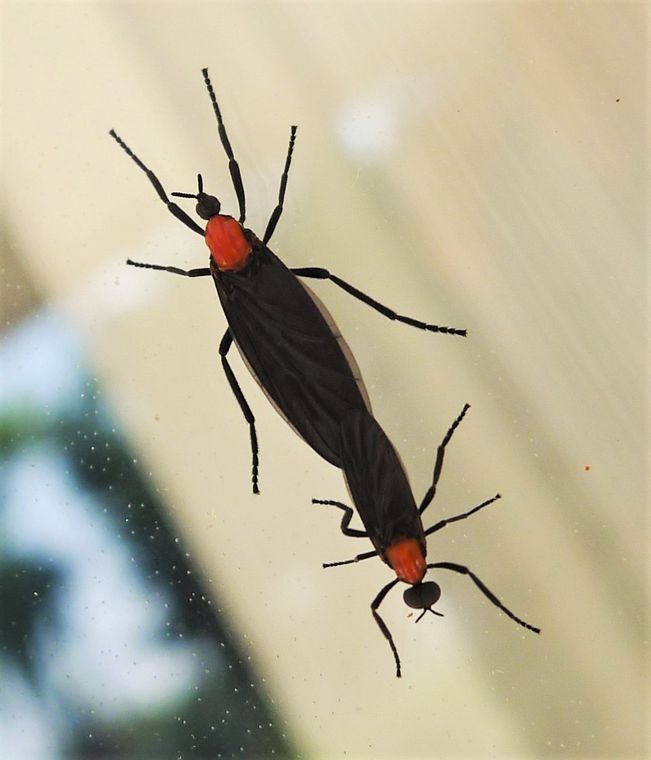
THE WOODLANDS, TX – Lately, more and more Woodlanders have found themselves swatting the air as they walk from home to car to office, thanks to a certain swarm pervading our lower atmosphere. Though their most prevalent presence in The Woodlands area is in April and May, love bugs have made an encore appearance right on the lifecycle schedule.
Also known as honeymoon flies, March flies, double-headed bugs, and scientifically as plecia nearctica, love bugs remain true to their name by literally hooking up; the male and female hook together at the abdomen to transfer genetic material; this love connection lasts anywhere from a half-hour to several days. Their aerial dance is purely couples only; staying attached keeps other males from mating with the female, who usually drags or carries the smaller male in the air or between flowers while they feed on nectar.
We can thank high humidity and heat for this onslaught of their second seasonal appearance. Texas typically sees lovebugs twice a year; once in the spring and again in summer as late as September. Living life to their fullest, adult lovebugs only live for about three to five days, meaning the entire existence for some is spent in flagrante delicto. But because they emerge all at once in large numbers while they’re in season, even a brief appearance can feel like a heavy invasion.
Besides being indiscriminate in their public breeding habits, love bugs are harmless to humans and pets, they don’t bite, sting, or carry diseases. They are actually beneficial to the ecosystem; their larvae break down dead plant matter, and adults assist with pollination.
While people are safe, the news is slightly worse for their property, primarily them being the harbingers of trouble for automobiles. While they have minimal impact on you and your home, splattered lovebugs on your windshield can reduce visibility. Furthermore, their crushed bodies become acidic within 24 hours and can damage your car’s clear coat or clog radiators if baked on by the Texas heat, causing damage both cosmetic and severe, resulting in the chance of high detailing and repair bills.
To mitigate the damage to your car, keep your washer fluid reservoir filled with bug-removing cleanser – not just water – and a squeegee in your trunk for your windshield, and be sure to wash the bugs off within 24 hours before the Texas heat bakes them into your auto’s clear coat. A home-grown secret is to take a used fabric softener dryer sheet and gently wipe the affected areas. The chemicals break down the bug proteins easily. For the car’s metal parts, mix baking soda and water into a paste, or dissolve it in warm water, and gently scrub the grill and bumper. Get proactive by wiping a light layer of baby oil or cooking spray on your bumper before driving to stop bugs from sticking.
While it’s tempting to attack the bugs with extreme prejudice, try to avoid pressure washers, which can actually blast the acidic bug fluids deeper into the paint microscratches.
As for your home, your exterior lit areas are at most danger for bug buildup. Lovebugs love ultraviolet light, so replace bright white porch bulbs with yellow bug lights or LED bulbs. Should you have a fan in a covered porch (or, heavens forbid, the critters manage to make it inside your home), kick your ceiling and desk fans into high, oscillating mode; love bugs are notoriously weak fliers.
Outdoors, love bug larvae live in damp, decaying grass clippings. Keep your lawn short and clear of thatch to prevent them from breeding nearby. Unlike mosquito mitigation with citronella, scented candles and sprays offer minimal to zero reliable deterrence against love bugs, who are not sensitive to the chemical compounds in citronella – and DEET – the way mosquitoes are. Instead, set out shallow white or light-colored containers filled with water and a few drops of dish soap. They will be drawn to the bright color and hopefully drown.
In the end, while the fogs of breeding bugs might be disconcerting and inconvenient, their days are numbered, and a few simple steps will keep your home, yard, and auto relatively unscathed. Until next spring.