- Sections :
- Crime & Public Safety
- Restaurants & Food
- Sports
- More


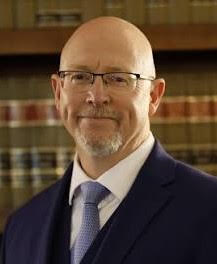
MONTGOMERY COUNTY, TX -- It was just a year ago that Governor Greg Abbott appointed Mike Holley as Montgomery County District Attorney, following the resignation of former MCDA Brett Ligon when he presented himself as a candidate for State Senator District 4. Holley’s decades-long tenure as First Assistant District Attorney was a God Send to the office, since numerous counties who change DA’s can signal an upheaval of personnel and the parting of ways. With the Governor’s appointment of Holley, only a new First Assistant needed to be appointed to maintain the integrity of the office, and with very few changes since, the Montgomery County DA’s office remains one of the most respected prosecutors offices in the state. Holley's service as a Judge Advocate General officer in the U.S. Army, is a hallmark to his leadership style, with the trust of his subordinates in their duties, while endeavoring to ensure fairness, accountability, and ensuring justice for every citizen.
Holley is a nice unassuming man in presentation, but is the lead pitbull in charge of 62 pitbull lawyers when it comes to trying crimes of the most heinous nature, especially when it comes to the most innocent in Montgomery County.
“The most common trials we have is sexual assault of a child,” said Montgomery County District Mike Holley. “It doesn't happen more often than other cases, but we try it more often.”
Holley explained that his prosecutorial team has to meet with victims multiple times to understand the nature of the crime, and explain the trial procedures to the victims to get them ready for trial. And whether its sexual assault or child pornagraphy of a young child by a family member, the District Attorney’s team is in a way experiencing post traumatic stress for their service. For cases like that, if the accused doesn’t plead guilty, then at trial, the jury is subject to viewing the painful to watch video of a child being sexually assaulted.
“It scars them mentally,” said Holley, speaking of the jury and his prosecutors. “You can tell it has.”
The District Attorney went on to say that some of the accused want their cases to go to trial because they want to see the recording of their abuse one more time.
There hasn’t been much change between Ligon’s office to that of Holley’s. Having been with the MCDA’s office for 14 years, ten of those as First Assistant, Mr. Holley was part of Ligon’s shaping of office for a decade, and very little restructuring was necessary upon his appointment by Governor Abbott.
“The biggest change I made initially was just simply promoting a person to replace me as the first assistant,” said the District Attorney Holley. “Kelly Blackburn is exceptional.”
Like any DA’s office, the greatest challenge is hiring and keeping good attorneys.
“We're able to be selective in Montgomery County,” said Holley. “But in a lot of offices across the state, they don't get any resumes.”
The MCDA’s office does a pretty detailed interview process, where they screen people to make sure they're equipped for the job. They screen a candidate’s social media accounts, conduct criminal history checks, and conduct a series of interviews, where potential assistant district attorneys actually make an argument in front of a small committee of senior staff. It’s the office’s way to see that candidates are capable of doing the job. In addition, potentials are given an ethical hypothetical situation, which if failed, will sink a prospects chances.
There are also Assistant District Attorneys who are either appointed or elected, such Donna Hansen, appointed by Governor Greg Abbott as Judge of the 523rd Judicial District Court; and Michael Ghutzman, the former Chief of the Major Crimes Section, who will take over the 359th District Court, once Judge Kathleen Hamilton retires at the end of December.
Since the summer, Holley has added eight new attorneys that the DA was pleased with, and it shows that attorneys are eyeing Montgomery County DA’s office for employment. Holley mentioned the Texas District and County Attorney Association, and noted of the eight awards the TDCA designated for rising stars every year, that two awards were ADA’s in his office.
“We're really pleased with that,” said Mr. Holley. “And the TDCA should be coming in November and present those awards to our people.”
The DA also noted that several of his investigators, Jason Salter-Mark, and Mike Wright, will soon be starting with State Brett Ligon’s office. They have also expanded their investigatorial team with several new team members, and a new structure now with a chief investigator, a captain, two lieutenants, and two sergeants. DA Holley is very pleased with the team including their experience in the field and investigative skills.
Community Outreach is another important aspect for the DA’s office, and they have stepped up their game with attendance at community events, as well as offering an MCDA’s Office Citizen Prosecutor Academy, where citizens can learn about local criminal justice operations through the DA’s office. ADA’s and staff also attend safety fairs or other events where the community are gathered for law enforcement purposes. Mr. Holley speaks dozens of times per year to community groups, including ladies clubs, as well as legal professional events; and he is asked to speak at conferences, most notably at a recent national gathering of several thousand attendees on the subject of Veteran’s Treatment Court and even meeting with the Secretary of the Veterans Administration.
One subject that Holley’s office is passionate about is their continued efforts to do talks about risks like fentanyl and to their potential use by kids. His team goes into schools, giving talks to students in the effort to save lives. The Financial Crimes & Forfeiture Division Chief Jamie Sulla, talks to groups of senior citizens about frauds and scams, educating them on the danger of being wrongly separated from their money.
“Jamie has spoken to a lot of groups,” said Holley. “And I'm convinced that every time she speaks to one, we are sparing some person from becoming a fraud victim.”
In the last year, there have been around 103 investigations involving about $5 million in losses, with Sulla’s division recovering some of that money, but there is still a lot out there. And in 2026, cryptocurrency involved, and experts in that speciality are also involved in its tracing.
“It's really devastating when a person's at the end of their life and they lose that money,” said the District Attorney. “One, they need the funds badly. And two, they don't have time to replace it.”
On the subject of AI, while some Judges in the District Courts have issued standing orders against the use in their courts, due to inflated, and at times outright made up or false submissions in documentation presented to their courts, commonly known as ‘hallucinations.’ The MCDA’s office relies on the responsible use of AI as a time saver, meaning verified information is used in the preparation of cases, and a human has the final say over their arguments submitted in court pleadings. The reduced workload on Holley’s staff via AI’s use allows for a more effective office, clearer thinking, and able to get the vital safety needed for children and the community.
Mr. Holley noted a case against a defendant tried for sexual assault of a child, and when they got to sentencing portion of the trial, his team wished to present further evidence to the judge that they felt he should consider in addition to the original charges. A subpoena was submitted to Snapchat, revealing thousands and thousands of lines of text between the defendant and other potential victims. And so the ADA staff asked AI to go through all the lines, with the search parameters, ‘Anytime that this username, who is the defendant, appears to be chatting with somebody who identifies as a child 14 or younger, then flag it.’ They further isolated the information down to dialogue in chats about sex, and distinct references were found from the subpoenaed text, easily verified via the original transcript in keyword searches.
“If we didn't have AI, we would have to have a team of people going through each line of text,” said DA Holley. ”And when you have many cases, you're limited in what you can do. So AI can help you, particularly with large volumes of records.”
For very important cases, where defendants have made efforts to have sex with kids, the ADA’s are able to show that to the defense and the judge, critical information that can inform a judge and make the right calls in regards to increased sentences for judgement, thus removing a predator from the streets making them safer for children.
Of course the DA’s office is unable to prosecute every case that is referred to by a county or city based law enforcement agency. Holley’s office receives about 10,000 misdemeanor cases, capable of a jail sentence up to one year. Felony cases rate about 7,000 filed per year, and in each case, the DA’s office will either have to accept or refuse the charges. Generally, about 1% of the seven-thousand felony charges will actually go to trial.
Mr. Holley gave a hypothetical on a sample case:
A police officer will call his office saying, “I tried to stop the suspect. He fled in his vehicle for five miles at 100 miles an hour. I pulled him over. He was impaired. He is in possession of marijuana and cocaine, plus he has a gun.”
And we would say, "Well, we're going to take evading with a motor vehicle. We'll accept the DWI and the unlawful carrying of a weapon. But we'll hold the possession of illegal drugs for now, maybe filing it later."
It’s sort of like playing chess, trying to make most of your moves with the biggest players for the shortest campaign to save the stress on your forces, yet you hold something in reserve should you need reinforcements later.
Then there are cases, where a police officer will call about charges on a suspect, and the ADA’s will review the statutes, and have to turn down the charge because of the lack of probable cause.
“We don't want somebody arrested who shouldn't be arrested,” said Mr. Holley. "We want the police arrest to stand, but its basis needs to be solid.”
The MCDA tries more cases than most counties, and of the 1% felony cases will be taken to court, while the other 99% will be plead down in some way or dismissed. In fact, most who have contact with the DA’s office don’t go to jail or prison, but instead are pointed to diversion programs or probation. The main concern for the office are the violent and repeat criminals, those who prey on members of the community.
As a U.S. Army Major and Chief Prosecutor in Baghdad, Iraq, Holley prosecuted the Abu Ghraib prison military defendants for human rights abuses against the Iraqi detainees at the facility. And he understands the challenges that faced true hardships in Iraq and Afghanistan, while supporting The Veterans Treatment court for Veterans in Montgomery and surrounding counties, which is known for its success across Texas and the Nation. Judge Hamilton has overseen the court for over 10 years, and both Ligon and Holley have supported it wholeheartedly.
A good example is a Veteran who has no criminal history, they have combat zone service, and have separated from the military, and they have challenges that may have led to their arrest in an offense against the law. Upon their incarceration, they are asked to verify if they are a Veteran. If so, sets are taken to verify their service, and separate them from the general population to that of a solely Veteran population at the Montgomery County Jail. For those accepted into the program, they are routed into Veterans Court to help them repair their offenses to the law with the least amount of consequence to their lives, and once they complete a program their charges are expunged from the record.
“We can work with that person,” said Mr. Holley. “And if we give them guidelines, most times we can restore them back to their family and society.”
The special treatment for Veterans stops for violent criminals, so it has its reasonable criteria to achieve the program’s objectives of giving a restart to a troubled Veteran who was arrested over troubles from his military service, as well as the personal conflicts he was troubled with when referred into custody.
“For the Veteran who sexually assaults a child, we're not having that discussion anymore,” said Holley. “Our main concern is how do we give justice to this victim that suffered.”
The Internet Crimes Against Children (ICAC), is always a major concern at the DA’s office, and they work tirelessly to combat the filth, while working closely with Children's Safe Harbor in the protection of children.
The MCDA has tried 58 felony and 32 misdemeanor trials since January, and it still outpaces one county with a much larger population that tried on half of that amount last year. And for habitual offenders, those working on the third conviction, the Three Strike Rule does apply for third degree or higher, and they are sent to prison, punishable by 25 years to life, and defendants may have to serve half their sentence before parole is considered. If a weapon is involved, or if a defendant is evading with a motor vehicle it too is used as a deadly weapon.
“We, on average, are getting about 40 years per defendant,” said Holley in describing the reconciliation of those trials. “Which is good, because the theory is that a small group of people will commit far more than their share of crimes.”
Mr. Holley went on to say that 95% of the people in prison will eventually be released, with 5% staying for the rest of their lives, either with a death sentence or life without parole. And despite 64% of those in prison being violent offenders, most will do 80% of their sentence.
In Texas, the recidivism rate for prisoners, those back in prison within three years, is 16.9%, while in states like California, it has been as high as 50% at times, because of the realization that defendants won’t be properly punished. Harris County criminals coming into south Montgomery County, can often be seen crying because they think of The Woodlands as being part of Harris County. And with HC judges much more defendant based rather than victim based, while Montgomery County judges are the complete opposite. Harris County criminals, thinking they will defy the MCDA plea bargain with a reduced sentence, often find trial sentences with multiple more decades added than anticipated.
Another off-shoot of his military service with the JAG Corp is Holley’s honor for the prosecution and the defense in their carrying out of their judicial requirements and duties.
“I really support, honor, and respect the defense bar,” said The District Attorney. “I want them to be good at their job. And I want them to have all the resources they need. That's really important to me.”
Mr. Holley believes in holding people accountable, but wants every Texan to have a good defense.
“I'm more confident that we get justice when a defendant is well represented,” said Holley. “I want to know the truth of what's happened. And sometimes we're not privy to all the truth.”
A lot of the plea bargains in sexual assault cases, although they limit the amount of time a defendant serves in prison, such as 20 years, they forego any appeal and victims are unburdened by having to go back to court and relived the experience in testimony they shouldn’t have lived in the first place.
Now as District Attorney for Montgomery County, Mike Holley handles a case from time to time, based on their significance, and like the former military prosecutor he was, he is always capable of returning to a courtroom, like with abortion cases. Holley does not hoard any limelight in his office, and gives credit where it is due, with his 62 attorneys and staff that work for him in the best DA’s office in the State of Texas.
“I'm very proud that I've been able to take care of my people in my county without any major disruption,” said District Attorney Mike Holley. “It’s the best job I've ever had.”
By: Ruben Borjas, Jr., Columnist, Montgomery County News