- Sections :
- Crime & Public Safety
- Restaurants & Food
- Sports
- More



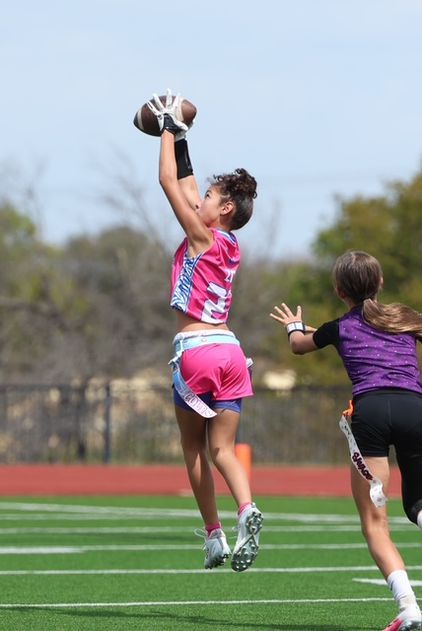
THE WOODLANDS, TX – Taking the field all across the nation are an excess of 100,000 girls who are placing their collective footprint on the fast-growing sport they’ve all been waiting for – girls flag football. Unexpectedly in the state of Friday Night Lights, Texas hasn’t been at the vanguard of integrating this sport into mainstream school athletics programs, but recent moves by the University Interscholastic League (UIL) show promise in the upcoming school years.
A National Movement
Girls flag football is among the fastest-growing high school sports in America, seeing nearly a 50 percent surge in high school growth in a single year.
The National Federation of State High School Associations (NFHS) reports participation rose from 68,847 to 102,360 in the past year, while participating schools increased from 2,736 to 3,990. The sport will debut at the 2028 Los Angeles Olympics. Girls are starting young, competing at increasingly high levels, and building pathways that now extend into college athletics.
Beyond the competition, flag football offers girls something equally valuable: the opportunity to build confidence, resilience, leadership, teamwork, and the ability to perform under pressure. It also opens the door to a sport historically dominated by boys and men, giving girls the chance to experience the same excitement, camaraderie, and personal growth that football has offered generations of male athletes. For many young players, the impact extends well beyond the field, shaping how they see themselves, approach challenges, and recognize their own potential.
Texas: Progress, Slowly but Surely
“While we are encouraged that the UIL is moving forward, we are disappointed that Texas, a state synonymous with football, is not among the early leaders in fully sanctioning girls flag football,” said Val Rupp, one of the earliest and loudest voices in mainstreaming the game into high school sports.
To date, 25 state athletic associations, including Washington, D.C., have approved girls flag football; however, the Lone Star State isn’t one of them… yet. Texas has instead approved development of a pilot with no more than two classifications, beginning no earlier than the 2028 - 29 school year and still subject to final approval.
“We would have expected Texas to be among the first,” challenged Rupp.
The Texas education system isn’t exactly asleep at the wheel, however; many factors must be figured out before a new sport can be merged into an existing system. Expanding girls flag football across Texas would require schools to address practical considerations, including budgets, coaches, officials, field access, scheduling, uniforms, and sustainable program support.
Growing demand for the sport should prompt swifter answers to these important implementation questions. In the meantime, though, many girls depend on club programs, family transportation, tournament fees, and travel to compete. This creates barriers for families who cannot afford those commitments and raises the possibility that some current players will graduate before a statewide school-based pathway is established.
Local Demand is Already Here
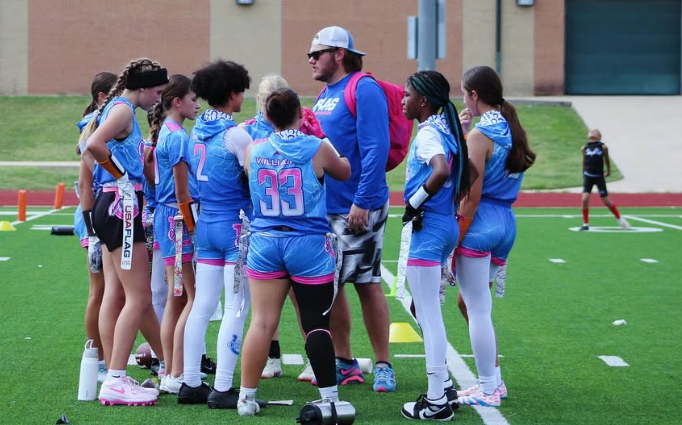
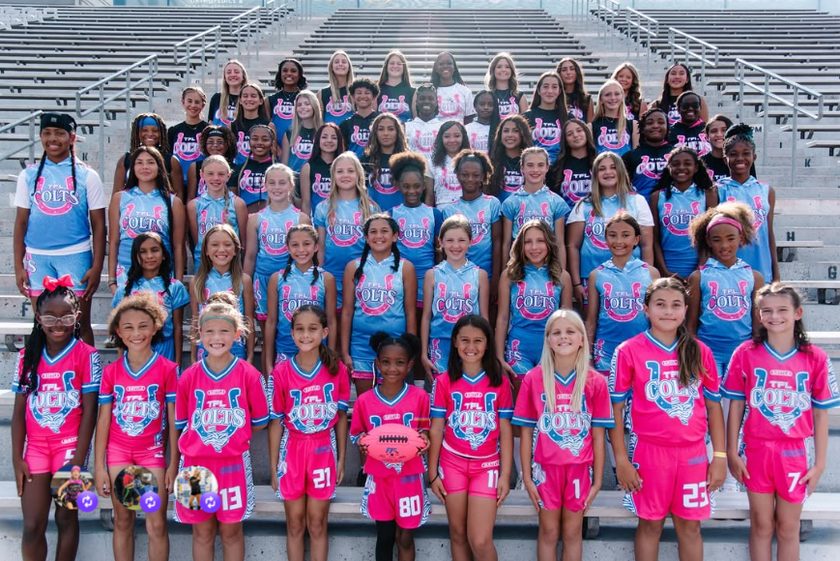
The Farm League – a prominent sports organization and park based in the Spring / Klein area – hosts the TFL Lady Colts program, a local youth-select all-girls flag football club for players aged 8 to 18. Founded in 2021 with a single 10U squad, the 501(c)(3) nonprofit organization has expanded to 14 teams across Greater Houston for these girls.
The club offers a full development pipeline designed for both beginners and experienced athletes aiming for collegiate play. Competitive rosters – typically kept tight at 8 to 10 players – compete in 8U, 10U, 12U, 14U, and High School divisions at regional and national tournaments. The program also runs a dedicated 5v5 winter high school league where athletes can register individually to represent their specific local high schools.
The TFL Lady Colts illustrate the growing demand for girls flag football across The Woodlands area, alongside numerous other local programs. Its expansion reflects the growing number of young athletes and families seeking opportunities to compete in a sport that is rapidly gaining momentum.
“Watching girls flag football grow and helping these athletes find their place in the game is incredibly rewarding. You get to see their confidence build, their talent develop and their goals become bigger than they ever imagined,” said Coach Tayton Coffelt, cofounder of the Lady Colts. “My commitment is to keep opening doors for them. If Texas UIL can’t give them the opportunity to represent their schools and show what they can do, I’ll build those opportunities for them. Their journey shouldn’t have to wait.”
Kelly Jatzlau, who cofounded the Lady Colts alongside “Coach Tayt,” is driven by a similar fire to see her girls achieve their top potentials.
“When we started the Lady Colts, I promised I would give everything I have to see them wear their high school’s name on their jersey and receive the recognition athletes get in states where girls flag football is sanctioned. Those girls are now freshmen, including my daughter. We’ll keep pushing for varsity girls flag and supporting efforts across Texas to give every player that opportunity. If it doesn’t come in time, we’ll keep building opportunities and making sure those girls – and every player in our program – are seen.”
College Opportunities are No Longer Hypothetical
Women are playing varsity flag football in college, and scholarship opportunities are emerging. Texas Wesleyan University in Fort Worth launched a women’s varsity program and identified it as a scholarship sport. The University of Texas at Arlington has announced a Division I varsity program beginning competition in spring 2027.
For the Lady Colts, the pathway from recreational flag football to Signing Day is already a reality. Four of the girls are now playing collegiate flag football: Kylie Marshall and Audrey Keeney at the University of Mary Hardin-Baylor, and Aubree Travis and Morgan Guyah at East Texas Baptist University. Additionally, seniors Seveyah Nickson and Gala Zarate, have been with The Lady Colts for four and three years respectively, and have received multiple offers, collectively spanning NJCAA, NAIA and NCAA Division III, II and I programs. Seveyah plans to announce her Division I commitment in the coming weeks.
“The next generation is following their lead,” said Rupp. “Our national team features standout juniors Marian Garcia, Eva Negron and Cadence Nixon, alongside promising underclassmen Brynlee Jatzlau, Brooklyn Dotson, Ellie Williams and Mary Margaret Dybesland – all building toward collegiate opportunities.”
Starting Young, Dreaming Big: Building a Pathway for Every Girl
For many young girls, flag football isn’t just a sport they’re discovering; it’s a sport they’re growing up with. Organizations like the TFL Lady Colts welcome girls as young as eight years old, creating opportunities to compete long before high school and inspiring dreams of playing at the next level.
One of those athletes is Zoey, a 12-year-old seventh grader who began playing flag football at age 9. Nearly four years later, she competes in regional tournaments, plays multiple positions, and recently helped her team reach a championship game in Nashville. She hopes to continue playing throughout high school and potentially into college.
For Zoey, flag football has become much more than an extracurricular activity. She’s invested years developing her skills, competing against talented athletes, and becoming increasingly committed to the game. Like so many girls playing today, she’s not wondering whether she wants to continue playing. She's wondering whether the opportunities will be there when she’s ready for high school.
Yet while youth programs are creating opportunities for girls like Zoey, the high school landscape is still developing. Building a sustainable pathway will require more than individual schools launching teams. Public and private schools operate within different athletic systems, but both need organized competition, willing opponents, and opportunities for athletes to continue developing.
As the governing body for most public-school athletics in Texas, the UIL has an opportunity to help establish a foundation for broader growth. For Zoey and the next generation of players, the hope is simple: that by the time they’re ready for high school, the sport they’ve grown up loving will have a place for them.
The Bigger Point
Girls are not waiting for permission to play football. They are already playing, competing, and excelling. The opportunity now is for Texas schools to build the pathways that allow them to keep going.
To learn more, get involved, and help these young women lead a kickoff into a new future, visit www.girlsflagfootballhouston.com.