- Sections :
- Crime & Public Safety
- Restaurants & Food
- Sports
- More
Lone Star College-Montgomery’s Biotechnology Program Advances with New Innovative Bioprinting Technology


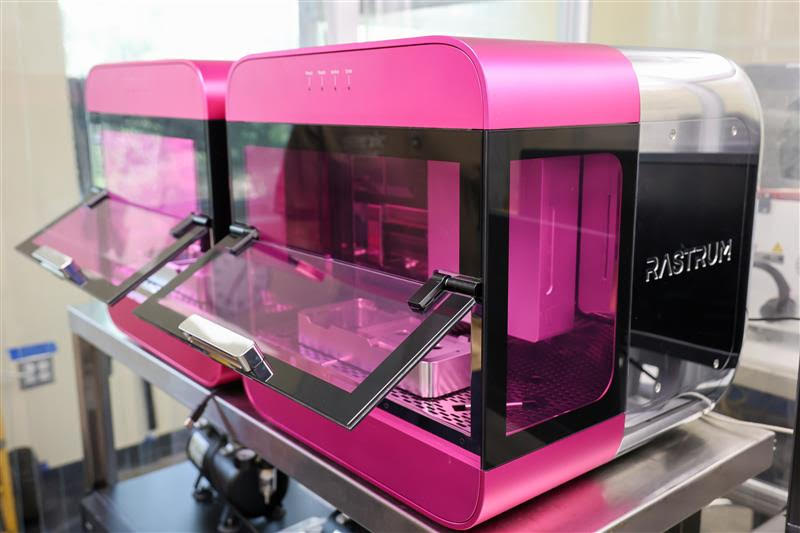
CONROE, TX -- Lone Star College-Montgomery’s Biotechnology Program continues to lead in innovation and excellence. Recently, the program invested more than $100,000 in cutting-edge equipment, including two Inventia RASTRUM 3D bioprinting systems and a BioAssemblyBot (BAB), transforming its laboratory into a high-tech hub for research and hands-on learning.
These state-of-the-art bioprinting tools enable rapid production of tissue structures and complex, large-scale organs. The BioAssemblyBot, with its six-axis robotic arm mimicking human dexterity, is at the forefront of organ fabrication, enabling students and researchers to explore printing functional organs like hearts and kidneys.
Complementing the BAB, the Inventia RASTRUM offers high-throughput, precise biofabrication. The system functions similarly to an advanced inkjet printer, swiftly producing organoids, tiny clusters of living cells, ideal for drug testing and personalized medicine. This capability allows for thousands of treatment variations to be tested quickly, accelerating breakthroughs in therapy.
Dr. Daniel Kainer, director of the LSC-Montgomery Biotechnology Program, emphasizes the significance: “It’s rare in STEM education to have access to such advanced equipment. Our students won’t just learn about cutting-edge technology; they’ll use it firsthand. Whether presenting research nationally or striving to develop the first bio-printed transplant organs, they gain a competitive edge at LSC-Montgomery.”
These technologies position Lone Star College-Montgomery as a pioneer in biotech education, providing students with real-world experience using platforms utilized by top research institutions. This hands-on approach fosters authentic discovery, enabling students to contribute to solutions for organ shortages and transplant challenges.
Dr. Kainer adds, “Working with these advanced bioprinting tools gives students a unique opportunity to participate directly in groundbreaking research, potentially printing organs that could save lives. Our goal is to prepare the next generation of innovators in regenerative medicine and transplant science.”
By bridging the gap between research and application, the program equips students with vital skills to transform laboratory breakthroughs into life-saving medical treatments, paving the way for a future where bio-printed organs and personalized therapies become a reality.
For more information about the Lone Star College-Montgomery Biotechnology Program and its innovative initiatives, visit LoneStar.edu/Biotechnology-Dept-Montgomery.