- Sections :
- Crime & Public Safety
- Restaurants & Food
- Sports
- More
Categories



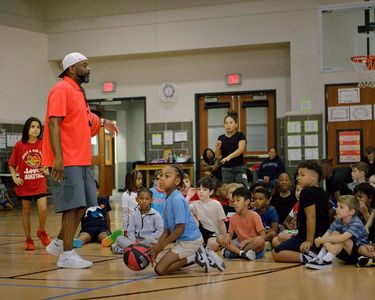
Coach Deon instructs young players during a basketball session in The Woodlands.
THE WOODLANDS, TX -- In youth sports, it’s easy to mistake activity for development. Fast drills, crowded gyms, and constant motion can look productive, but real growth often happens in quieter moments — when young players learn how to listen, move with purpose, and build habits that last.
That philosophy guides the work at Coach Deon Basketball, a local youth basketball program serving families across The Woodlands. Rather than rushing players toward short-term outcomes, the program emphasizes fundamentals, structure, and consistency, particularly at younger ages.
“Confidence isn’t something kids are born with on the court,” says Coach Deon. “It’s built through repetition, clear expectations, and learning the game the right way.”
Why Structure Matters at Young Ages
For developing players, structure creates clarity. Practices are organized around age-appropriate instruction, focused skill blocks, and repetition designed to reinforce proper mechanics. This approach allows players to progress at a steady pace without feeling overwhelmed, while giving parents confidence that their child is learning in a positive, intentional environment.
Instead of prioritizing highlights or immediate results, sessions focus on foundational elements such as proper footwork and balance, shooting mechanics before range, decision-making before speed, and listening to and applying instruction.
These fundamentals help players grow not only as athletes, but as learners — skills that carry beyond the basketball court.
A Community-Centered Approach
Youth basketball in The Woodlands is competitive, and families have no shortage of options. What distinguishes a development-first approach is consistency. Players know what to expect each week. Parents see gradual, measurable progress over time. Improvement is reflected not just in performance, but in confidence and understanding of the game.
For families looking for more than recreation, this approach offers something different — a focus on teaching, accountability, and long-term growth.
As one season concludes and new sessions approach, the emphasis remains unchanged: build habits first, trust the process, and allow development to unfold naturally.
For many families in The Woodlands, that steady, structured approach is exactly what youth sports should be.
A development-first approach to youth basketball in The Woodlands
That philosophy guides the work at Coach Deon Basketball, a local youth basketball program serving families across The Woodlands. Rather than rushing players toward short-term outcomes, the program emphasizes fundamentals, structure, and consistency, particularly at younger ages.
“Confidence isn’t something kids are born with on the court,” says Coach Deon. “It’s built through repetition, clear expectations, and learning the game the right way.”
Why Structure Matters at Young Ages
For developing players, structure creates clarity. Practices are organized around age-appropriate instruction, focused skill blocks, and repetition designed to reinforce proper mechanics. This approach allows players to progress at a steady pace without feeling overwhelmed, while giving parents confidence that their child is learning in a positive, intentional environment.
Instead of prioritizing highlights or immediate results, sessions focus on foundational elements such as proper footwork and balance, shooting mechanics before range, decision-making before speed, and listening to and applying instruction.
These fundamentals help players grow not only as athletes, but as learners — skills that carry beyond the basketball court.
A Community-Centered Approach
Youth basketball in The Woodlands is competitive, and families have no shortage of options. What distinguishes a development-first approach is consistency. Players know what to expect each week. Parents see gradual, measurable progress over time. Improvement is reflected not just in performance, but in confidence and understanding of the game.
For families looking for more than recreation, this approach offers something different — a focus on teaching, accountability, and long-term growth.
As one season concludes and new sessions approach, the emphasis remains unchanged: build habits first, trust the process, and allow development to unfold naturally.
For many families in The Woodlands, that steady, structured approach is exactly what youth sports should be.
Comments •

Related News: Sports

The Woodlands Christian Academy Wins Big at 2025 Touchdown Club Awards

6A State Quarterfinals: Another District 13 Season Ended By DeSoto As Willis Comes Up Short Against A Heated Rival

The Woodlands Township Announces Registration Now Open for 2026 Race Series

State Playoffs Quarterfinals: The Willis Wildkats Looks To Avenge Last Years Loss Against The DeSoto Eagles
