- Categories :
- More
What Window Tint Percentage Is Best for Drivers in The Woodlands, TX?
By:
 Bespoke Auto Pros
| Published 08/30/2026
Bespoke Auto Pros
| Published 08/30/2026


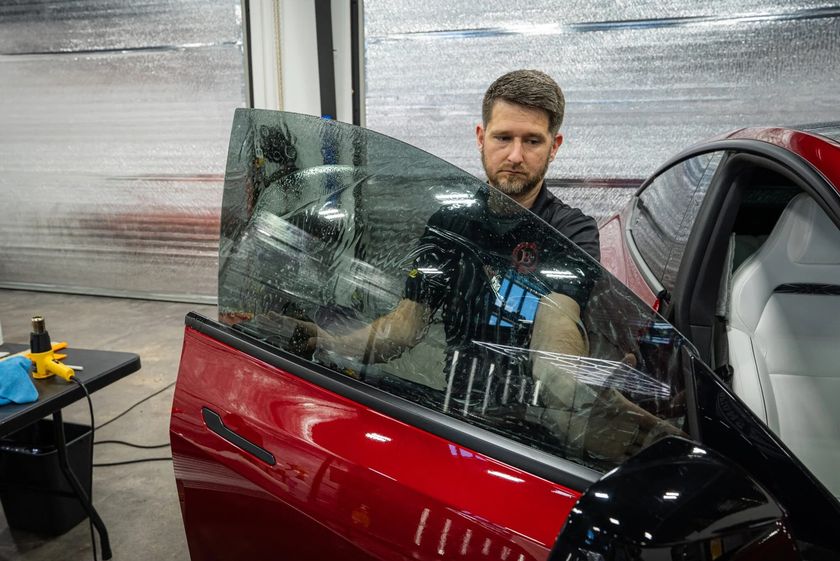
Choosing window tint for your vehicle isn’t just about deciding how dark you want your windows to look. The percentage you choose can affect privacy, glare, visibility, and the overall appearance of your vehicle. For drivers in The Woodlands and throughout the Houston area, Texas window tint laws are another important part of the decision.
So, what window tint percentage is best?
There isn’t one percentage that’s right for every vehicle or every driver. The best choice depends on the look you want, how much visible light you want to pass through the glass, where the film is being installed, and Texas law.
At Bespoke Auto Pros, we can help you compare your options and choose an XPEL window film and shade that fits your vehicle and your preferences.
What Does Window Tint Percentage Mean?
Window tint percentages refer to Visible Light Transmission, commonly called VLT. VLT describes how much visible light passes through the glass and window film.
The key thing to remember is:
A higher VLT percentage allows more visible light through, while a lower VLT percentage creates a darker appearance.
For example, a 70% VLT film allows considerably more visible light through than a 20% VLT film.
This is why choosing a tint percentage isn’t as simple as assuming a higher number means “more tint.” When discussing VLT, the opposite is true: lower percentages generally appear darker.
What Window Tint Percentage Is Best in Texas?
For many drivers, the decision comes down to balancing appearance, privacy, visibility, and performance.
Here are some common VLT ranges you may encounter when choosing automotive window film:
70% Tint
A high-VLT film has a very light appearance and allows a large amount of visible light to pass through.
This can be a good option for drivers who want the performance benefits of a quality window film without significantly darkening the appearance of their glass.
For example, XPEL offers PRIME XR PLUS 70, a nano-ceramic film that allows 70% visible light transmission while still providing significant infrared energy rejection and blocking 99% of harmful UV rays.
50% Tint
50% tint provides a subtle tinted appearance while still allowing plenty of visible light through the glass.
Drivers who don’t want a particularly dark appearance may prefer a VLT in this range. It can provide a noticeable change without creating the much darker appearance associated with lower-VLT films.
35% Tint
Moving down to 35% creates a noticeably darker appearance.
For drivers who want more privacy and a darker aesthetic while retaining more visibility than lower-VLT options, a shade around this range may be worth considering.
Keep in mind that the final VLT of a window isn’t determined by the film alone. The factory glass already has its own light transmission level, and Texas measures the combination of the glass and applied film when determining compliance.
20% Tint
20% tint creates a significantly darker appearance and provides considerably more privacy than lighter shades.
However, drivers need to pay particular attention to where a film this dark is installed because of Texas regulations.
Texas requires the windows immediately to the left and right of the driver to have a light transmission value of 25% or greater when the film and original glass are measured together.
That means choosing a film labeled 25% doesn’t automatically guarantee that the finished window will measure at 25% VLT.
5% Tint
5% tint is extremely dark and allows very little visible light through the window.
While some drivers prefer this appearance and level of privacy, it is not permitted on the front side windows under the standard Texas tint requirements because those windows must maintain at least 25% light transmission when measured with the original glass.
Lower VLT can also make it more difficult to see through a window in low-light conditions, which should be considered when selecting a shade.
What Are the Window Tint Laws in Texas?
Before choosing your tint percentage, it’s important to understand where Texas allows different levels of tint.
According to the Texas Department of Public Safety, window film installed on the side windows immediately to the right and left of the driver must have a combined light transmission value of 25% or greater. Luminous reflectance must also be 25% or less.
The side windows behind the driver are exempt from these light-transmission requirements.
The rear window can also be tinted without a VLT restriction when the vehicle has outside mirrors on both sides that provide the required view behind the vehicle. If the vehicle doesn’t meet that mirror requirement, different restrictions apply.
Windshields have additional requirements. Tint can generally be applied above the vehicle’s AS-1 line. If there is no AS-1 line, it may extend no more than five inches from the top of the windshield. Texas DPS also states that clear, untinted UV film is allowed anywhere on the front windshield without requiring a medical exemption.
Because regulations can change and individual vehicles can differ, current Texas requirements should always be checked before installation.
Does Darker Tint Mean Better Heat Rejection?
Not necessarily.
This is one of the most important things to understand when choosing window tint.
The darkness of window film and its ability to reject heat are not the same thing.
Modern window film technology can provide substantial performance even at higher VLT levels.
XPEL PRIME XR and PRIME XR PLUS, for example, use multi-layer nano-ceramic technology. XPEL offers these films in multiple shades, allowing drivers to choose an appearance that works for their vehicle without relying solely on extremely dark film for heat rejection.
XPEL’s PRIME XR PLUS 70 demonstrates this particularly well. Despite allowing 70% of visible light through, XPEL reports that this film can reject up to 96% of infrared energy while blocking 99% of harmful UV rays.
For Texas drivers, this means choosing a darker film isn’t automatically the best way to improve performance.
Ceramic Tint vs. Tint Percentage
Another common misconception is that “ceramic” refers to how dark the tint is.
It doesn’t.
Ceramic describes the technology used in the window film, while VLT describes how much visible light passes through it.
That means you can have ceramic window film in different shades.
XPEL PRIME XR and PRIME XR PLUS use nano-ceramic technology and are available in multiple shades. This allows you to choose your desired appearance and VLT while also considering the performance characteristics of the film itself.
What About Factory Privacy Glass?
Trucks and SUVs commonly come from the factory with darker rear glass.
It’s important to distinguish this factory privacy glass from aftermarket window film. If you’re trying to create a more consistent appearance between the front and rear windows, the existing glass needs to be considered before choosing a film.
It also matters from a performance standpoint. Dark-looking factory glass isn’t necessarily equivalent to installing a high-performance ceramic window film.
A professional installer can evaluate the existing glass and discuss film options based on the appearance and performance you’re trying to achieve.
Should You Get the Same Tint Percentage on Every Window?
Not necessarily.
Many vehicles use different film shades in different areas. Your front side windows, rear side windows, rear glass, and windshield all have different considerations.
Factors such as Texas regulations, factory glass, nighttime visibility, privacy, and your preferred appearance can all influence which film makes sense for each window.
Instead of choosing one percentage and applying it everywhere, it’s often better to look at the vehicle as a whole.
What Tint Percentage Is Best for Night Driving?
If nighttime visibility is an important concern, a higher VLT should be considered.
Because lower-VLT films allow less visible light through the glass, very dark tint can make seeing through the windows more difficult in low-light environments.
Drivers who frequently travel at night may prefer a lighter film while still taking advantage of the performance offered by nano-ceramic technology.
XPEL notes that its PRIME XR PLUS technology can provide heat and UV protection at high VLT levels without requiring an extremely dark appearance.
Choosing Window Tint for The Woodlands and Houston Area
Drivers around The Woodlands, Magnolia, Conroe, Tomball, Spring, Montgomery County, and North Houston spend plenty of time behind the wheel in Texas conditions.
When choosing window tint, don’t focus on darkness alone.
Consider:
- The amount of visible light you want to pass through the glass
- Your preferred level of privacy
- Daytime and nighttime visibility
- Texas window tint regulations
- Your vehicle’s existing factory glass
- The window film technology
- Heat and UV performance
- The overall appearance you want for your vehicle
A quality ceramic film can provide strong performance without requiring you to choose the darkest shade available.
Why Professional Window Tint Installation Matters
Choosing the right film is only part of the equation. Proper installation also matters.
A professional installer can evaluate your vehicle’s existing glass, discuss your preferred appearance and performance goals, and help determine which film and VLT options are appropriate for each area of the vehicle.
At Bespoke Auto Pros, we install XPEL automotive window film and can help you compare your options before deciding which setup is right for your vehicle.
Frequently Asked Questions About Window Tint Percentage
What does 20% window tint mean?
20% VLT means the window film allows approximately 20% of visible light to pass through. Lower VLT percentages generally create a darker appearance.
Is 20% tint legal in Texas?
Texas requires the side windows immediately to the right and left of the driver to maintain at least 25% light transmission when the film and original glass are measured together. Because 20% is below that threshold, a 20% combined VLT would not meet the standard requirement for those windows.
Different rules apply to windows behind the driver.
Is 5% tint legal in Texas?
5% VLT does not meet Texas’ standard 25% minimum light-transmission requirement for the side windows immediately beside the driver. Rear side windows are exempt from the light-transmission requirement, and rear-window rules depend on the vehicle’s mirror configuration.
Is 35% tint legal in Texas?
A film labeled 35% may potentially result in a compliant front side window, but the film percentage alone doesn’t determine legality. Texas measures the light transmission of the film and original glass together, and the finished window must meet the applicable requirement.
Is ceramic tint always dark?
No. Ceramic refers to the film’s construction and technology, not its darkness. XPEL offers nano-ceramic window film at multiple VLT levels, including high-VLT options that have a much lighter appearance.
Does darker tint block more heat?
A darker appearance doesn’t automatically mean better heat rejection. Film technology plays an important role. XPEL’s nano-ceramic films are engineered to provide heat rejection across multiple VLT levels.
Can I tint my windshield in Texas?
Texas has specific restrictions for windshield tint. Tint may generally be installed above the AS-1 line or, when there is no AS-1 line, within the top five inches of the windshield. Texas DPS also allows clear, untinted UV film anywhere on the front windshield without a medical exemption.
What’s the best tint percentage for my car?
There isn’t a universal best percentage. The right choice depends on the vehicle, existing glass, desired appearance, privacy preferences, visibility, film technology, and where the film will be installed.
Find the Right Window Tint for Your Vehicle
If you’re deciding between different window tint percentages, you don’t have to choose based on darkness alone.
Bespoke Auto Pros can help you compare XPEL window tint options based on your vehicle, preferred appearance, performance goals, and applicable Texas regulations.
We serve drivers throughout The Woodlands, Magnolia, Conroe, Tomball, Spring, Montgomery County, and North Houston.
Contact Bespoke Auto Pros today to discuss XPEL window tint options for your vehicle and find the setup that’s right for you.