- Categories :
- More
What Does “Slow Travel” Actually Mean? A Guide to Traveling with Intention
By:
 Rossnaree Travel
| Published 09/23/2026
Rossnaree Travel
| Published 09/23/2026


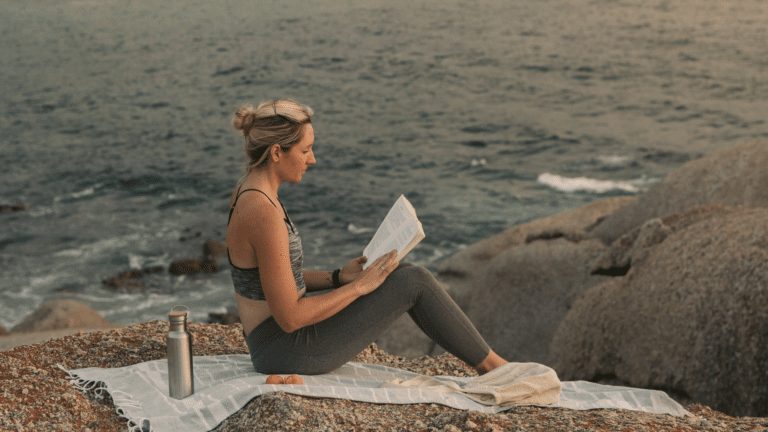
Slow travel means planning a trip around depth rather than distance, choosing fewer destinations, staying longer in each one, and leaving room in the itinerary for the unplanned moments that usually become the best part of the story. It is not about how many days you have or how far you go. It is about how present you are once you get there. You can practice slow travel on a long-dreamed month in Europe or on a single unhurried weekend two hours from home. The trip length is not the point. The pace is.
At Rossnaree Travel, this is not a trend we borrowed for marketing. It is the philosophy the agency was built on. Every itinerary we design starts with a simple question: what does this traveler actually want to feel, not just see. That question changes everything about how a trip gets built.
What is slow travel, exactly?
Slow travel is an approach to itinerary design that prioritizes fewer stops, longer stays, and unstructured time over a checklist of sights. Where a conventional itinerary might move a traveler through four cities in seven days, a slow travel itinerary might spend all seven days in one region, with mornings left open, afternoons built around a single meaningful experience, and evenings unscheduled on purpose. The goal is not to see less. It is to actually absorb what you see, rather than photographing it from a moving bus and moving on to the next stop.
The concept has roots in the slow food movement of the 1980s, which pushed back against fast food by asking people to slow down, cook with intention, and taste what they were eating. Slow travel asks the same question of a vacation. What happens if you stop rushing from landmark to landmark and instead let a place unfold at its own pace.
How is slow travel different from a typical vacation?
A typical vacation is often built around maximizing coverage. How many countries, how many cities, how many bucket list items checked off in the time available. Slow travel flips that priority. It asks how deeply you can know one place, one neighborhood, even one café, rather than how many stamps end up in your passport.
This does not mean slow travel is passive or unstructured to the point of aimlessness. A well-designed slow itinerary still has a shape. It still has standout moments, a great dinner reservation, a private tour, a day trip worth planning around. The difference is what surrounds those moments. Instead of packing the schedule tight, slow travel leaves space, so that a conversation with a shop owner, an unplanned wrong turn down a beautiful street, or simply an extra hour with your coffee overlooking the water becomes part of the trip rather than a missed opportunity because you had somewhere else to be.
Do you have to travel for months to practice slow travel?
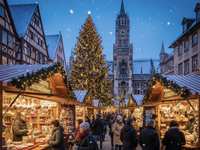
No. This is one of the most common misconceptions about slow travel, and it keeps people from trying it. Slow travel is a mindset applied to whatever time you have, not a minimum trip length. A single week spent entirely in the Cotswolds, rather than rushed across four countries, is slow travel. A three day weekend in New Orleans with only two planned activities and the rest left open is slow travel. Even our Spotlight on New York City Holiday journey, built around a specific season and a specific feeling rather than a packed checklist, reflects the same principle on a shorter timeline.
What matters is the ratio of planned to unplanned time, and the willingness to choose fewer things and give them more room to breathe.
What are the benefits of slow travel?
Travelers who slow down tend to come home describing their trip differently. Fewer people talk about how many places they saw. More people talk about a specific afternoon, a specific person they met, a moment that stuck with them. That is not a coincidence. Depth creates memory in a way that speed rarely does.
There are practical benefits too. Slower itineraries tend to reduce the exhaustion that comes with constant packing, unpacking, and transit. They allow for genuine cultural immersion rather than a surface level tour. And for group journeys especially, a slower pace often means a more cohesive experience, since the group is not rushing to keep a bus schedule but settling into a shared rhythm together.
How do you plan a slow travel itinerary?
Planning a slow itinerary starts with subtraction, not addition. Instead of asking what else can we fit in, we ask what can we take out. A good starting point is choosing one region rather than several, then identifying two or three experiences that genuinely matter to you, and building loose structure around those, with everything else left open.
Marina, one of our travel concierges, spent years living overseas before joining Rossnaree, and she often tells clients that the trips she remembers most clearly were never the ones with the fullest itinerary. She still talks about an afternoon in Cambodia that was not on any schedule at all, simply time spent wandering with no particular destination in mind. That is the instinct we try to build into every itinerary, not as an afterthought, but as the starting point.
Mary, who designs both solo and guided touring itineraries across Europe, the Middle East, and Central America, applies the same principle even to multi-stop trips. Rather than treating each stop as a box to check, she builds in enough time at each one that travelers leave with a real sense of the place, not just a photograph of it.
Is slow travel more expensive than typical travel?
Not necessarily. In some cases it is more affordable, since fewer transitions mean fewer flights, fewer transfers, and less money spent simply moving between places rather than experiencing them. Staying longer in one region can also open up accommodation and rental options that are not available or cost effective for a one or two night stay. The bigger shift is not usually in the budget. It is in what the budget is spent on, favoring fewer, more considered experiences over a longer list of shorter ones.
How does a travel advisor help with slow travel planning?
Slow travel sounds simple in theory and is easy to get wrong in practice, mostly because it requires resisting the urge to add just one more stop. A travel advisor who has actually lived and traveled internationally brings a different instinct to that conversation than a booking engine ever could.
Ursula, our founder, built her own life around this same philosophy long before Rossnaree existed, living and working across England, Spain, Southeast Asia, and Australia rather than passing through any of them quickly. Ana, one of our travel concierges who grew up in Mexico, brings that same firsthand understanding of what it means to actually know a place rather than simply visit it. Between our team’s own travel experience and the itineraries we build every day, slow travel is less a service we offer and more a lens we apply to every trip that comes across our desks, whether it is a two week custom journey or a single weekend away.
Frequently Asked Questions
What is slow travel in simple terms?
Slow travel means planning a trip around fewer destinations and longer stays, with unstructured time built in, rather than moving quickly through as many places as possible in a fixed amount of time.
Can slow travel work for a short trip?
Yes. Slow travel is a mindset, not a minimum trip length. A single unhurried weekend with only one or two planned activities reflects the same principle as a monthlong trip abroad.
Is slow travel the same as sustainable travel?
The two overlap but are not identical. Slow travel often has a lighter environmental footprint because it involves less transit between destinations, but its primary focus is depth of experience rather than environmental impact specifically.
Does slow travel mean having no itinerary at all?
No. A well-planned slow itinerary still includes a handful of meaningful, well-chosen experiences. The difference is that it leaves generous space around them, rather than filling every hour.
Is slow travel a good fit for group trips?
Yes, particularly for hosted or guided journeys where the pace is shared among the group. A slower, less rushed schedule often makes the group experience feel more cohesive rather than transactional.
How do I start planning a slow travel trip?
Start by choosing one region instead of several, and identify two or three experiences that matter most to you. A travel advisor can help build the rest of the itinerary around that foundation, rather than around a checklist.
This post reflects the travel planning philosophy of Rossnaree Travel. For a custom itinerary designed around depth rather than distance, reach out to our team directly.