- Categories :
- More
- Home Page
- All About Kids
- Apartments & Rentals
- Automotive & Cars
- Best of The Woodlands
- Between The Trees
- Blogs
- Business Directory
- Business to Business
- Car Dealers Guide
- Church Guide
- Classifieds
- Commercial Real Estate
- Community Services
- Contests
- Dental Guide
- Education & Schools
- Election Guide 2026
- Electronics & Computers
- Email Lists
- Employment Guide
- Entertainment & Arts
- Events Calendar
- Family Life
- Food & Drink
- Government
- Halloween Guide
- Health & Medical
- Home Décor
- Home Improvement
- Homes For Sale
- Hotels Guide
- Industry & Research
- Insurance
- Internet & WWW
- Jobs Market
- Legal Services Guide
- Log-In - Register
- Marketplace
- Media Kit - Advertising
- Money & Finance
- Music & Nightlife
- News
- Parks Guide
- Patio Dining
- Personal Care & Beauty
- Pets
- Photo Galleries
- Podcasts
- Private School Guide
- Professional Services
- Real Estate Directory
- Religion
- Relocation Guide
- Restaurant Guide
- Seniors
- Shopping Guide
- Specials & Coupons
- Sports
- Sports Directory
- Travel
- Video Directory
- Visitors Guide
- Wedding Guide
- Yard & Garden
- Blogs /
- Home & Garden /
- HVAC & Plumbing Tips with Weiss Air Conditioning & Plumbing /
- 7 HVAC Installation Questions Montgomery, TX Homeowners Ask
7 HVAC Installation Questions Montgomery, TX Homeowners Ask
By:
Weiss Air Conditioning and Plumbing
| Published 11/02/2026
HVAC Installation at a Glance
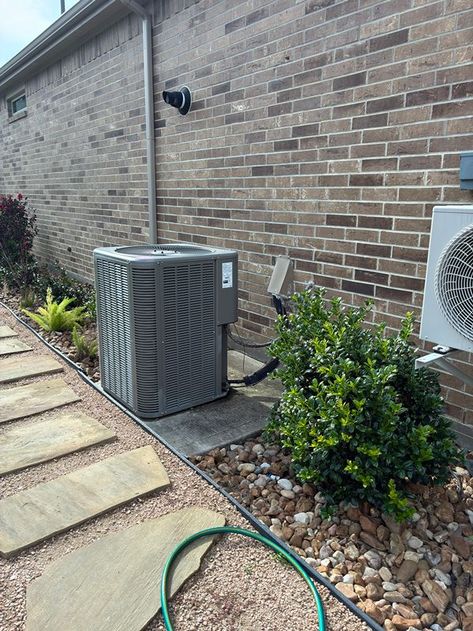
A standard residential HVAC replacement typically takes 1-2 days to complete. Total installation costs vary based on home size, SEER2 efficiency ratings, and ductwork modifications, but most complete system replacements range between $7,000 and $14,000+. To ensure long-term comfort, both indoor and outdoor units should be replaced as a matched system and sized accurately.
Investing in a new heating and cooling system is one of the most significant upgrades you can make for your home. Because an HVAC replacement involves substantial financial decisions and home access, feeling uncertain about what happens behind the scenes is completely normal.
Whether you live in Walden, Bentwater, Grand Harbor, or Historic Montgomery, here are clear, straightforward answers to the top seven questions local homeowners ask before upgrading their home’s cooling system.

1. How Much Does a New HVAC Installation Cost?
System cost is almost always the first question Montgomery, TX homeowners ask. While every home is unique, a complete residential HVAC system replacement—including the outdoor condenser or heat pump, indoor air handler or furnace, and safety controls—typically ranges between $7,000 and $14,000+.
Key factors that influence your overall investment include:
-
Equipment Capacity: Sizing is critical in Southeast Texas. Larger or two-story homes require precise tonnage calculations to manage continuous cooling loads during 100°F+ summer stretches.
-
Efficiency Ratings (SEER2): High-efficiency variable-speed units cost more upfront but yield lower monthly operating costs.
-
Ductwork Modifications: Repairing, resizing, or replacing damaged attic or crawlspace ductwork adds labor and material costs.
-
Electrical Upgrades: Adding new disconnect boxes, electrical wiring, or breaker panels to meet current building codes.
We know an HVAC replacement is a major investment. To help fit your new system comfortably into your household budget, we offer flexible financing options with monthly payments and competitive rates upon approved credit.
2. How Long Does a Typical Installation Take?
For a standard residential change-out (replacing an existing indoor and outdoor unit in the same location), a professional installation crew can complete the job in 1-2 days.
The timeline may extend to two or three days if your project requires:
-
Installing brand-new ductwork throughout the home.
-
Reconfigure framing or closet spaces for a larger unit.
-
Converting a gas furnace system to a dual-fuel heat pump.
3. What Size HVAC System Does My Home Actually Need?
A common misconception is that buying the largest unit possible leads to better cooling. In reality, an oversized system will short-cycle—turning on and off rapidly—which prevents the unit from removing indoor humidity, leads to uneven room temperatures, and accelerates component wear. Conversely, an undersized system will run continuously without reaching your thermostat setpoint.
To determine exact sizing, a licensed technician performs a Load Calculation. This calculation factors in:
-
Total square footage and ceiling height.
-
Window placement, solar exposure, and insulation quality.
-
Local climate patterns and home orientation.
4. Should I Replace Both Indoor and Outdoor Units at the Same Time?
Replacing only the outdoor condenser while keeping an older indoor evaporator coil is one of the most expensive mistakes a homeowner can make.
Modern HVAC systems operate as matched pairs. Mixing new and old components causes several issues:
-
Invalidated Warranties: Manufacturers rarely honor parts warranties on unmatched equipment.
-
Reduced Efficiency: An old indoor coil restricts airflow and prevents new outdoor units from reaching advertised SEER2 efficiency ratings.
-
Premature Failures: Lingering contaminants or mismatched refrigerants from old components can ruin a new compressor.
5. What SEER2 Rating Should I Choose?
Efficiency for air conditioners and heat pumps is measured in SEER2 (Seasonal Energy Efficiency Ratio 2). The higher the number, the more energy efficient your system is. However, bigger numbers don’t automatically mean a better choice for your wallet—it comes down to finding the right payback balance for your home.
Standard Efficiency (14.3 to 15.2 SEER2)
These single-stage systems meet current minimum building codes and carry the lowest upfront installation cost. They operate much like an on/off light switch, running at 100% capacity whenever called. Standard systems are ideal if you are on a strict budget, preparing to sell your home in the near future, or replacing a unit in a home with lower overall cooling demands.
High Efficiency (16 to 18 SEER2) — The “Sweet Spot”
For most homeowners, this tier offers the ideal balance between upfront price and long-term utility savings. These units feature two-stage or variable-speed technology, running at lower capacity on moderate days to save energy while keeping room temperatures steady. If you live in a warm climate or plan to stay in your home for at least 5 to 7 years, the lower electric bills often pay off the upgrade cost.
Premium Efficiency (19+ SEER2)
Ultra-high efficiency systems offer maximum energy savings, whisper-quiet operation, and elite indoor humidity control. However, because the initial equipment cost is significantly higher, they make the most financial sense for long-term homeowners, properties in extreme-heat regions, or those looking to maximize local utility rebates and federal tax credits.
When deciding on a SEER2 rating, consider how long you plan to live in the home and your total budget. A licensed technician can help walk you through your options.
6. Will I Need to Replace or Modify My Existing Ductwork?
If your existing ductwork is structurally sound, properly insulated, and correctly sized for the airflow of your new system, it can often be reused.
During your home evaluation, technicians perform a static pressure test to inspect your duct system. If your ducts are leaky, undersized, or deteriorating, airflow restrictions will choke your new unit, causing high utility bills and frozen coils regardless of how efficient the new equipment is.
7. How Should I Prepare My Home for Installation Day?
Taking a few simple steps before the installation crew arrives helps ensure a smooth, efficient project:
-
Clear Access Paths: Ensure hallways, closets, attics, and outdoor areas surrounding the units are clear of furniture and personal items.
-
Secure Pets: Move dogs and cats to a safe, quiet room away from open doors and heavy equipment movement.
-
Reserve Driveway Space: Leave space in the driveway close to the entry point so technicians can unload heavy equipment and tools.
-
Be Available for Walkthrough: Plan to be home at the beginning and end of the day so the lead technician can review equipment operation and thermostat controls with you.
Schedule Your HVAC Installation Today
A high-performance HVAC unit is only as good as the team that installs it. At Weiss Air Conditioning & Plumbing, our licensed technicians ensure every system is proply calculated, fitted to local building codes, and tuned to handle extreme Southeast Texas heat and humidity.
-
Locally Owned & Operated: Based right here off Keenan Cut Off Rd in Montgomery, TX.
-
Fast, Neighborhood Service: Serving Walden, Bentwater, Woodforest, Conroe, Magnolia, Willis, The Woodlands, and Montgomery County, TX.
-
No-Risk Estimates: Straightforward pricing and flexible financing options upon approved credit.
Don’t Think Twice, Call Weiss!
This article was originally published on Weiss Air Conditioning & Plumbing's website. You can read the blog here: 7 HVAC Installation Questions Montgomery, TX Homeoweners Ask
-
Menu Links  :
- Blogs Home
- News
- Events
- Photos
- Videos
- Start Your Blog