- Categories :
- More
Best Outdoor Kitchen Countertops in Texas (and Why Not Quartz)
By:
 Allied Outdoor Solutions
| Published 11/17/2026


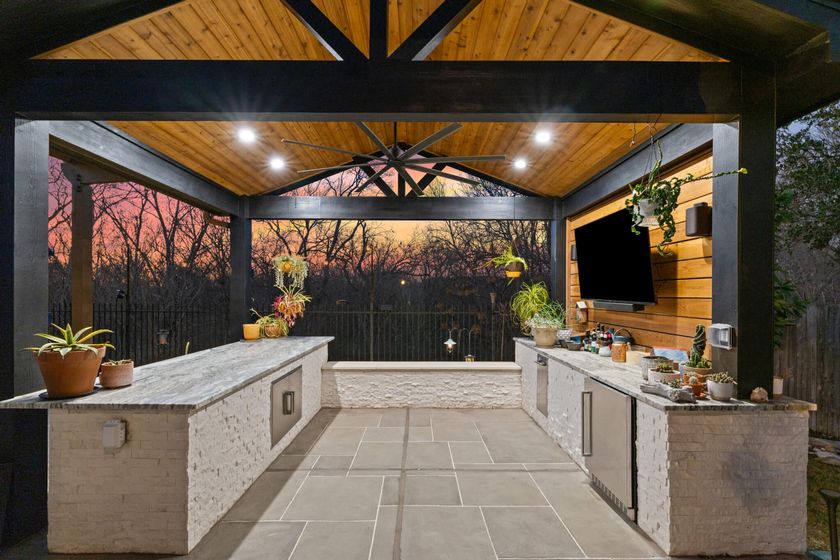
Granite, Lueders limestone and quartzite are three natural stones we commonly use for Texas outdoor kitchen countertops. All three handle heat and weather well, so the real question is which one suits the way you cook, the look you want and how much sun your kitchen gets.
And if quartz is on your list, keep reading. It sounds a lot like quartzite, but it’s a very different material, and it’s the one we steer homeowners away from outdoors.
Our outdoor kitchen design team helps homeowners choose countertops that fit their space and style, and this is the same comparison we walk through at the design table. Our family has been building for Texas homeowners since 1988, and since 2009, Allied Outdoor Solutions has transformed more than 25,000 Texas backyards. For a step-by-step look at matching materials to your space, see our guide on how to choose the best outdoor countertop materials.
Granite vs. Lueders Limestone vs. Quartzite at a Glance
|
Material |
Type |
Look |
Sun Exposure |
Best For |
|---|---|---|---|---|
|
Granite |
Natural stone |
Speckles, veining, varied colors |
Covered or uncovered |
Heavy-use outdoor kitchens |
|
Lueders limestone |
Texas limestone |
Beige, buff, gray, charcoal |
Covered or uncovered |
Rustic, Hill Country designs |
|
Quartzite |
Natural stone |
White and gray marble-like veining |
Covered or uncovered |
Marble look outdoors |
|
Engineered quartz |
Resin-based stone |
Consistent colors and patterns |
Indoor only |
Indoor kitchens |
1. Granite: Our Top Pick for Texas Outdoor Kitchens
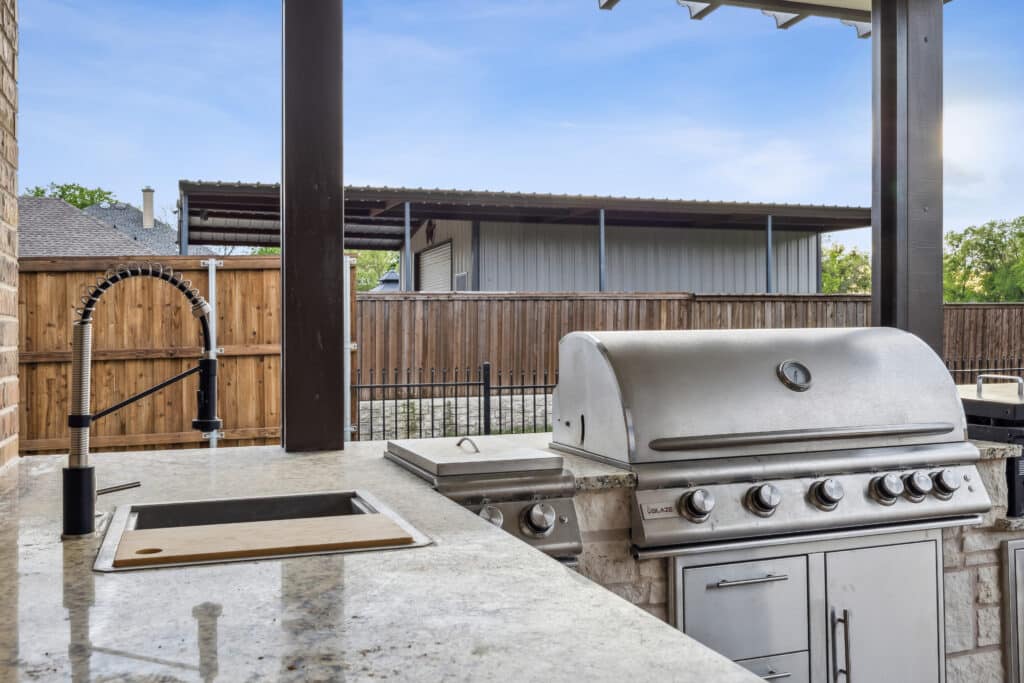 Grill heat and daily prep are no match for granite.
Granite is a go-to choice for outdoor kitchens and custom grill islands, and it’s our first recommendation for most Texas homes. It’s hard, dense and handles heat from built-in grills and hot pans without scorching. Plus, each slab has its own pattern, so no two kitchens look exactly alike.
For a higher-end look, ask about leathered granite. Instead of a high polish, a leathered finish gives the stone a textured, matte surface, so you get the color and movement of granite without the shine.
Best For: Homeowners who cook often and want a tough, low-fuss surface.
Why It Works: Granite resists scratches, chips and impacts, and you can set a hot pan directly on it. It also comes in a wide range of colors, from light grays and whites to deep blacks and greens.
One Thing to Know: Granite naturally resists moisture, but the Natural Stone Institute notes that many granite countertops still benefit from a quality sealer. We recommend checking the seal about once a year and resealing as needed. Also, wipe up grease and cooking oil quickly so they don’t have time to soak in.
Wondering which material fits your kitchen? Book your free, no-obligation design consultation, and we’ll give you an honest answer either way.
2. Lueders Limestone: The Texas Original
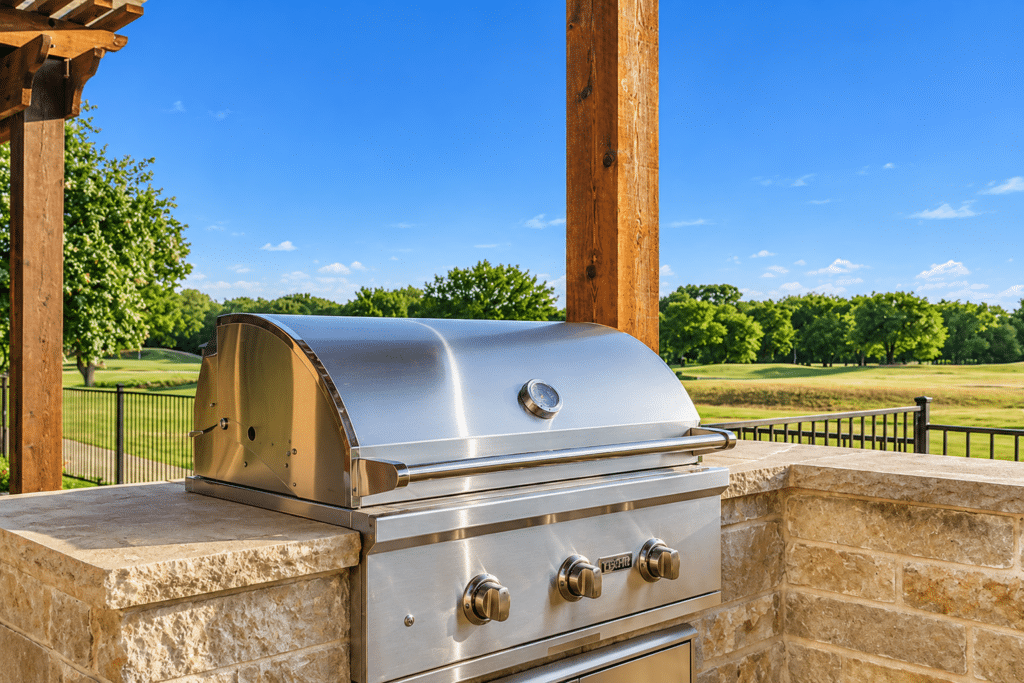 Warm, earthy tones make a grill island feel at home.
Lueders brings something the other stones can’t: it’s quarried right here in Texas, around the small town of Lueders near Abilene. Its natural beige, buff, gray and charcoal tones give an outdoor kitchen a warm, timeless look that feels at home in the Texas landscape.
We install Lueders limestone for homeowners in our Austin, Dallas, Fort Worth and San Antonio markets. It isn’t one of the materials we offer in Houston, where granite and quartzite are our go-to natural stones.
Best For: Rustic, ranch and Hill Country designs, or a Texas stone outdoor kitchen that ties into nearby stone walls and fire features.
Why It Works: Lueders is denser and less absorbent than many other limestones, so it stands up to weather, wear and everyday use.
One Thing to Know: Even so, we recommend sealing it to boost stain and moisture resistance, especially around the grill. Like all limestone, it can also etch from acidic spills such as citrus, vinegar and wine, so wipe those up quickly.
3. Quartzite: The Look of Marble, Built for the Outdoors
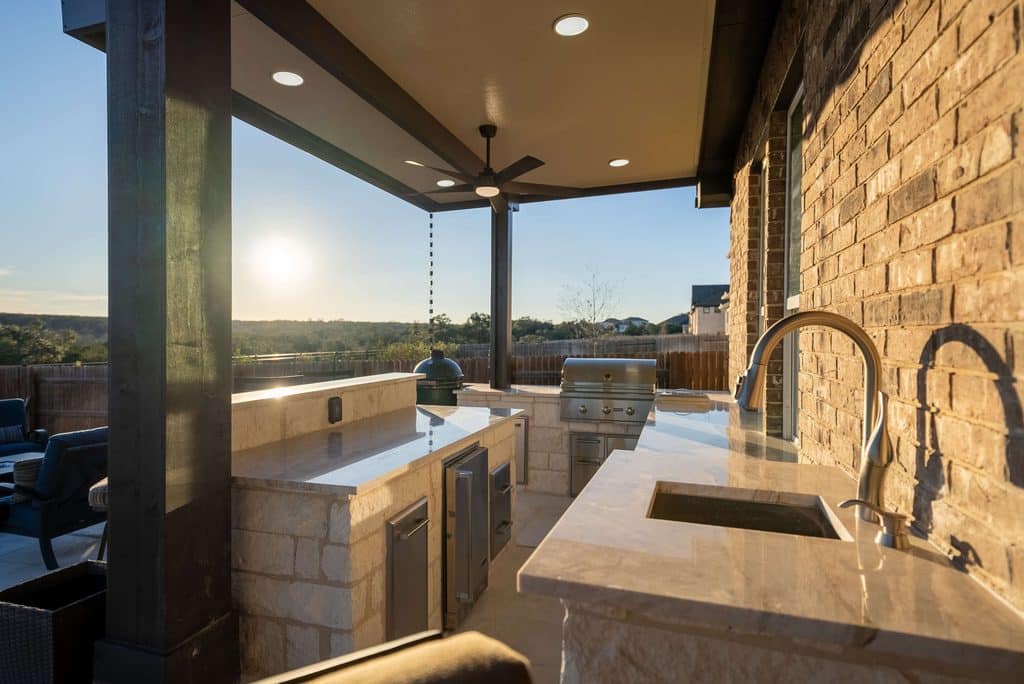 Marble-style veining that holds up outdoors.
Quartzite is a natural stone, quarried like granite, and one of the most striking countertop options for outdoor kitchens. In fact, it often has the soft veining and movement people love in marble. The difference is durability: quartzite is extremely hard and dense, so it stands up to outdoor use far better than marble.
Best For: Homeowners who want the elegant look of marble in an outdoor kitchen, covered or uncovered.
Why It Works: Quartzite resists scratches, heat and UV rays, and it’s generally less porous than granite or marble. Plus, it typically comes in whites and grays, sometimes with hints of blue or green.
One Thing to Know: Don’t confuse quartzite with quartz. The names are similar, but quartzite is a natural stone, while quartz is an engineered product made with resin. Like granite, quartzite also benefits from periodic sealing to boost stain resistance.
What About Quartz? Why We Avoid It Outdoors
Engineered quartz is made mostly of ground natural quartz held together with resin. That’s why it’s a popular indoor countertop: every slab has a consistent color and pattern. Outdoors, though, standard engineered quartz is the one material we steer homeowners away from.
In our experience, the resin in standard engineered quartz can yellow, warp and crack under the Texas sun within a year or two. Manufacturers know it, too: many don’t approve their standard quartz for outdoor use. If you love the clean, bright look of quartz, ask us about a light-colored quartzite or granite instead.
Granite vs. Lueders Limestone vs. Quartzite: How to Choose
All three natural stones are proven performers, so choosing between granite, Lueders limestone and quartzite comes down to your space, your style and where you live:
- Your kitchen gets direct sun. Choose a light-colored granite, quartzite or Lueders limestone. Light colors reflect heat and stay more comfortable to the touch.
- You cook a lot. In that case, granite is the most forgiving choice for hot pans, heavy cookware and daily wear.
- You want a high-end, non-shiny look. Ask about leathered granite for a textured, matte finish.
- You love the look of marble. Then quartzite gives you similar veining with far more durability outdoors.
- Rustic style is your thing. Outside Houston, Lueders limestone pairs beautifully with stone veneers, stone fireplaces and rustic finishes.
- Your kitchen sits under a full patio cover. Any of these three natural stones will work, so let your style decide.
Build Details That Help Any Countertop Last
Even the best countertop needs a well-built island underneath it, which is why choosing trusted outdoor kitchen contractors matters as much as choosing the slab. These details make the biggest difference:
- Solid support. First, an outdoor kitchen is heavy enough that it needs a concrete footer poured beneath it to support the island and countertop.
- Supported overhangs. Bar-height overhangs need hidden brackets or corbels so the countertop doesn’t stick out too far without support.
- Fewer seams. For example, planning the island and its outdoor kitchen layout around slab sizes means fewer joints where moisture and grime can collect.
- Softer edges. In general, eased or rounded edges resist chipping better than sharp, square edges.
- A cover overhead. Finally, a patio cover protects your countertops, appliances and the cook from sun and rain.
Dreaming of all your backyard possibilities? View our outdoor kitchen project gallery for more ideas.
Frequently Asked Questions
Choosing a Countertop
For most Texas outdoor kitchens, granite is the best all-around choice. It’s tough, handles heat well and comes in polished or leathered finishes. Quartzite is a great natural option if you want a marble look, and Lueders limestone suits rustic designs in our Austin, Dallas, Fort Worth and San Antonio markets.
Neither is better for everyone. Granite handles heat exceptionally well and comes in more colors and finishes, while Lueders limestone offers warm, natural Texas tones. Lueders is more sensitive to acidic spills like citrus and wine, but both hold up well outdoors when properly sealed.
Lueders limestone is a dense natural stone quarried around the town of Lueders, near Abilene in West Texas. Its earthy beige, buff, gray and charcoal tones make it a popular choice for rustic and Hill Country outdoor kitchens, and we install it in our Austin, Dallas, Fort Worth and San Antonio markets.
Quartz, Care and Cost
Quartzite is a natural stone quarried from the earth, while quartz is an engineered product made from ground quartz and resin. As a result, quartzite often has marble-like veining and holds up well outdoors. Standard engineered quartz is designed for indoor use, and its resin can yellow, warp and crack in the Texas sun.
We don’t recommend standard engineered quartz for Texas outdoor kitchens. In our experience, its resin can yellow, warp and crack in the sun within a year or two, and many manufacturers don’t approve it for outdoor use. Instead, quartzite or a light-colored granite gives you a clean look that’s built for the outdoors.
Many granite countertops benefit from a quality sealer, and we recommend checking the seal about once a year. Lueders limestone and quartzite also benefit from periodic sealing. Your Project Manager can recommend the right schedule for your countertop, and you’ll find more on our warranty and maintenance page.
It depends on the material, the slab you choose, how much counter space you need and details like finishes, edges and overhangs. We’ll price granite, quartzite and, where available, Lueders limestone side by side at your free, no-obligation consultation, and financing options are available with monthly payment plans.
Ready to Choose Your Outdoor Kitchen Countertop?
Whether you’re leaning toward granite, quartzite or Lueders limestone, the right material depends on how you cook, the look you love and how much sun your kitchen gets. Either way, we’ll help you compare slabs during our design and build process and create an outdoor kitchen that’s built to last. For a broader look at budgeting, see what drives outdoor renovation costs in Texas.
Your consultation is free, with no obligation. And the best room in your house might turn out to be the one without walls.
Book your free design consultation today