

A breaker that trips once after a busy evening in the kitchen may be doing exactly what it is supposed to do. A breaker that will not stay on, trips without an obvious cause, or leaves part of your home without power needs closer attention. Knowing how to fix tripping breakers starts with knowing when a simple reset is reasonable and when the safest choice is to stop and call a licensed electrician.
Circuit breakers protect your wiring from overheating, shock hazards, and damage. Resetting one may restore power, but it does not correct the condition that caused it to trip. The goal is not to keep a breaker on at all costs. The goal is to identify the load, appliance, outlet, or wiring issue behind the trip and address it safely.
Start With a Safe Breaker Reset
Before opening your electrical panel, turn off lights and unplug appliances on the affected circuit. This reduces the electrical load when you reset the breaker and helps you narrow down what may be causing the problem.
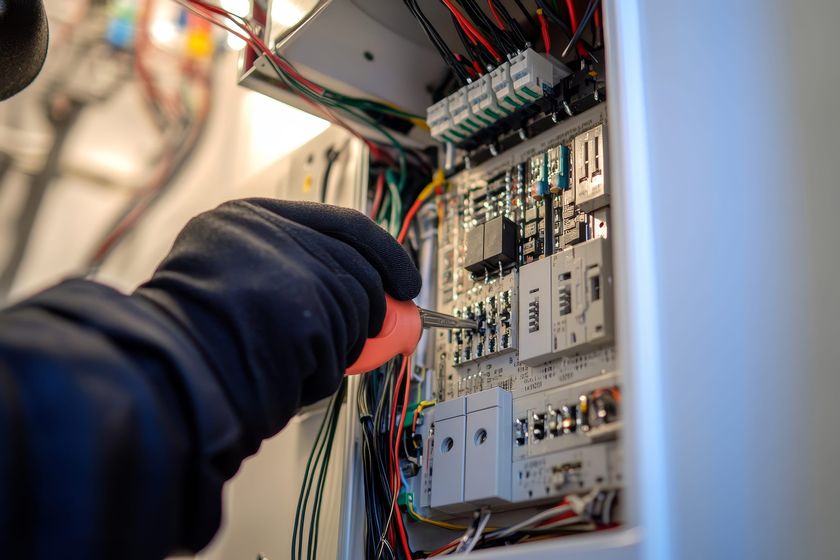
At the panel, look for a breaker that is sitting between the ON and OFF positions, or one that is clearly switched off. To reset it, move the breaker firmly all the way to OFF first, then back to ON. Some breakers will not reset unless they are fully moved to the OFF position before being turned back on.
If it stays on, wait a moment before reconnecting appliances. Plug items back in one at a time and use the circuit normally. If the breaker trips after a particular appliance is plugged in or switched on, leave that item unplugged. The appliance, its cord, or the outlet it uses may be the issue.
Do not keep resetting a breaker that immediately trips. Do not hold it in the ON position, replace it with a larger breaker, or bypass it in any way. Those actions can allow wiring to overheat and create a serious fire risk.
Why Your Breaker Keeps Tripping
A tripped breaker is usually tied to one of four conditions: an overloaded circuit, a short circuit, a ground fault, or a failing appliance or electrical component. The timing of the trip often provides a useful clue.
An overloaded circuit
Overloads are common in older homes and in rooms where many high-demand appliances share one circuit. A bathroom circuit might trip when a hair dryer and space heater run together. In the kitchen, a toaster oven, coffee maker, air fryer, and microwave can quickly exceed what one circuit can safely carry.
Houston-area homeowners also see this issue with portable air conditioners, garage refrigerators, power tools, and holiday lighting. If the breaker trips only when multiple items run at the same time, reduce the load and avoid relying on extension cords or power strips as a permanent solution.
The long-term fix may be as simple as changing how appliances are used. It may also require adding a dedicated circuit, especially for an appliance that draws substantial power. A licensed electrician can determine whether the circuit is overloaded, undersized for its intended use, or improperly shared.
A short circuit
A short circuit happens when a hot wire contacts a neutral wire or another unintended conductive path. It can cause a breaker to trip immediately and may be accompanied by a burning smell, buzzing, a spark, or a discolored outlet.
Do not investigate inside outlets, switches, appliances, or the panel yourself. Turn off the breaker and leave it off. A short can be caused by damaged insulation, loose connections, worn appliance wiring, pests, moisture, or a problem hidden inside a wall or junction box. Finding it requires proper testing and safe access to the circuit.
A ground fault
Ground faults are especially common where water or damp conditions are present, including bathrooms, kitchens, garages, laundry rooms, patios, and exterior outlets. Ground-fault circuit interrupter, or GFCI, protection is designed to shut off power quickly when it detects electricity traveling along an unsafe path.
If outlets in one of these areas lose power, look for a GFCI outlet with TEST and RESET buttons. It may be in the same room, a nearby garage, an exterior location, or another area on the same circuit. Unplug connected items, press RESET once, and see whether power returns. If it will not reset or trips again, stop there and schedule service.
A failing appliance, outlet, or breaker
Sometimes the circuit wiring is fine, but an appliance is not. A refrigerator compressor, dishwasher, disposal, washing machine, sump pump, power tool, or HVAC-related equipment can develop an electrical fault that trips the breaker when it starts.
An aging outlet, loose wire connection, or worn breaker can also cause trouble. Breakers do wear over time, but a breaker replacement should never be treated as a guess. If the underlying circuit has a fault, a new breaker will trip too, and replacing it without diagnosis can miss the real safety concern.
How to Fix Tripping Breakers by Isolating the Cause
A careful process can help you provide useful information to an electrician without exposing yourself to electrical hazards. Begin by noting which rooms, outlets, and fixtures lost power. If your panel directory is labeled, record the circuit name and breaker number. If it is not labeled clearly, that is worth correcting during a future panel service.
With the breaker off, unplug everything on the affected circuit. Reset the breaker once. If it remains on with nothing connected, reconnect devices individually. When a specific item causes a trip, leave it disconnected and have the appliance repaired or replaced as appropriate.
If the breaker trips with every appliance unplugged, the problem is more likely in fixed wiring, an outlet, a light fixture, a switch, or a hardwired appliance. This is not a do-it-yourself repair. The circuit needs professional troubleshooting with the correct test equipment.
Pay attention to patterns. Does the breaker trip only when rain is heavy? Moisture may be affecting an outdoor outlet, landscape lighting connection, or underground wiring. Does it trip when the air conditioner starts, the dryer runs, or the garage door opens? The circuit may be overloaded, or the equipment may have a developing fault. These details help a licensed electrician diagnose the issue more efficiently.
Signs You Should Call an Electrician Right Away
Some breaker issues are urgent. Turn off power to the affected circuit, avoid using it, and arrange professional service promptly if you notice any of the following:
- A burning odor, smoke, sparks, popping sounds, or a warm electrical panel
- Scorch marks, melted plastic, discoloration, or a loose-feeling outlet or switch
- A breaker that trips immediately after being reset, even with devices unplugged
- Repeated tripping involving major appliances, HVAC equipment, a well pump, or a generator connection
- Flickering lights, buzzing, partial power loss, or multiple circuits behaving unpredictably
- Water near outlets, the panel, electrical equipment, or wiring
If you see smoke, active sparking, or signs of fire, move away from the area and contact emergency services. Do not touch a wet electrical panel or attempt to reset breakers near standing water.
When a Panel Upgrade May Be the Better Fix
Frequent breaker trips can reveal a larger issue with an older electrical system. Many Magnolia homes have added modern electrical demands over the years: larger kitchen appliances, home offices, EV chargers, pool equipment, security systems, smart devices, and backup generators. The original panel and circuit layout may not have been designed for that load.
A panel upgrade is not automatically necessary just because a breaker trips. In many cases, a dedicated circuit or targeted repair is the more practical and cost-effective answer. However, if the panel is full, outdated, damaged, difficult to label, or regularly strained by current household needs, a professional evaluation can clarify the safest path forward.
Adding whole-home surge protection can also help protect sensitive electronics and appliances from voltage spikes, though it will not correct an overloaded or faulty circuit. Each solution has a different purpose, which is why accurate diagnosis matters before any work begins.
Protect Your Home With a Clear Diagnosis
The best repair is based on evidence, not repeated resets or guesswork. A licensed electrician can test the circuit, inspect connections and devices, confirm the breaker type and condition, and explain the repair options in plain language. That may mean replacing a damaged outlet, repairing wiring, adding a dedicated circuit, correcting GFCI protection, or upgrading the panel to support your home safely.
For homeowners who want honest answers and code-compliant work, Logo Electrical Services provides residential electrical troubleshooting throughout Magnolia and surrounding Houston-area communities. A prompt inspection can prevent a small nuisance trip from becoming a damaged circuit, appliance failure, or safety hazard.
A breaker that trips is your home asking for attention. Treat that warning with care, and you will protect both the electrical system behind your walls and the people who rely on it every day.