- Categories :
- More
Rewiring Hope: How Ketamine Treatment at The Woodlands Wellness and Mind Spa Supports the Brain's Natural Ability to Heal
By:
 The Woodlands Wellness and Mind Spa, LLC
| Published 08/25/2026
The Woodlands Wellness and Mind Spa, LLC
| Published 08/25/2026


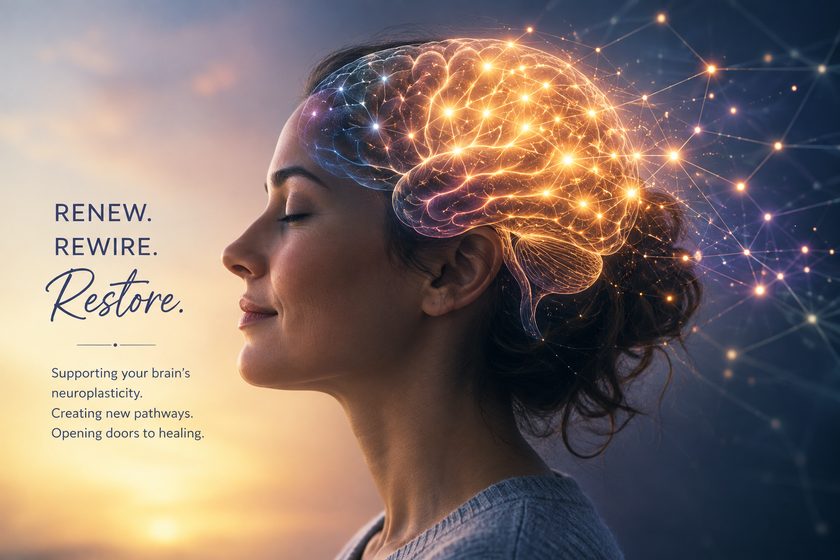
There's a moment many of our patients describe when they first come to us, which is a kind of exhaustion that goes beyond tiredness. It's the exhaustion of trying medication after medication, of waiting six to eight weeks to find out if something might work, of wondering if their brain is simply "stuck." If that sounds familiar, we want you to know something important: it's not a lack of willpower, and it's not because you haven't tried hard enough. It may be that your brain's own capacity for change — its neuroplasticity — needs a different kind of support to come back online.
At The Woodlands Wellness and Mind Spa, ketamine treatment is one of the ways we help make that support possible.
What Neuroplasticity Actually Means
Neuroplasticity is simply the brain's ability to form new connections, strengthen existing ones, and adapt in response to experience. It's how we learn, how we recover from injury, and how we heal from depression, anxiety, and chronic stress.
When someone lives with depression or treatment-resistant anxiety for a long time, research has consistently shown that the brain's neuroplasticity can become impaired. Depression is strongly linked to abnormalities in neuroplasticity, observed through neuroimaging and pharmacological studies, and brain regions like the prefrontal cortex and hippocampus can show reduced volume and connectivity in people who are depressed. In other words, it's not just that the mind feels stuck. The brain's circuitry can genuinely become less flexible, less able to form the new pathways needed for recovery.
This is where ketamine offers something different.
How Ketamine Helps the Brain Reopen Its Own Doors
Ketamine works on a different neurotransmitter system than most traditional antidepressants. Rather than primarily targeting serotonin, ketamine acts on the brain's glutamate system as an NMDA receptor antagonist. In doing so, it appears to trigger a state of enhanced, glutamate-driven neuroplasticity in the very brain regions involved in mood and emotional regulation.
In practical terms, animal and human studies suggest ketamine can open a window of synaptic plasticity in the hours after treatment, during which the brain forms new synaptic connections in the prefrontal cortex. This process is closely tied to increases in a protein called BDNF (brain-derived neurotrophic factor), which supports the growth and survival of neurons — a pathway that ketamine appears to stimulate.
We like to describe it to our patients this way: if depression narrows the brain's pathways, ketamine helps widen them again and creates a window of opportunity where new, healthier patterns of thought and emotional response have room to take root.
How This Differs From Traditional SSRIs
We deeply respect the role SSRIs (selective serotonin reuptake inhibitors) have played in mental health treatment for decades. For many people, they are effective, and we never suggest patients stop taking a medication that's working without a conversation with their prescribing physician. But SSRIs and ketamine work in meaningfully different ways, and understanding that difference matters.
Mechanism. SSRIs work by increasing the availability of serotonin in the brain over time. Ketamine works primarily through the glutamate system, and its involvement in glutamatergic neuroplasticity has become one of the most well-supported explanations for how it relieves depression — one that some researchers now consider more compelling than the traditional serotonin-focused model.
Timeline. This is often the difference patients feel most. SSRIs typically take four to eight weeks of daily use to produce noticeable effects. Ketamine works differently: a single treatment can improve depressive symptoms within about four hours, with effects that may last three to seven days. For someone in real distress, that difference in timeline can be profound- and life-saving.
Population. Ketamine has shown particular promise for people who haven't found relief elsewhere. It has emerged as one of the most promising pharmacological treatments for depression since SSRIs first became available, especially for individuals who have not responded to other therapies, and it has also been shown to help patients whose depression was resistant to electroconvulsive therapy, while easing suicidal ideation.
Neither approach is "better" in every case — they simply work through different biological doors. For some patients, ketamine is a bridge: something that creates rapid relief and renewed neuroplasticity while other, longer-term supports (therapy, lifestyle changes, sometimes traditional medication) have the chance to take hold.
A Patient-Centered Approach
We want to be honest with you: ketamine is not a cure-all, and it is not the right fit for everyone. It's a powerful tool that works best as part of a broader, personalized plan that includes clinical support, integration, follow up and social prescription. Research in this space is still evolving, and reputable providers will always talk with you openly about what's known, what's still being studied, and what makes sense for your specific history and goals.
What we can offer is this: a calm, supportive space where your history is heard, your questions are welcomed, and your treatment plan is built around you — not a one-size-fits-all protocol. If you've felt stuck, we want you to know that "stuck" is not the same as "unchangeable." The brain's capacity to rewire itself doesn't disappear — sometimes it just needs the right conditions to begin again.
If you're curious whether ketamine treatment might be part of your path forward, we'd love to talk with you.
Anita Bangale, MD, FACEP