- Categories :
- More
Where Did Halloween Come From? The Irish Origins of Samhain
By:
 Rossnaree Travel
| Published 10/27/2026


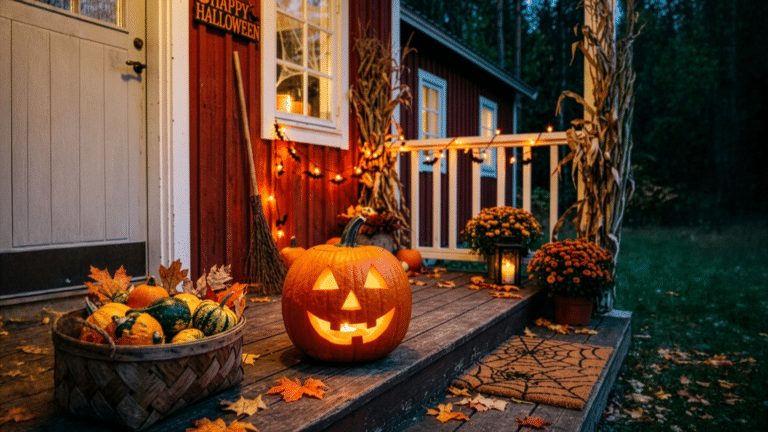
Halloween comes from Ireland. It began more than 2,000 years ago as Samhain (pronounced SOW-in), the Celtic festival that marked the end of the harvest and the beginning of winter, when the boundary between the living and the dead was believed to grow thin. Tradition places its birthplace at Tlachtga, the Hill of Ward, in County Meath, part of the same Boyne Valley landscape that gave Rossnaree Travel its name.
Long before the porch lights and the candy bowls, there was a hilltop, a fire, and a community gathered against the coming dark. The costumes, the carved lanterns, the knock at the door; nearly all of it traces back to that night. This is the story of where Halloween began, how it crossed the Atlantic, and how you can stand in the place where it started.
What is Samhain, and how is it connected to Halloween?
Samhain was one of the four great seasonal festivals of the old Gaelic year, alongside Imbolc, Bealtaine, and Lughnasa. It ran from sunset on October 31 to sunset on November 1, and it marked a turning point. The harvest was in, the cattle had come down from their summer pastures, and the bright half of the year gave way to the dark. Many describe it as the Celtic New Year, a threshold between one cycle and the next.
Thresholds were powerful things in the Celtic imagination. At Samhain, the veil between this world and the Otherworld was said to be at its thinnest. Ancestors could find their way home, so families set a place for them at the table. Other spirits were less welcome, so people lit great fires and disguised themselves to pass unnoticed among whatever might be wandering.
When Christianity took root in Ireland, the old festival was folded into the new calendar rather than erased. The church marked November 1 as All Saints’ Day, also called All Hallows, which made the night before All Hallows’ Eve. Say it quickly, over a few centuries, and it becomes Halloween. The name changed. The fires, the disguises, and the sense that this one night belongs to something older never really left.
Where in Ireland did Halloween begin?
The answer most often given is a low green hill outside the town of Athboy in County Meath. Tlachtga, known today as the Hill of Ward, is traditionally held to be the site of the great fire of Samhain. Medieval Irish accounts describe hearth fires across the country being put out so they could be relit from its flame, and archaeological excavations on the hill have uncovered evidence of large-scale burning and ceremonial use stretching back many centuries.
It does not stand alone. Roughly twelve miles away is the Hill of Tara, seat of the High Kings, where the passage of the Mound of the Hostages is aligned with the rising sun around Samhain. Farther west, at Rathcroghan in County Roscommon, a narrow cave called Oweynagat is remembered in legend as a doorway to the Otherworld, the place from which the spirits of Samhain emerged.
For Rossnaree Travel, this is home ground. Our name comes from a small village on the banks of the River Boyne, a name that means “wood of kings,” in the valley that also holds Newgrange. Our founder, Ursula Blackburne, was raised near the Boyne Valley before a career in travel carried her to England, Spain, Southeast Asia, Australia, and eventually Texas. The story of Halloween and the story behind our name begin in the same few miles of Irish countryside.
Which Halloween traditions come from Ireland?
More than most people realize. The customs that feel most American on October 31 are, in many cases, Irish ones that learned a new accent.
- Costumes. Dressing up began as disguise. If the spirits were abroad at Samhain, the safest way to travel was to look like one of them. The practice became known as guising.
- Jack-o’-lanterns. The first ones were carved from turnips, not pumpkins. Irish folklore tells of Stingy Jack, a trickster condemned to wander the dark with only a burning coal inside a hollowed turnip to light his way.
- Trick-or-treating. Children and young people went door to door in disguise, offering a song, a verse, or a prayer in exchange for food, fruit, or nuts.
- Fortune-telling foods. Barmbrack, a spiced fruit loaf, is still baked with a ring hidden inside. Find it in your slice and, the tradition says, a wedding is coming.
Bonfires belong on the list as well. They remain a fixture of Halloween night across Ireland, a direct echo of the fires once lit on the hills of Meath.
How did Halloween get from Ireland to America?
It came by ship. In the nineteenth century, and especially during the years of the Great Famine in the 1840s, Irish families arrived in the United States in enormous numbers. Along with Scottish immigrants who shared many of the same customs, they brought Halloween with them, the guising, the lanterns, the games, and the stories.
America added its own chapter. Pumpkins, native to North America, turned out to be larger, softer, and far easier to carve than a turnip, and the jack-o’-lantern took on the shape the world now recognizes. By the early twentieth century, Halloween had become a community celebration across the country, and by mid-century trick-or-treating was a neighborhood ritual.
The holiday has since traveled home again. Ireland today celebrates with pumpkins on doorsteps and barmbrack on the table, the borrowed and the original sitting side by side.
How is Halloween celebrated in Ireland today?
With a great deal of fire, music, and pride. Two celebrations stand out for travelers.
The Púca Festival, County Meath. Held in the towns of Trim and Athboy, this is Samhain returned to its source. The 2026 festival runs October 29 to November 1. A torchlit procession moves through Trim with the medieval castle as its backdrop, and on Halloween night the Samhain fire is lit in Athboy, close to Tlachtga itself. Guided walks of the hill, storytelling, live music, and harvest food fill the days between. The festival takes its name from the púca, a shape-shifting spirit of Irish folklore.
Derry Halloween, Northern Ireland. The walled city of Derry hosts what is often billed as the largest Halloween celebration in Europe, with a carnival parade through the old streets and fireworks over the River Foyle.
Beyond the festivals, Halloween in Ireland is still a night kept at home and in the village. Bonfires on the green, children in costume, a loaf of brack cut carefully at the kitchen table. It is quieter than the American version, and in many ways closer to the original.
When is the best time to visit Ireland for Halloween?
Plan to arrive in the last week of October and stay into the first days of November. This gives you time to settle in before the festival nights and to linger afterward, when the crowds thin and the countryside is at its most atmospheric.
Expect cool, changeable weather, with daytime highs typically in the low to mid 50s Fahrenheit, early sunsets, and a fair chance of rain. Pack layers and a proper waterproof jacket. In return, you get a season most visitors never see: low golden light over the Boyne, turf smoke on the evening air, and a seat by the fire that you will not have to fight for.
A well-paced Samhain itinerary might begin with two or three nights in Dublin, then move into the Boyne Valley for Newgrange, the Hill of Tara, Trim Castle, and Tlachtga. From there, travelers often continue north to Derry or west toward Roscommon and Galway. Depth over distance is the rule. This is a trip built around a few meaningful places, not a race around the island.
How do you plan a Samhain trip to Ireland?
Start early, and start with the dates. Festival weekends in small Irish towns have limited rooms, and accommodation near Trim and Athboy fills well in advance. Halloween 2027 falls on a Sunday, which makes it a natural long weekend to build a longer journey around. We recommend beginning the conversation nine to twelve months ahead.
This is where an advisor earns their keep. Rossnaree Travel designs every Ireland itinerary from scratch, with no templates, and our team brings firsthand knowledge to the details that matter: which country house hotels sit within easy reach of the festival towns, how to reserve timed entry at Newgrange, when to hire a private driver so no one has to navigate dark rural roads after the fire is lit. Ursula knows this landscape as someone who grew up beside it, and Mary, who designs our multi-stop European itineraries, shapes the route so the days breathe.
Rossnaree Travel was named Best Travel Agency in The Woodlands by Best of The Woodlands in both 2025 and 2026, and we support our travelers around the clock, before, during, and after the trip. If Ireland in the dark half of the year is calling, you can explore our Ireland destination page or start a conversation with our team.
Frequently asked questions about Halloween’s Irish origins
Did Halloween really start in Ireland?
Yes. Halloween grew out of Samhain, a Celtic festival observed in Ireland for more than 2,000 years. Tradition identifies Tlachtga, the Hill of Ward in County Meath, as the site of its great ceremonial fire. Related customs were also kept in Scotland and other Celtic regions.
How do you pronounce Samhain?
Samhain is pronounced SOW-in, with the first syllable rhyming with “cow.” In the Irish language, Samhain is also the word for the month of November.
Is Samhain the same as Halloween?
Not exactly. Samhain is the ancient seasonal festival marking the start of winter. Halloween is the modern holiday that developed from it after the Christian feast of All Hallows was placed on November 1, making October 31 All Hallows’ Eve.
Why were jack-o’-lanterns originally carved from turnips?
Turnips were the root vegetable on hand in Ireland, and the legend of Stingy Jack describes him carrying a coal inside a hollowed turnip. Irish immigrants in America switched to pumpkins because they were plentiful and much easier to carve.
What is the Púca Festival?
The Púca Festival is an annual celebration of Samhain held in Trim and Athboy, County Meath. It features a torchlit procession, the lighting of the Samhain fire, music, storytelling, and guided walks of Tlachtga. In 2026 it runs from October 29 to November 1.
Is late October a good time to visit Ireland?
Yes, for travelers who value atmosphere over sunshine. The weather is cool and often wet, but crowds are lighter, the landscape is rich with autumn color, and the Halloween festivals offer an experience unavailable at any other time of year.
How far in advance should I book a Halloween trip to Ireland?
Nine to twelve months ahead is ideal. Hotels near the festival towns are limited and book early, and the best guides, drivers, and country house stays are reserved well before autumn arrives.
Some journeys take you somewhere new. Others take you back to where a story began. Ireland at Samhain does both; the fire is lit, the night is long, and the welcome is warm.
Every journey begins with a story. Let yours begin with Rossnaree Travel.
rossnareetravel.com | (281) 400-1305 | info@rossnareetravel.com