- Categories :
- More
Pickleball, Aging, and the Risks Caregivers Need to Talk About
By:
 Amada Senior Care North Houston
| Published 04/03/2026
Amada Senior Care North Houston
| Published 04/03/2026


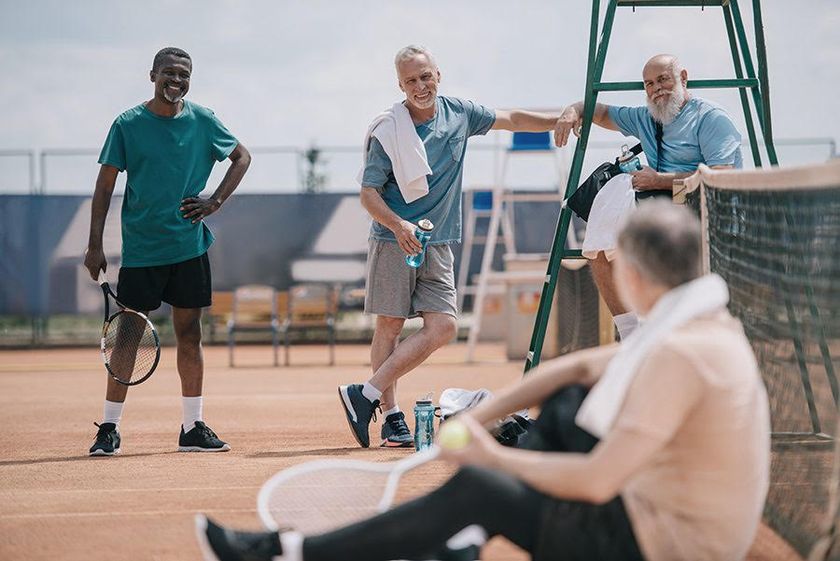
The recent death of Jeff Webb, “the founder of modern cheerleading” who reportedly suffered a fatal head injury after a fall while playing pickleball at age 76, is a heartbreaking reminder that a sport can be healthy, joyful, and community-building, and still carry serious risks for older players.
Pickleball Deserves Its Popularity Among Older Adults and Active Seniors
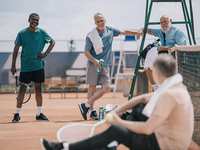
Pickleball is social, accessible, and easier to enter than many other racket sports, and for countless older adults it provides exactly what healthy aging experts want more people to have: movement, connection, competition, and routine. The Sports & Fitness Industry Association says 24.3 million Americans played pickleball in 2025, underscoring just how mainstream the sport has become. But as pickleball has grown, so has the dangerous misconception that because it looks manageable, it must also be low-risk for everyone.
For many older adults, especially those in their late 60s, 70s, and beyond, the issue is not whether pickleball is “too hard.” The issue is that aging changes the consequences of mistakes. A quick lunge, an awkward pivot, a backward stumble, or a loss of balance that might leave a younger player bruised can leave an older one with a fractured wrist, broken hip, or traumatic brain injury. CDC data show that falls are a leading cause of injury among older adults, with about 3 million emergency department visits and about 1 million hospitalizations each year tied to older-adult falls. The CDC also notes that in 2019, falls accounted for 83% of traumatic brain injury–related deaths among adults 65 and older. This matters in pickleball because falling is not incidental to the sport. It is one of the main injury pathways.
Pickleball Risks for Older Players: An Honest Conversation
Pickleball is especially appealing to seniors because it feels doable. The court is smaller. The paddle is light. The learning curve is friendly. Compared with sports that demand longer sprints or more sustained impact, it can seem gentler. But “gentler” does not mean gentle enough for every body on every day.
Older players are often working with quieter vulnerabilities: slower reaction time, reduced ankle stability, less lower-body power, diminished balance recovery, neck stiffness, osteoporosis or osteopenia, arthritis, blood thinners, vision changes, or simply less ability to absorb impact. Those are not signs of weakness. They are normal features of aging. Yet they can make the split-second demands of pickleball more consequential than they appear from the sideline.
This is particularly true for brain injury risk. When an older adult falls, the danger is not limited to the point of contact. Head trauma can be more serious because aging brains are more vulnerable, recovery is often harder, and medications such as anticoagulants can complicate bleeding risk after even what initially looks like a routine fall. There is another hard truth here: older athletes and active seniors do not just get injured more easily in some cases. They are also more likely to have injuries serious enough to require hospitalization.
Playing Pickleball with Age-Aware Respect
Informed of specific risks, what can families and caregivers do to keep pickleball-loving active seniors healthy and safe? First accept that there is no need to panic, or shame older adults out of sports, or talk about seniors as if fragility should keep them seated on the sidelines. Instead adopt the encouraging message that pickleball is worth playing, but it should be played with age-aware respect.
That means rethinking the culture around the sport for older seniors. Too often the message is just “stay active.” That is not enough. The better message is “stay active intelligently.” Warm up before play. Build balance and leg strength off the court. Wear shoes designed for court traction and lateral stability. Ease into competition rather than jumping from sedentary living into frequent hard play. Be honest about dizziness, fatigue, medication effects, and prior falls. And for players with osteoporosis, prior concussions, or a history of balance problems, a conversation with a clinician before regular play is not overcautious. It is wise.
Safety Tips for Active Seniors Who Play Pickleball
For older adults who want to keep enjoying the game, a few practical habits can go a long way.
Prepare before you play. Warm up your hips, ankles, shoulders, and hamstrings before stepping onto the court. Even a few minutes of movement can improve flexibility, balance, and reaction time.
Wear the right shoes. Court shoes with solid lateral support are a better choice than walking or running shoes, which may increase the risk of slipping or rolling an ankle.
Know when to stop. Fatigue, dehydration, dizziness, and soreness can all increase the chance of a fall. It is better to stop early than to push through and lose balance late in a game.
Train off the court. Strengthening the legs and core, along with practicing balance exercises, can improve stability and reduce fall risk.
Pay attention to medical realities. Older players with osteoporosis, prior falls, vertigo, vision changes, blood thinner use, or a history of concussion should think carefully about how they play and whether extra precautions are needed.
Choose the right level of play. Not every match needs to be fast or highly competitive. Recreational or skills-based play may be the safer option for many older seniors.
Take falls seriously. Any hit to the head, or symptoms such as dizziness, nausea, confusion, headache, or unusual fatigue after a fall, should be treated as a reason to seek prompt medical evaluation.
Tips for Families and Caregivers Who Want to Support Senior Pickleballers
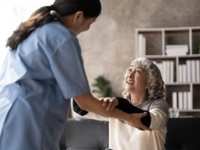
Being mindful of an aging loved one’s safety doesn’t mean discouraging older adults from staying active, and it should not mean stripping away a senior’s independence. Being mindful means helping make strenuous activities like pickleball safer. A loved one, spouse, adult child, friend, or caregiver may be the person who notices repeated dizziness, reminds someone to wear the right shoes, encourages hydration and balance training, or insists that a head strike be taken seriously rather than brushed off.
For older seniors, staying active is often safest when independence is paired with informed support. That distinction matters because the sport’s popularity among older Americans is not going away. Nor should it. Pickleball can improve quality of life, support social connection, and help people remain active longer. Those benefits are real. But so is the possibility that for some seniors, the greatest hazard is not overexertion. It is the fall they do not see coming.
Jeff Webb’s death is tragic in its own right. It should also prompt a broader public conversation, not about whether older adults should stop playing pickleball, but about how we can stop pretending that enthusiasm erases biology. Aging does not mean retreating from joy, play, or competition. It does mean recognizing that when physicality changes, risk changes too. And if we want pickleball to remain one of the best things older adults can do for their health, we need to take those risks seriously enough to prepare for them.
If you would like to learn more about how a trained caregiver can help support a senior loved one stay active and safe, CLICK HERE to find your local Amada Senior Care office.