- Categories :
- More
Dental Insurance - Is It Worth The Premium ... Or Just A Time Payment Plan?
By:
 TheWoodlandsTXHealthInsurance.com
| Published 04/07/2026
TheWoodlandsTXHealthInsurance.com
| Published 04/07/2026


By D. Kenton Henry – editor, agent, broker
Dental Insurance: Worth the Premium — or Just a Payment Plan?
“Is dental insurance really worth what I pay for it?”
That’s a question I hear often—and it’s usually followed by:
“Or am I just spreading the cost of my dental work over time?”
My answer?
It depends—but it doesn’t have to be a losing proposition.
Employer vs. Individual Coverage
If you receive dental insurance through an employer, part (or all) of your premium is subsidized. That makes the value proposition much more favorable.
However, if you are:
- Self-employed
- Retired
- Or purchasing coverage on your own
…then you’re paying the full premium—and the math becomes more important.
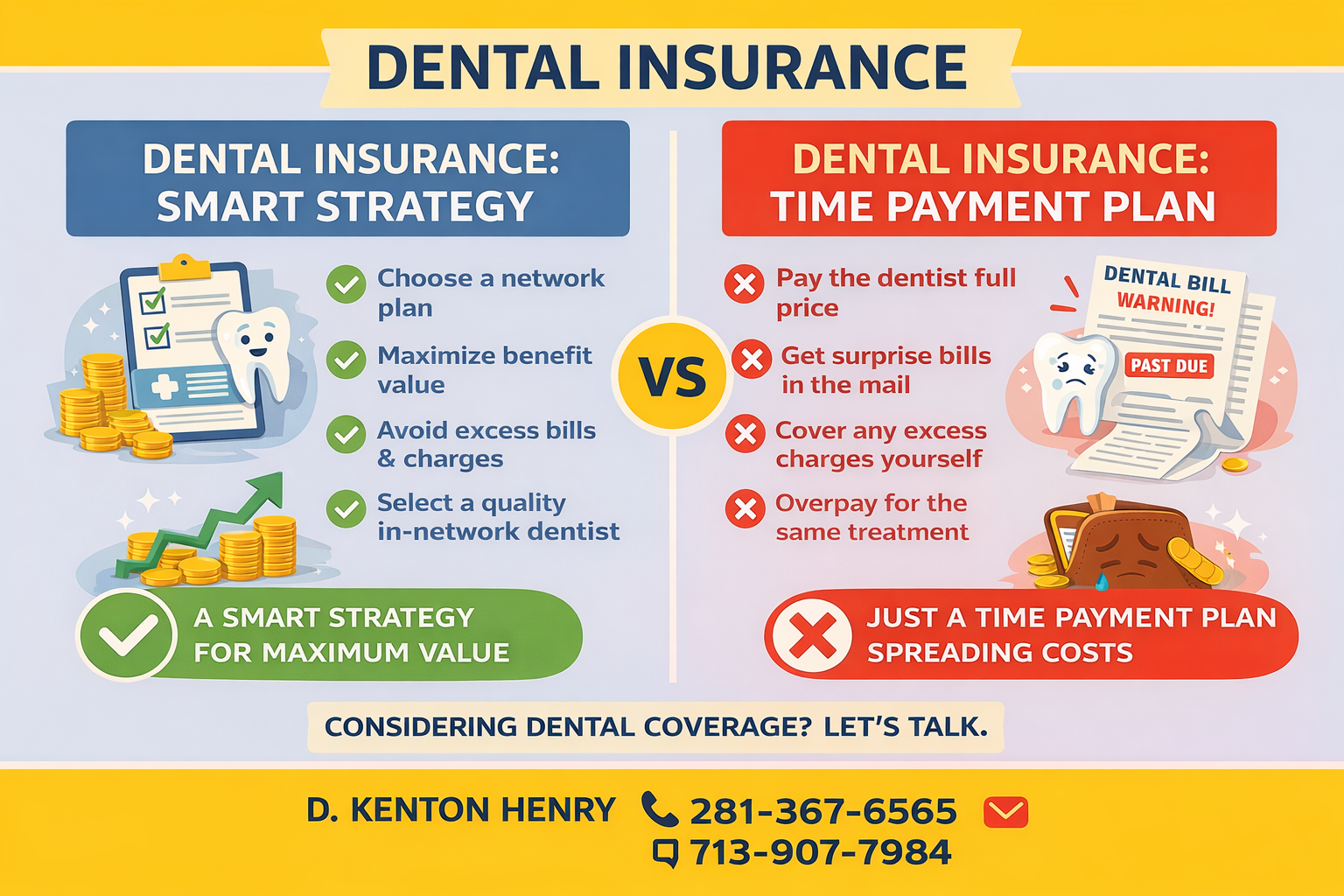
Without the right strategy, dental insurance can become nothing more than a time-payment plan. Worse yet, you could end up paying more in premiums than you ever receive in benefits.
The Reality of Dental Costs
Let’s be honest—dental work is expensive.
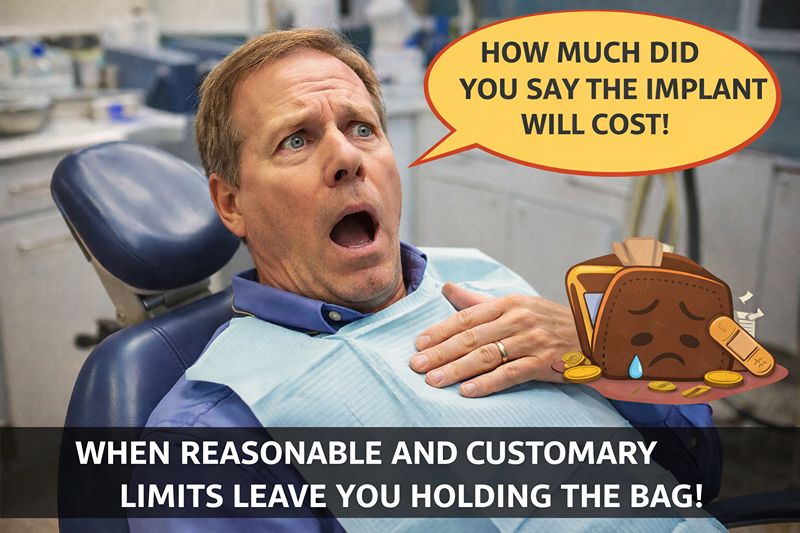
A single dental implant can cost anywhere from $3,500 to $7,000. And unlike medical insurance, dental plans come with strict limitations.
Before choosing a plan, there are three key concepts you need to understand:
1. “Reasonable and Customary” Limits
No insurance company pays unlimited fees.
Instead, they base payments on what is considered “reasonable and customary” for your geographic area.
- A crown in Beverly Hills will cost more than one in Brenham, Texas
- If a dentist charges above the accepted range, you pay the difference
Understanding this concept is critical to avoiding unexpected costs.
2. Network vs. Non-Network Plans
Dental plans fall into two categories:
Network Plans (Recommended)
- PPO (DPPO): Flexibility to go out-of-network (at higher cost)
- HMO (DHMO): Must stay in-network for coverage
These plans offer lower negotiated fees because dentists agree to discounted rates.
Non-Network Plans
- “Any dentist” plans
- Typically higher premiums
- Often result in higher out-of-pocket costs
Why? Because dentists are free to charge above what the insurance company considers reasonable—and you’re responsible for the difference.
3. The Most Important Rule: Avoid Excess Charges
Here’s where many people get burned:
- With a non-network plan, you can be billed above what insurance pays
- With a network plan, dentists must write off excess charges
That means:
If your share is 20% or 50%—that’s all you pay. No surprises.
Finding the Right Dentist (and Plan)
As an individual, you don’t have the bargaining power of a large employer.
So how do you gain access to lower fees and quality care?
You choose an insurance company that:
- Has a large, reputable network
- Pays claims promptly and reliably
- Attracts high-quality dentists
Then you select a dentist based on:
- Credentials
- Technology used
- Patient reviews
- Location and convenience
Understanding Benefit Limits
Dental insurance is not unlimited coverage.
Typical plans:
- Cover $1,000–$1,500 per year
- Higher-end plans may go up to $5,000 annually
- Often include waiting periods for major work
A smarter strategy is to choose a plan that:
- Starts affordable
- Increases benefits over time
- Aligns with your expected dental needs
A Real-World Strategy (From Experience)
After decades in the business—and personal experience with extensive dental work—I approached my own coverage strategically.
I selected:
- A financially strong insurance company
- A plan that started at $1,500, then increased to $2,500, and ultimately $5,000 annually
- A highly qualified dentist within the network
This allowed me to:
- Stage treatment over time
- Maximize benefits
- Avoid excessive out-of-pocket costs
Bottom Line: How to Make Dental Insurance Work
To get real value from dental insurance:
 Choose a network plan
Match benefits to your expected needs
Select a skilled, in-network dentist
Work with a knowledgeable advisor
How I Can Help
With over 30 years of experience in health, Medicare, and dental insurance, I help clients:
- Compare plans from top-rated carriers
- Avoid costly mistakes
- Maximize benefits relative to premium
I represent companies such as:
Aetna, Ameritas, Anthem, Blue Cross Blue Shield, Cigna, Delta Dental, Humana, and UnitedHealthcare.
Let’s Talk
If you’re considering dental coverage—or wondering if your current plan is worth it—I’d be happy to help.
If you follow my guidelines, I assure you, your dental insurance can be a real asset.
D.Kenton Henry

TheWoodlandsTXHealthInsurance.com
 281-367-6565
Text my cell 24/7 @ 713-907-7984
Final Thought
Dental insurance can either be:
- A smart financial tool
or - An expensive payment plan
The difference lies in how you choose—and how you use—it.
Https://TheWoodlandsTXHealthInsurance.com
Https://HealthandMedicareInsurance.com
Https://Allplanhealthinsurance.com