- Categories :
- More
Two Big Reasons To Move This Summer
By:
 The McClung Group
| Published 06/17/2026
The McClung Group
| Published 06/17/2026



Are you wondering whether it makes sense to move this summer, or if waiting until later in the year might be the better strategy?
If a move is already on your radar, summer may offer advantages that are easy to overlook. Buyers typically see more homes hit the market, while sellers often benefit from stronger sale prices compared to the fall and winter months.
Why Many People Are Thinking About Waiting
A lot of buyers and sellers are sitting on the sidelines right now, hoping mortgage rates will drop significantly or market conditions will become more predictable.
While that sounds reasonable, most housing experts expect mortgage rates to remain relatively stable rather than experience dramatic declines. That means waiting may not necessarily create the opportunity many people are hoping for.
Instead, the bigger question becomes:
What opportunities could you miss by delaying your move?
Historically, summer has been one of the strongest seasons for real estate activity, creating advantages for both buyers and sellers.
Buyers: Summer Brings More Fresh Inventory
One of the biggest challenges for buyers over the last few years has been finding the right home.
You may have experienced it yourself:
- Homes you love are outside your budget.
- Homes within your budget don't meet your needs.
- Weeks go by without anything new catching your attention.
That's where summer tends to shine.
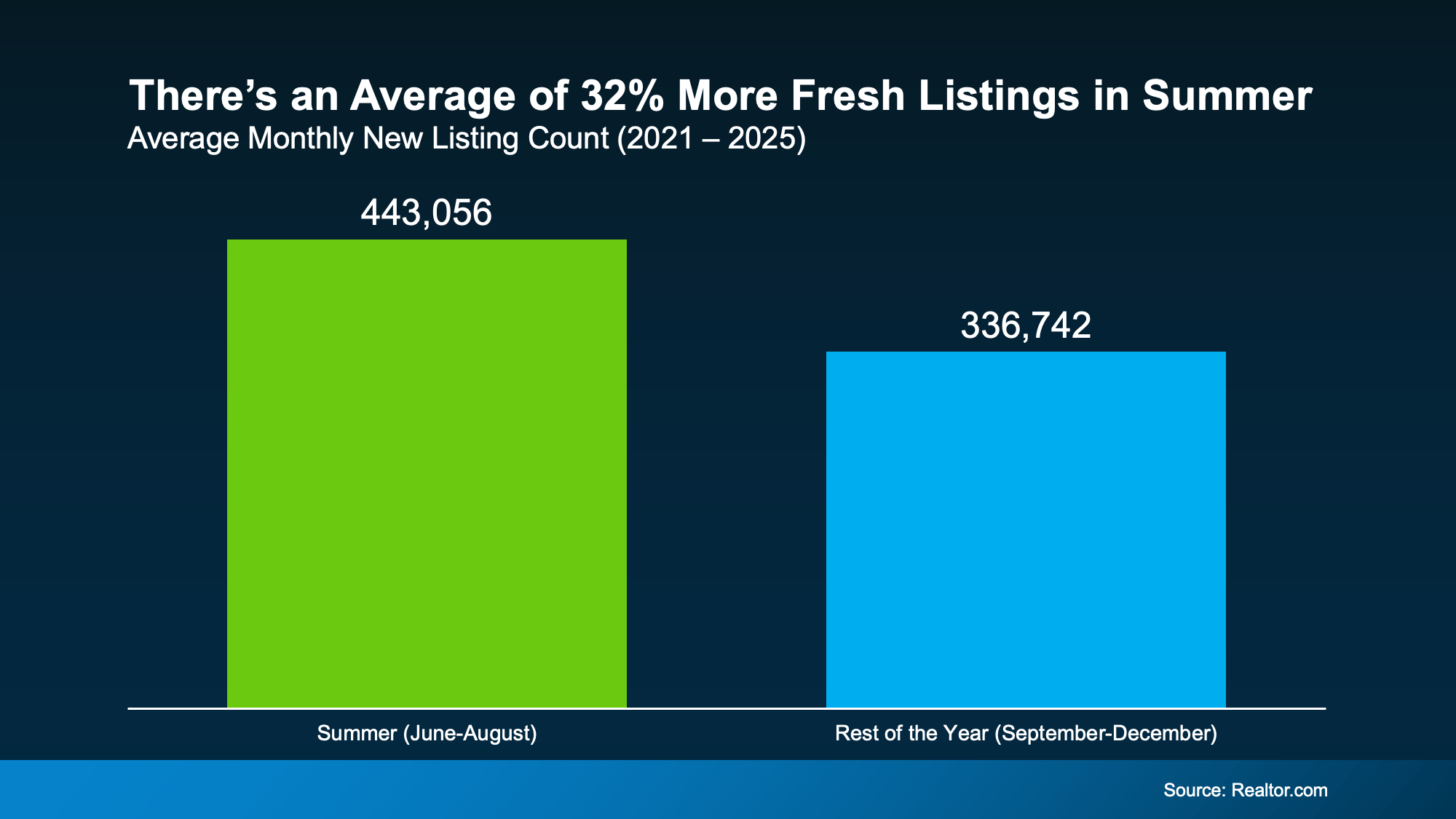
According to Realtor.com data, the average summer month sees significantly more new listings than the months that follow.
More Choices Mean Better Opportunities
The chart above shows that from 2021-2025, summer months averaged approximately 443,056 new listings, compared to 336,742 during the remainder of the year.
That's about 32% more fresh inventory available to buyers.
For buyers, that matters because:
- More listings create more options.
- More options improve your chances of finding a home that fits your budget.
- More inventory can reduce competition on individual properties.
- More choices often lead to better negotiation opportunities.
Sometimes finding the right home isn't about waiting for rates to change.
Sometimes it's simply about having enough inventory available to find the one that works for your situation.
Why Inventory Usually Slows Later in the Year
As summer ends, listing activity often slows for several reasons:
- Families prefer to move before the school year begins.
- Many sellers who planned to move have already listed.
- Holiday schedules begin approaching.
- Seasonal market activity naturally cools.
While homes will continue to come on the market, the pace typically slows compared to summer.
If your biggest challenge has been finding the right property, waiting until fall or winter may actually reduce your available options.
Sellers: Summer Often Brings Stronger Sale Prices
Buyers aren't the only ones who benefit from seasonal trends.
If you've been considering selling your home, summer has historically been one of the strongest periods for pricing.
According to the National Association of Realtors (NAR), homes sold during summer months typically achieve higher median sale prices than homes sold later in the year.
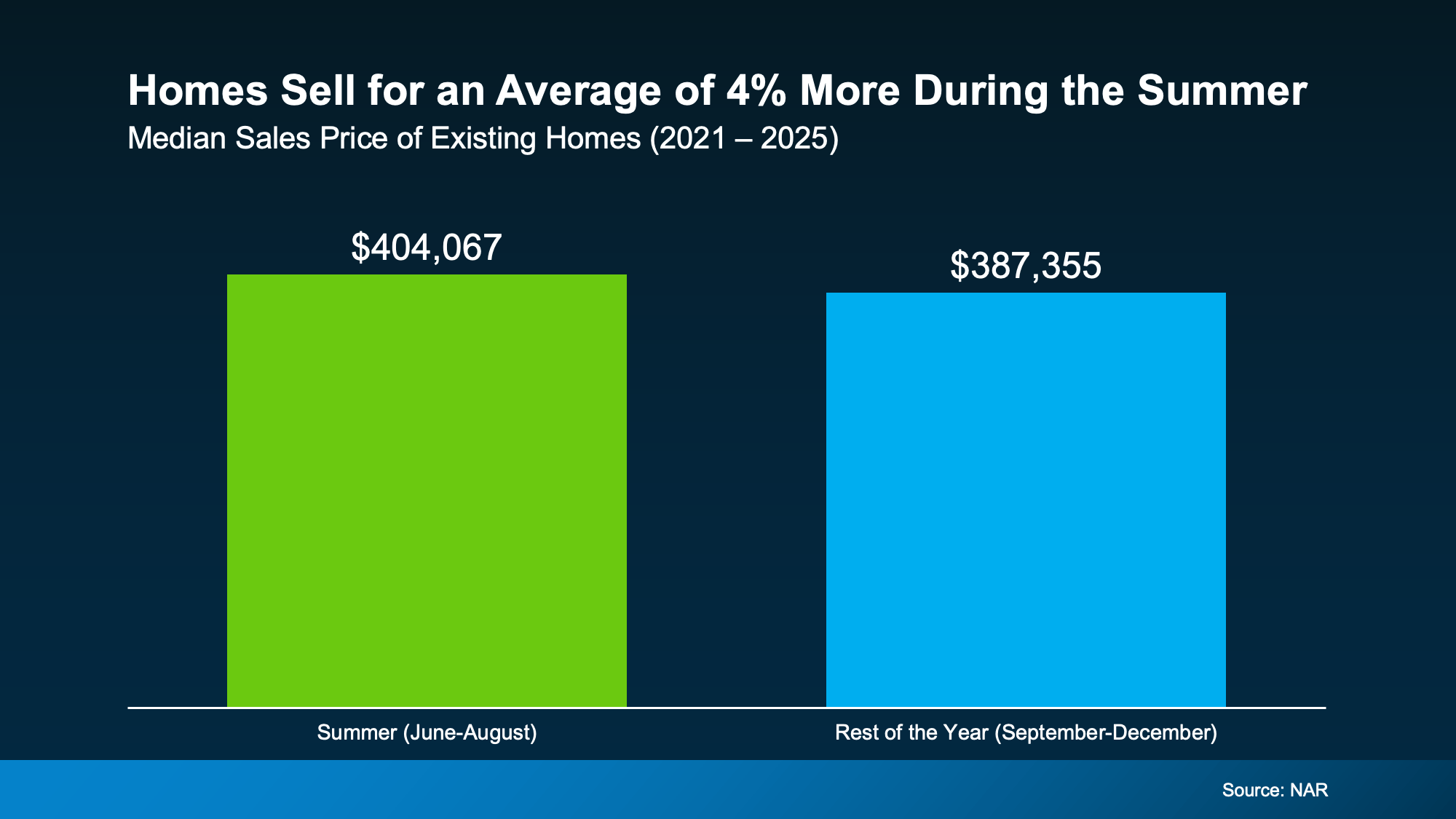
The data shows:
- Average summer median sales price: $404,067
- Average fall/winter median sales price: $387,355
That's approximately a 4% difference.
For many homeowners, that could represent thousands of dollars in additional equity at closing.
Why Buyers Tend To Pay More During Summer
The increase in summer pricing isn't random.
Many summer buyers are motivated by specific timelines:
Relocation Deadlines
Job transfers and corporate relocations frequently occur during summer months.
Family Scheduling
Many households prefer moving when children are out of school and schedules are more flexible.
Better Touring Conditions
Longer daylight hours and favorable weather make it easier to view homes and complete inspections.
Stronger Buyer Activity
More buyers actively searching often creates stronger competition for desirable properties.
When buyers are working against a deadline, they're often more willing to move forward quickly on homes that meet their needs.
What Sellers Should Avoid Right Now
One important note:
A stronger seasonal market doesn't mean you should automatically price your home higher.
Today's market is more balanced than the ultra-competitive conditions we saw a few years ago.
Pricing too aggressively can:
- Reduce showing activity.
- Increase days on market.
- Lead to future price reductions.
- Cause buyers to overlook your home.
Instead, sellers should focus on:
- Accurate pricing.
- Strategic marketing.
- Professional presentation.
- Strong online exposure.
When those elements work together, summer seasonality can help maximize your results.
What This Means for The Woodlands Area
While national trends provide valuable context, every local market behaves differently.
In The Woodlands and surrounding communities, inventory levels, buyer demand, neighborhood trends, and pricing conditions can vary significantly from national averages.
That's why it's important to evaluate:
- Current local inventory levels
- Neighborhood-specific pricing trends
- Active buyer demand
- Comparable recent sales
- Seasonal market timing
A personalized strategy will always outperform relying solely on national headlines.
At The McClung Group, we help buyers and sellers understand exactly what's happening in today's market so they can make confident decisions based on real data and local expertise.
Should You Move Now or Wait?
The answer depends on your goals.
If you're a buyer:
- Summer may provide more inventory and better selection.
If you're a seller:
- Summer may help position your home in front of motivated buyers while seasonal pricing remains favorable.
Waiting could still work out. But before deciding, it's important to understand what opportunities exist right now.
The best move isn't determined by headlines.
It's determined by your timeline, your goals, and your local market conditions.
Final Takeaway
Summer has historically been one of the most active times of year for real estate. Buyers often benefit from a larger selection of homes, while sellers frequently see stronger sale prices compared to later months.
If you're considering a move in 2026, understanding how these seasonal trends affect your specific situation can help you make a more informed decision.
Ready To Talk About Your Next Move?
Whether you're buying, selling, or simply exploring your options, we're here to help you understand what's happening in today's market and create a strategy that fits your goals.
Schedule a call with The McClung Group today and let's discuss whether this summer could be the right time for your next move.
Visit our website to get started.