- Categories :
- More
Who Has the Upper Hand in Today’s Housing Market?
By:
 The McClung Group
| Published 08/16/2026
The McClung Group
| Published 08/16/2026



Neither buyers nor sellers have a universal advantage right now. Nationally, the housing market has moved closer to balanced conditions, but your actual negotiating power depends heavily on what’s happening in your local market—including inventory, demand, pricing, and competition.
The Housing Market Is More Balanced Than It’s Been in Years
If you’re buying a home, you probably want to know whether you have room to negotiate. If you’re selling, you’re likely wondering whether you can still command a strong price.
Interestingly, both can be true at the same time.
That’s because the 2026 housing market isn’t moving in one direction everywhere. Some areas favor buyers, others continue to favor sellers, and many are somewhere in between.
For buyers and sellers in The Woodlands housing market, that distinction matters. National headlines can give you context, but they can’t tell you exactly what’s happening with the homes competing against yours or the properties you’re considering buying.
Understanding your local market is what helps you decide how aggressively to price, negotiate, or make an offer.
Buyer’s Market vs. Seller’s Market: One Number Helps Explain the Difference
One of the most useful measurements for determining who has leverage is months of supply.
Think about it this way: If no additional homes came onto the market starting today, months of supply estimates how long it would take for buyers to purchase the existing inventory at the current pace of sales.
Generally:
- Less than 4 months of supply: Conditions tend to favor sellers.
- 4–6 months of supply: The market is generally considered more balanced.
- More than 6 months of supply: Conditions tend to provide buyers with greater leverage.
According to the National Association of Realtors data provided for this article, the national market is at approximately 4.6 months of supply, putting it within balanced territory.
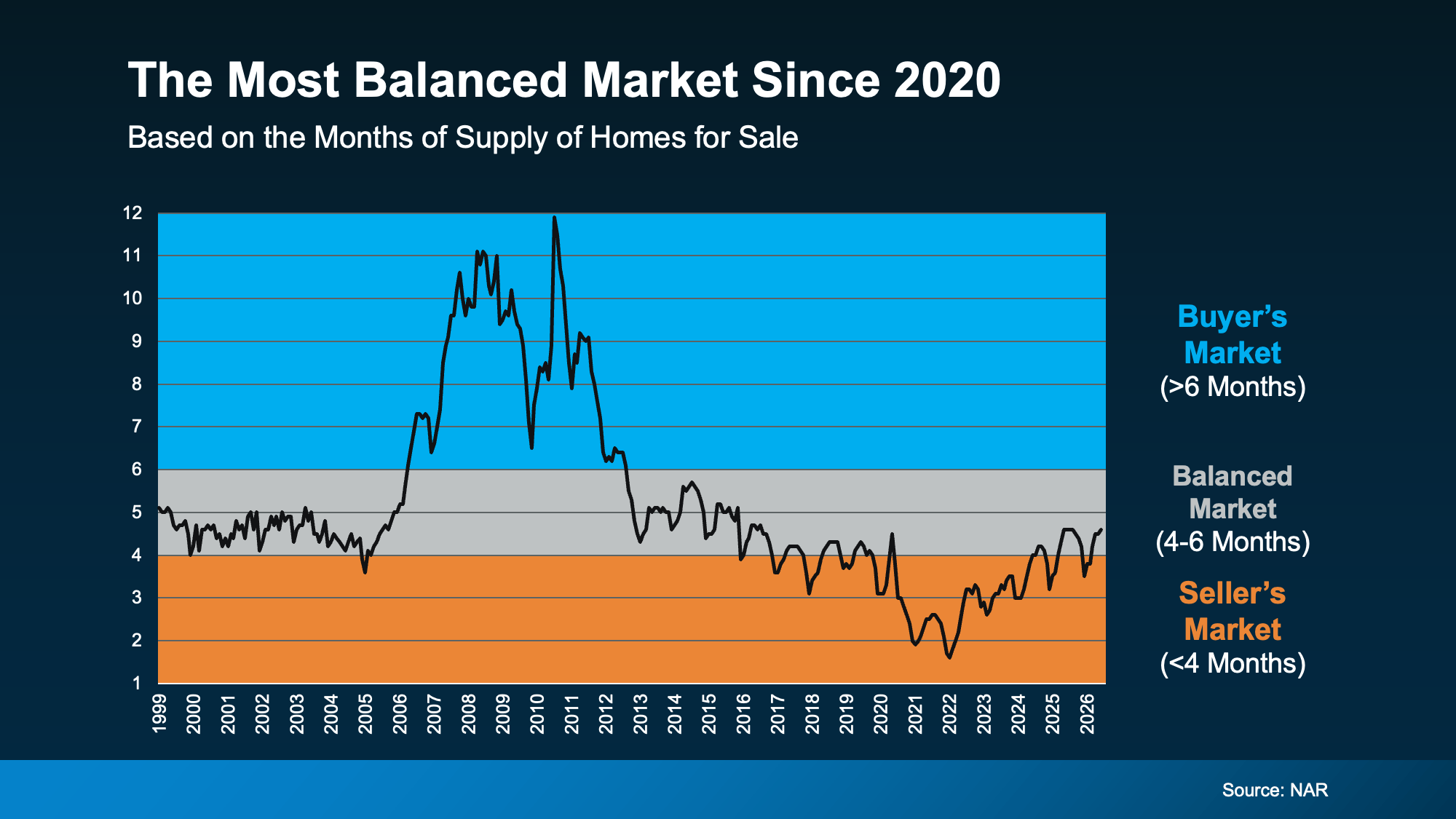
Alt text: NAR chart showing months of housing supply from 1999 through 2026, with the 2026 national housing market at approximately 4.6 months of supply and within balanced-market territory.
That’s an important shift.
For several years, limited inventory gave sellers a substantial advantage. Buyers frequently had fewer choices and less negotiating power. As inventory has increased, the balance between buyers and sellers has begun to normalize.
But a balanced national housing market doesn’t mean every local market is balanced.
Why the 2026 Housing Market Depends on Where You Live
The second graphic illustrates just how dramatically conditions can differ from one metro area to another.
Based on the June 2026 Redfin data shown in the chart, several metros have significantly more sellers than buyers, creating more buyer-friendly conditions. Other markets remain much tighter and continue to lean toward sellers.
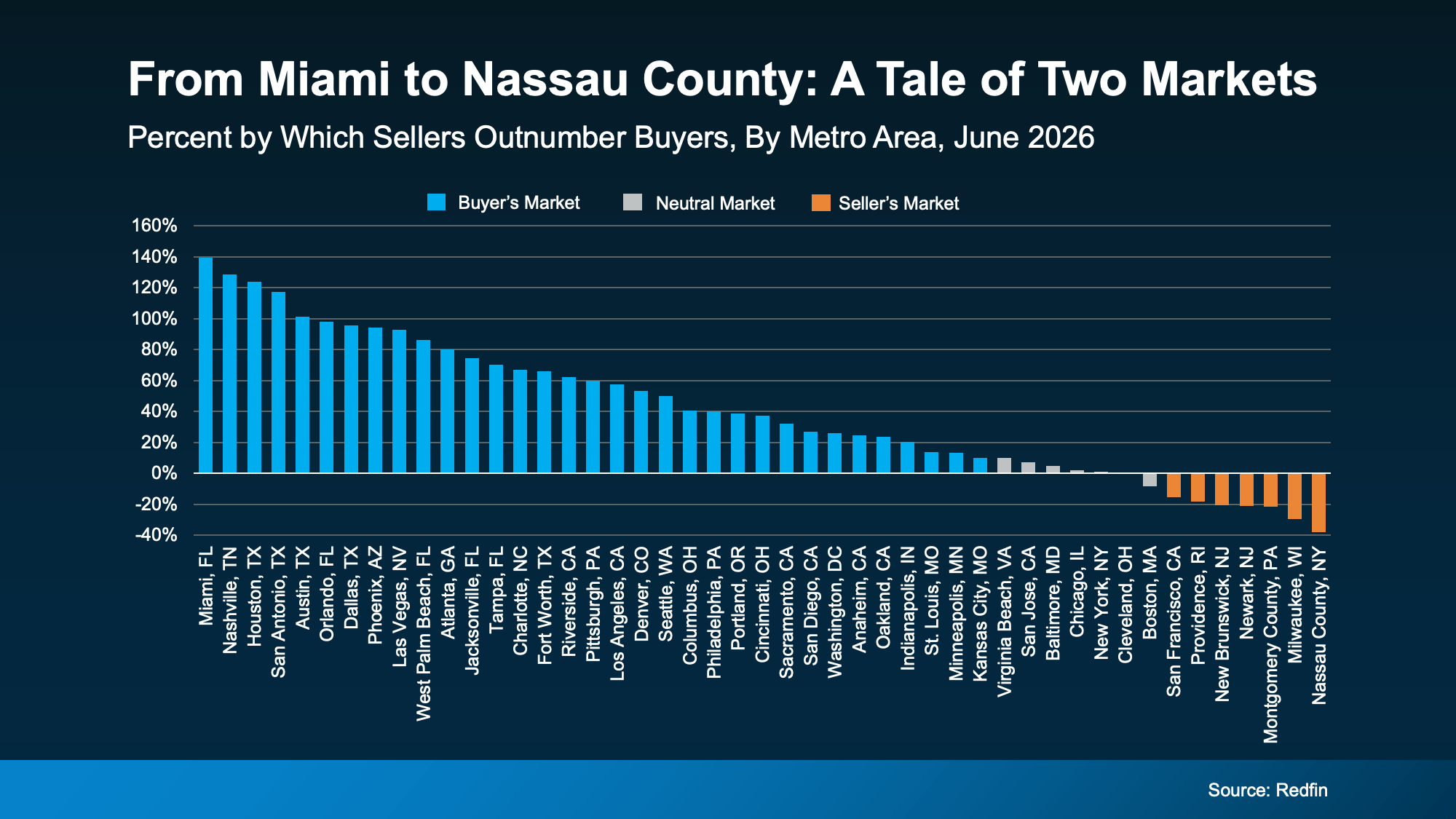
Alt text: Redfin chart comparing the percentage by which home sellers outnumber buyers across U.S. metro areas in June 2026, illustrating buyer, neutral, and seller-leaning housing markets.
Look at the difference between the two ends of that chart.
Markets such as Miami, Nashville, Houston, and San Antonio appear much more buyer-leaning in the data provided. Meanwhile, several markets toward the opposite end of the chart continue to show conditions more favorable to sellers.
The takeaway isn’t that one type of market is necessarily better than another.
It’s that location changes the strategy.
What Does a More Balanced Market Mean for Homebuyers?
If you’re buying in a market where inventory has increased and sellers face more competition, you may have options that weren’t available during the intensely competitive market of a few years ago.
Depending on the specific property and local conditions, that could mean greater opportunity to:
- Negotiate on price.
- Request seller concessions.
- Negotiate repairs after an inspection.
- Take more time comparing available homes.
- Include important protections in your offer.
- Walk away from a property that doesn’t make financial sense.
But more leverage doesn’t mean every seller is willing—or needs—to negotiate.
A well-priced home in a desirable location can still attract substantial interest. A property that receives multiple offers requires a different strategy than one that has been sitting on the market with limited activity.
That’s why simply hearing that “buyers have more leverage” isn’t enough information to determine what you should offer.
You need to know what’s happening with that property and its immediate competition.
What Does a Balanced Market Mean for Sellers?
If you’re considering selling, a more balanced market isn’t automatically bad news.
Homes are still being bought and sold. The difference is that buyers may have more options, which means your property has to compete more effectively for their attention.
Your strategy becomes especially important.
Pricing Matters From Day One
When buyers have more choices, an overly ambitious list price can make it easier for them to move on to another property.
You want your pricing strategy to reflect current comparable sales, active competition, buyer activity, and the condition and features of your home—not what a neighbor sold for several years ago or what an online estimate says your property might be worth.
Presentation Can Make a Bigger Difference
More inventory means buyers can compare properties side by side.
Condition, photography, marketing, positioning, and the overall presentation of your home can influence whether a buyer schedules a showing or keeps scrolling.
Negotiation Becomes Part of the Strategy
Receiving an offer below asking price doesn’t necessarily mean the buyer isn’t serious.
Depending on current conditions, buyers may test whether there’s room to negotiate. The important question is whether the overall terms make sense for your goals.
Price is only one part of an offer. Timing, contingencies, concessions, and other terms can all affect the strength of a deal.
What’s Happening in The Woodlands Housing Market?
This is where national statistics need to be put into perspective.
The national charts above provide valuable context about the direction of the broader housing market, but they shouldn’t be treated as a substitute for current local data in The Woodlands.
Real estate can change significantly not only from one metro to another, but from one neighborhood, price range, and property type to another.
You could have one segment where buyers have multiple comparable homes to choose from and another where attractive inventory remains limited.
That’s why, at The McClung Group, we look beyond the national narrative when helping you make a decision.
As Realtors serving The Woodlands, we can evaluate factors such as current inventory, recent comparable sales, days on market, competing listings, price adjustments, and buyer activity to help determine where the leverage actually sits for the property you’re buying or selling.
The Biggest Mistake Buyers and Sellers Can Make Right Now
The biggest mistake isn’t assuming this is a buyer’s market.
It isn’t assuming it’s still a seller’s market, either.
It’s assuming at all.
Imagine two different situations.
A buyer finds a home that has been sitting on the market while several similar properties are also available nearby. There may be room to negotiate on price or terms.
Another buyer finds a newly listed property that is receiving immediate attention, with limited comparable inventory. Coming in too aggressively could cost that buyer the home.
The same applies to sellers.
One homeowner may need to compete against several similar listings and price accordingly. Another may own a property in a segment with limited inventory and stronger demand.
Those scenarios can exist simultaneously—even within the same broader market.
Your Strategy Should Start With the Local Numbers
The return to a more balanced national market is ultimately a positive development for anyone trying to make a thoughtful real estate decision.
Buyers can have more choices and, in some circumstances, greater negotiating power.
Sellers can still achieve strong outcomes, but pricing and positioning matter more when buyers have alternatives.
Neither side should base a major financial decision solely on a national headline.
Before you decide what to offer, what to accept, or where to price your home, you need to understand the conditions affecting your specific part of The Woodlands housing market.
Final Takeaway
The 2026 housing market is more balanced nationally, but real estate remains highly local. Whether you’re navigating a buyer’s market vs. seller’s market depends on inventory, demand, competition, price range, and even the specific property involved.
The question isn’t simply, “Do buyers or sellers have the upper hand?”
The better question is: Who has the upper hand in your market segment right now?
That’s the number that should shape your next move.
Ready To See What the Market Looks Like for You?
If you’re considering buying or selling in The Woodlands, schedule a conversation with The McClung Group.
We’ll help you look at the current local numbers, understand where you have leverage, and build a strategy around what’s actually happening in the market—not what a national headline says should be happening.