- Categories :
- More
6 Best Outdoor Lighting Options for Home Security
By:
 Logo Electrical Services
| Published 09/01/2026
Logo Electrical Services
| Published 09/01/2026


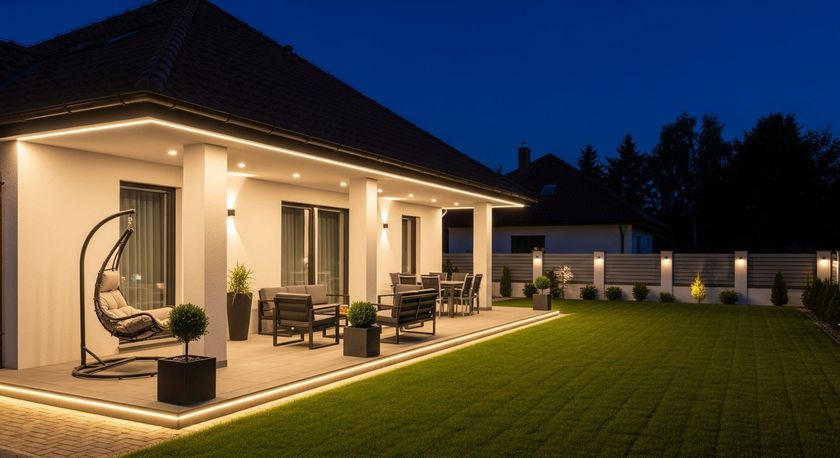
A dark side gate, driveway, or back patio gives someone a place to approach unnoticed. Good exterior lighting changes that. It helps your family see where they are walking, makes visitors easier to identify, and removes the concealment that intruders prefer. The best outdoor lighting for home security is not simply the brightest fixture you can buy. It is a planned combination of light type, placement, controls, and safe electrical installation.
For homeowners in Magnolia and across the Houston area, that planning also needs to account for heat, heavy rain, humidity, and frequent storms. A fixture that looks good on a shelf but is not rated for the location can fail early or create an electrical safety issue.
What Makes Outdoor Security Lighting Effective?
Effective security lighting puts usable light where people enter, walk, park, or could hide. It should allow you to recognize a face at the door, see a vehicle in the driveway, and check the perimeter from inside your home without creating harsh glare in your own windows.
The right choice depends on the area. A front porch needs welcoming, steady light. A side yard may benefit from motion-activated floodlights. A long driveway may need several lower-output fixtures instead of one oversized light at the garage. Layered lighting usually provides better coverage and a more comfortable appearance than relying on a single powerful fixture.
Controls matter as much as the fixture itself. Timers, dusk-to-dawn photocells, motion sensors, and smart controls can keep the property lit when it needs to be while limiting unnecessary energy use. The goal is reliable visibility, not a backyard that is lit all night like a stadium.
6 Best Outdoor Lighting Options for Home Security
1. Motion-Activated LED Floodlights
Motion-activated LED floodlights are often the best starting point for side yards, rear doors, garages, and dark corners of the property. When movement triggers the fixture, the sudden light can discourage someone from lingering while alerting occupants to activity outside.
Look for an adjustable sensor so you can set its detection range and sensitivity. A poorly aimed sensor may activate every time a car passes or tree branches move in the wind. Aim the light downward and across the area you want to cover, not directly at a neighbor’s home or into the street.
For many homes, a fixture in the 1,500- to 3,000-lumen range provides strong coverage. Larger yards or detached buildings may require more light, but more lumens are not automatically better if glare makes it harder to see beyond the bright spot.
2. Dusk-to-Dawn Wall Lights
Dusk-to-dawn wall lights provide consistent illumination at entry doors, garage corners, and covered patios. A built-in photocell turns the light on after dark and off in daylight, so there is no need to remember a switch or reset a timer after an outage.
These fixtures work especially well at the front entrance, where guests, delivery drivers, and family members need clear visibility. They also make it easier for a doorbell camera or security camera to capture usable footage. Choose a fixture with a fully enclosed, weather-rated design, particularly in exposed locations.
A warm white color temperature around 2700K to 3000K is often comfortable at a front porch. For security-focused areas where clearer detail is the priority, neutral white around 4000K may be a better fit. Very cool blue-white light can feel harsh and may not suit every home exterior.
3. Garage and Driveway Flood Lighting
Driveways are common blind spots because cars, landscaping, and garage walls can block light from the porch. Mounted garage floodlights can cover the parking area, vehicle doors, and the transition from driveway to front entry.
A two-head or three-head adjustable fixture lets you direct light into separate areas. One head can cover the driveway, another can reach the walkway, and a third can illuminate the side of the garage. If the driveway is long, consider spacing fixtures along the route rather than forcing one light to do all the work.
Motion activation is useful here, but a dusk-to-dawn setting may make more sense if your driveway is used regularly after dark. Some homeowners choose a fixture that operates at a low level from dusk to dawn and brightens when motion is detected. That approach offers steady visibility without constant full brightness.
4. Entry and Doorway Lighting
Every exterior door should have dependable lighting. That includes the front door, back door, garage service door, and any gate that leads into the yard. Well-placed doorway lights improve security, but they also reduce everyday risks such as missed steps, uneven concrete, and difficulty finding keys at night.
Wall sconces on both sides of a front door create more even facial lighting than a single overhead fixture. At a back or side door, a weather-rated ceiling light or compact floodlight may be more practical. The fixture should light the lock, threshold, and several feet beyond the doorway.
Avoid placing a bright fixture directly behind the person standing at the door. Backlighting can create a silhouette, making it harder to identify a visitor through a window, peephole, or camera.
5. Path and Step Lights
Path lighting is not usually the primary security layer, but it plays an important supporting role. It guides family members and guests safely from the driveway to the house while making it more difficult for someone to move quietly through a dark yard.
Low-voltage path lights, recessed step lights, and hardscape lights work well along sidewalks, stairs, pool areas, and patio edges. The key is consistent spacing. A few decorative lights scattered far apart may look attractive but leave dark gaps that reduce their safety value.
Solar fixtures can be convenient for a small decorative path, but they are not always dependable enough for security use. Cloudy weather, tree shade, worn batteries, and lower-quality components can leave the area dark when you need it most. Professionally installed low-voltage or line-voltage lighting offers more reliable performance.
6. Smart Exterior Lighting
Smart exterior lighting gives homeowners more control, especially when paired with a security system or camera setup. Depending on the system, you may be able to turn lights on remotely, create schedules, receive motion alerts, or have lights activate when a camera detects movement.
This can be useful when you are away from home or when you want different lighting behavior for weekdays, weekends, or travel. Smart features should be a convenience, not a substitute for sound placement and quality wiring. A poorly located smart light is still a poorly located light.
For permanent exterior fixtures, hardwired smart lighting is generally more dependable than relying on battery-powered products. It also reduces the routine maintenance that comes with changing batteries or recharging devices.
Placement Matters More Than Raw Brightness
The best outdoor lighting for home security starts with a nighttime walkthrough of your property. Stand at the street, pull into the driveway, walk to each door, and look for areas where a person could approach without being seen. Pay close attention to fence gates, air-conditioning equipment, storage sheds, side yards, and windows that are hidden by landscaping.
Place fixtures high enough that they are harder to tamper with, but not so high that the light spreads too broadly and loses useful detail. For many floodlights, mounting between 8 and 12 feet above the ground provides a practical balance. Keep fixtures clear of tree limbs and rooflines that can block the sensor or cast deep shadows.
Landscape growth should be part of the plan. A light that works perfectly after installation can become ineffective when shrubs grow across its beam. Trim vegetation regularly and check that fixtures remain aimed where they are needed.
Wiring, Weather Ratings, and Professional Installation
Outdoor lighting has to stand up to rain, moisture, heat, insects, and changing temperatures. Fixtures must be rated for their specific location. A damp-rated light may be suitable under a covered porch, while an exposed wall or open eave usually needs a wet-rated fixture.
Electrical boxes, covers, connectors, and wiring methods matter just as much as the visible fixture. Outdoor circuits may also require GFCI protection, proper grounding, and code-compliant connections. Improvised wiring or overloaded exterior outlets can create shock, fire, and reliability concerns.
A licensed electrician can evaluate whether an existing circuit can safely support new lighting, determine the right mounting and control options, and install the system cleanly. For homeowners who want a coordinated lighting and security upgrade, Logo Electrical Services can help design and install permanent exterior lighting that fits the property and its electrical system.
Before choosing fixtures, decide which areas need constant light, which need motion response, and which simply need safe path illumination. A few well-placed, professionally installed lights can make your home easier to use after dark and far less inviting to anyone who should not be there.
Logo Electrical Services
Whether it’s a quick repair, a big upgrade, or something in between — we’re here and happy to help! At Logo Electrical Services, we love working closely with homeowners to turn ideas into safe, reliable solutions.
Here’s how to reach out:
Call us anytime: 281-440-3300
Message us online: Contact Form »