- Categories :
- More
The Most Common Automotive Services (And Why They Matter More Than You Think)
By:
 Milstead Automotive
| Published 10/21/2026


Most people don’t think much about their car until something goes wrong with it. That’s normal, cars are meant to just work quietly in the background of your life. But a handful of routine services come up again and again, across nearly every make and model, and understanding what they actually do (and why they’re recommended on the schedule they are) makes it a lot easier to stay ahead of problems instead of reacting to them.
Here’s a rundown of the services we handle most often, what they involve, and why they matter more than a simple line item on an invoice might suggest.
Oil Changes
This is the one everyone’s heard of, and for good reason. Oil is what keeps your engine’s internal components from grinding against each other, while also helping to cool the engine and carry away contaminants. Over time, oil breaks down and loses its ability to lubricate effectively, and it accumulates dirt, metal particles, and combustion byproducts along the way.
Most modern vehicles recommend oil changes somewhere between 5,000 and 7,500 miles, though this varies by vehicle and oil type, synthetic oils generally last longer than conventional ones. Skipping oil changes doesn’t just risk a rough-running engine, it can lead to serious internal engine damage that’s far more expensive than the routine service itself. It’s genuinely one of the best dollar-for-dollar investments in keeping a vehicle running long-term.
Brake Service
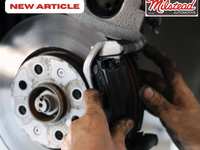
Brakes are one of those systems where “wait until it’s a problem” is a genuinely bad strategy, given what’s at stake if they fail. Brake pads wear down gradually with use, and most vehicles will give you a warning in the form of a squealing or grinding noise once the pads get thin. By the time you hear grinding specifically, the pads have often worn down enough that the metal backing is contacting the rotor directly, which means you’re now looking at rotor replacement in addition to pads, a more expensive repair than if it had been caught earlier.
Brake service can include pad replacement, rotor resurfacing or replacement, brake fluid flushes, and inspection of the full system including calipers and brake lines. Brake fluid in particular is often overlooked. It absorbs moisture over time, which can lower its boiling point and reduce braking performance, so periodic fluid flushes matter even when the pads themselves are in good shape.
Tire Services
Tires are the only part of your car actually touching the road, which makes their condition directly tied to how safely your vehicle handles, brakes, and grips in wet conditions. Tire services cover a range of needs: rotation, balancing, alignment, and replacement.
Rotation moves tires to different positions on the vehicle to promote even wear, since front and rear tires typically wear at different rates depending on your vehicle’s drivetrain. Balancing corrects for tiny weight variations that cause vibration at higher speeds. Alignment adjusts the angles of the wheels relative to each other and the road, correcting issues that cause a vehicle to pull to one side or wear tires unevenly. Left unaddressed, a poor alignment can wear through a brand-new set of tires years before it should.
Knowing when tires actually need replacing matters too. A simple penny test, inserting a penny into the tread with Lincoln’s head upside down, gives a rough read on whether tread depth has worn down to an unsafe level, though a proper tread depth gauge at a shop gives a more precise answer.
Battery Testing and Replacement
Car batteries don’t usually fail with much warning. One day they’re fine, and the next you’re turning the key to nothing but silence. Most batteries last somewhere between three and five years, though extreme heat (which is a real factor in our climate) tends to shorten that lifespan by accelerating internal corrosion.
A battery test measures how well the battery is holding and delivering charge, which can catch a weakening battery before it leaves you stranded. This is a quick, inexpensive service that pays for itself the first time it prevents an inconvenient dead battery on a morning you really didn’t have time for one.
A/C System Service
Especially in a climate like ours, a working air conditioning system isn’t a luxury, it’s close to a necessity for several months out of the year. A/C systems can lose refrigerant gradually over time through small leaks in hoses, seals, or connections, even without any obvious signs of a problem until the air just isn’t as cold as it used to be.
A/C service can include recharging refrigerant, identifying and repairing leaks, replacing worn components like the compressor or condenser, and general system inspection. Catching a slow leak early is a lot less expensive than waiting until the system fails completely on the hottest day of the year.
Engine Diagnostics
When a check engine light comes on, or a vehicle is running roughly, making unusual noises, or losing power, diagnostics are the starting point for figuring out why. Modern vehicles have onboard computer systems constantly monitoring dozens of sensors, and a proper diagnostic scan reads that data to pinpoint what triggered a warning or symptom.
This matters because guessing at repairs based on symptoms alone often leads to replacing parts that weren’t actually the problem, adding cost without solving anything. A real diagnostic narrows things down to the actual root cause before any repair work begins.
Transmission Service
Transmissions don’t get talked about as often as brakes or oil changes, but they’re just as critical, and repairs when something goes wrong tend to be significantly more expensive than routine maintenance would have been. Transmission fluid, like engine oil, breaks down over time and needs to be changed on a schedule that varies by vehicle, often somewhere between 30,000 and 60,000 miles, though this varies quite a bit by manufacturer.
Warning signs of transmission trouble include delayed or rough shifting, slipping between gears, unusual noises, or fluid leaks (transmission fluid is typically red or pink, which helps distinguish it from an oil leak). Catching these symptoms early, before the transmission fails completely, is one of the more significant ways routine maintenance saves real money over the life of a vehicle.
Cooling System Service
Your engine generates a tremendous amount of heat, and the cooling system, radiator, water pump, thermostat, hoses, and coolant, is what keeps that heat from becoming a serious problem. Coolant breaks down over time and loses some of its protective properties, both against overheating and against internal corrosion.
Cooling system service typically involves flushing old coolant, replacing it with fresh fluid at the correct concentration, and inspecting hoses and the water pump for wear or leaks. In a climate that regularly pushes temperatures into the high 90s and beyond, a properly maintained cooling system isn’t optional, it’s one of the services most directly tied to avoiding a roadside breakdown during the hottest months.
Power Steering Service
Power steering makes turning the wheel feel effortless, and most drivers never think about it until it suddenly doesn’t work that way anymore. Traditional hydraulic power steering systems rely on a fluid-filled system, and like other fluids in your vehicle, that fluid can break down or leak over time. A whining noise when turning, particularly at low speeds like when parking, is a classic early sign of a power steering fluid issue.
Many newer vehicles use electric power steering instead, which doesn’t rely on fluid at all, so this particular service is more relevant to some vehicles than others. If your car does have a hydraulic system, periodic fluid checks and flushes help avoid a situation where the pump itself wears out from running low on fluid, a repair that costs considerably more than a simple fluid top-off would have.
Suspension and Steering Components
Your suspension system does a lot of quiet work that most drivers never think about: absorbing bumps, keeping tires in consistent contact with the road, and maintaining stability during turns and braking. Components like shocks, struts, ball joints, and tie rods wear gradually, which means the decline in ride quality often happens slowly enough that drivers adjust to it without noticing.
Signs worth paying attention to include a bouncier ride than usual, the vehicle pulling to one side, uneven tire wear, or a clunking noise over bumps. These issues affect more than comfort, worn suspension components can also affect braking distance and overall handling, particularly in sudden maneuvers or wet conditions.
Serpentine Belt and Hose Inspection
The serpentine belt is a single, continuous belt that powers several engine components at once, including the alternator, power steering pump, and air conditioning compressor, depending on the vehicle. Because so much depends on this one part, a failed serpentine belt can leave you stranded quickly and unexpectedly.
Belts and hoses are made of rubber, which naturally degrades over time from heat and general wear, and our climate specifically accelerates that process given the intensity of Texas summers. A visual inspection during routine service can catch cracking or fraying before it turns into a roadside breakdown, and it’s a relatively small thing to check compared to the inconvenience of a belt failing while driving.
Why Routine Beats Reactive
There’s a pattern across every service on this list: the cost of routine maintenance is almost always smaller than the cost of the failure it prevents. A brake fluid flush costs far less than a caliper replacement caused by contaminated fluid. A coolant flush costs far less than an overheated engine. A battery test costs far less than a tow after being stranded.
None of this requires becoming an expert on your own vehicle. It just means paying attention to your owner’s manual’s recommended service intervals, and not putting off small, inexpensive services until they turn into large, expensive ones.
If it’s been a while since your last service, or you’re not sure what your vehicle actually needs right now, we’re happy to take a look and walk you through it honestly. Give us a call at 281-367-3535 or stop by 29707 West Hawthorne in Spring.