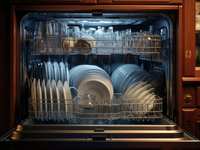


Decades of experience, highly skilled service professionals, and a commitment to exceptional customer service have made Mr. Appliance a trusted leader in appliance maintenance and repairs. Our commitment to keeping your appliances up and running includes using our many years of experience and expertise to answer your questions. Here are answers to some of the most frequently asked questions about dishwasher repair.
Why is my dishwasher not cleaning dishes effectively?
One of the most common dishwasher frustrations is opening it after a cycle to find dishes still dirty. This typically happens because of buildup inside your appliance. Over time, grease, food particles, mineral deposits, and soap scum accumulate on the interior components of your dishwasher.
Quick Fix: Pour 3 cups of white vinegar into the bottom of your empty dishwasher and run a complete hot water cycle without detergent. This natural cleaning method helps dissolve buildup and residue that may be preventing your dishwasher from cleaning properly.
For stubborn buildup, you might need a more thorough cleaning approach. Remove and clean the filter, spray arms, and other removable components.
What not to do when your dishwasher is not cleaning effectively:
- Don't use regular dish soap in your dishwasher, as it creates excessive suds.
- Avoid ignoring mineral buildup if you have hard water.
- Don’t run partial loads—they don’t actually save water or energy!
- Don’t neglect regular maintenance cleaning.
- Never block spray arms with oversized items.
Is the spray arm causing my dishwasher to perform poorly?
If you've noticed your dishwasher not rinsing dishes properly, the spray arms might be the culprit. These components are critical to your dishwasher's cleaning performance.
The spray arms are the propeller-like parts that spin around inside your dishwasher, spraying water through tiny jets to clean your dishes. When these jets become clogged with food particles or mineral deposits, water can't flow freely, resulting in poorly cleaned dishes.
How to check and fix spray arms:
- Locate the spray arms (usually at the bottom of your dishwasher).
- Remove them according to your model's instructions.
- Hold each arm up to a light to check for clogged holes.
- Use a toothpick or small wire to clear any obstructions.
- Rinse thoroughly under warm water.
- Reinstall properly.
My dishwasher isn't rinsing dishes completely—why do I still see soap residue?
This frustrating issue usually stems from one of several problems:
- Water temperature issues: Your dishwasher requires hot water (at least 120°F) to properly dissolve detergent and clean effectively. If water isn't hot enough, detergent may not dissolve properly and can leave a residue.
- Detergent considerations: Using the wrong type or amount of detergent can cause rinsing problems. Too much detergent creates excess suds that can't be fully rinsed away.
- Rinse aid depletion: If your rinse aid dispenser is empty, your dishwasher may struggle to rinse dishes properly. Rinse aid helps water sheet off dishes and prevents spotting.
The best solution is to check your water heater temperature, ensure you're using the correct amount of the right detergent type for your machine, and keep the rinse aid dispenser filled.
When should I call for professional dishwasher repair instead of troubleshooting myself?
While many dishwasher issues can be resolved with DIY troubleshooting, certain situations will call for professional assistance:
- Unusual noises like grinding, buzzing, or hammering
- Water leaks onto your floor
- The dishwasher stops mid-cycle consistently
- The control panel displays error codes you can't resolve
- Electrical components aren't functioning properly
- The inlet valve needs replacement (indicated by hammering sounds)
Professional repair is particularly important for complex issues involving electrical components or water supply systems.
How can I prevent my dishwasher from developing cleaning problems?
Prevention is always better than troubleshooting! Here's a comprehensive maintenance routine to help keep your dishwasher running efficiently:
Daily Habits:
- Scrape large food particles from dishes before loading.
- Avoid overloading the dishwasher.
- Use fresh, quality detergent appropriate for your water hardness.
- Check for signs of dishwasher leaks around the base of the unit.
Weekly Care:
- Wipe down the door gasket and edges.
- Check spray arms for free movement.
Monthly Maintenance:
- Deep clean the filter (located at the bottom of the dishwasher).
- Inspect and clean spray arm jets.
- Run an empty load with a dishwasher cleaner or vinegar.
In addition to regular cleaning and maintenance, avoid these common mistakes to ensure you get the most out of your dishwasher:
- Pre-washing dishes too thoroughly: Modern dishwashers actually work better with some food residue that activates detergent enzymes.
- Clumping silverware: Don't nest spoons together!
- Blocking the detergent dispenser: Make sure tall items aren't preventing the dispenser from opening.
- Ignoring the filter: A clogged filter recirculates dirty water.
- Using regular dish soap: This creates too many suds and can damage your appliance.
By following these care tips, you'll help extend your dishwasher's life and enjoy sparkling clean dishes with every cycle!
This article is intended for general informational purposes only and may not be applicable to every situation. You are responsible for determining the proper course of action for your home and property. Mr. Appliance is not responsible for any damages that occur as a result of this blog content or your actions. For the most accurate guidance, contact the Mr. Appliance location nearest you for a comprehensive, on-site assessment.