- Categories :
- More
Support for Parkinson’s Seniors and Families Starts at Home
By:
 Amada Senior Care North Houston
| Published 04/11/2026
Amada Senior Care North Houston
| Published 04/11/2026


Every April, Parkinson’s Awareness Month shines a light on a condition that affects not only movement, but also speech, sleep, mood, swallowing, digestion and daily independence. This year’s awareness efforts are especially focused on helping families find reliable, science-backed information and practical support. The Parkinson’s Foundation’s 2026 campaign centers on “Find Real Answers,” while the American Parkinson Disease Association launched a new public awareness campaign encouraging those living with Parkinson’s to keep doing what they love, even if they have to do it differently.
That message matters because Parkinson’s is becoming more common. The Parkinson’s Foundation says more than 1.1 million people in the United States are living with Parkinson’s disease, and nearly 90,000 people are newly diagnosed each year. The organization also notes that prevalence rises with age, making Parkinson’s an especially important topic for older adults and seniors, their families, and the care professionals who support them at home.
There is also meaningful momentum in research and policy. This month, leading Parkinson’s organizations called on Congress to strengthen NIH funding for Parkinson’s research, and APDA announced support for the newly seated Advisory Council on Parkinson’s Research, Care, and Services under the National Plan to End Parkinson’s Act. At the same time, researchers continue to explore new diagnostic tools, including promising blood-based biomarker work that could one day help identify Parkinson’s earlier. These are encouraging developments, but families still need day-to-day help now, especially with the realities of living safely and confidently at home.
Where In-Home Care Can Make a Meaningful Difference for Parkinson’s Seniors
Parkinson’s is progressive, which means needs can change over time. A Parkinson’s senior who first needs occasional reminders or transportation to appointments may later need more hands-on help with mobility, mealtimes, dressing, bathing or medication routines. Senior care for Parkinson’s is not limited to physical help alone. Emotional support, patience, structure and a strong care network all matter for quality of life.
Consistency in Parkinson’s Care
An Amada caregiver has the Parkinson’s care training that can support senior clients and families in ways that are practical, respectful and deeply reassuring. For many households, one of the biggest benefits is consistency. Parkinson’s symptoms often fluctuate throughout the day, and routines matter. Medication timing can be especially important, because seniors with Parkinson’s may need medications at exact times to function at their best. A caregiver can help seniors stay on schedule, observe changes and reinforce the daily rhythm that helps reduce stress for the whole family.
Protecting Parkinson’s Seniors from Falls
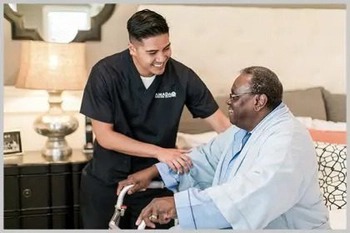
Mobility and fall prevention are another major area of support. Parkinson’s can affect balance, gait, posture and confidence with walking. A caregiver can assist with safe transfers, cue movement, encourage prescribed exercises and help reduce tripping hazards around the home. The goal is not to take over unnecessarily, but to support independence while making everyday routines safer.
Adhering to Dietary Plans Designed for Parkinson’s Seniors
Meals and hydration can also become more complicated than families expect. Parkinson’s may affect swallowing, appetite, digestion and constipation. Speech and swallowing changes can increase the risk of dehydration, malnutrition and even aspiration pneumonia. A trained, attentive caregiver can notice signs such as coughing during meals, taking unusually long to eat, reduced fluid intake or changes in comfort at mealtime, and can help families escalate concerns to the appropriate clinician.
Support for Non-Visible Parkinson’s Symptoms
Support also matters beyond the visible symptoms. Parkinson’s can bring non-movement challenges such as sleep disruption, confusion, hallucinations, anxiety or changes in mood. These symptoms can be distressing not only for the senior, but for spouses and adult children who may feel unprepared or overwhelmed. Families often need someone calm, dependable and observant in the home—someone who can provide companionship, notice patterns and help maintain a steadier daily environment while loved ones coordinate with the medical team.
Trained Caregivers Support the Family Caregiver of a Senior Loved One Living with Parkinson’s
For many families, Parkinson’s care is a marathon, not a sprint. Spouses and adult children often juggle appointments, medications, meals, work responsibilities and emotional strain all at once. Family caregivers of Parkinson’s seniors benefit greatly from support networks, self-care, and respite to reduce caregiver burnout and protect the well-being of care partners. In-home care can give families room to breathe, whether that means a few hours of relief, help with personal care, or a trusted presence during a difficult stage of the disease.
During Parkinson’s Awareness Month, it is worth remembering that awareness should lead to action. Awareness means noticing early symptoms of Parkinson’s. It means seeking credible information. It means recognizing that Parkinson’s affects the entire family. And it means building support systems that help seniors remain as safe, comfortable and independent as possible at home.
Parkinson’s Support: From Daily Routines, Meal and Mobility Support, and Companionship
At Amada Senior Care, that kind of Parkinson’s support can look like help with daily routines, mobility assistance, meal support, companionship, respite for family caregivers and a steady hand during a time of change. Parkinson’s may be chronic and progressive, but no family should feel like they have to navigate it alone.
For families caring for an aging loved one with Parkinson’s, the right support at home can make everyday life feel more manageable—and much more hopeful. If you or your senior loved one living with Parkinson’s could benefit from support at home from a trained caregiver, Amada Senior Care is here to help. CLICK HERE to find your local Amada Senior Care office.