- Categories :
- More
All Puffed Up – Not Much There
By:
 The Woodlands Institute for Health & Wellness - Mila McManus MD
| Published 04/09/2026
The Woodlands Institute for Health & Wellness - Mila McManus MD
| Published 04/09/2026


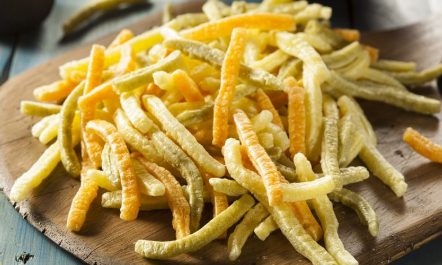
Puffed foods—whether made from corn, rice, quinoa, or even vegetables—are often marketed as light, healthy, organic, non-GMO, and convenient. But much like something (or someone) that’s a little too “puffed up,” there may be more “show” than real substance.
To create that airy, crispy texture, whole foods undergo intensive industrial processing (ultra-processed foods, or UPFs). Grains or plant materials are first pulverized into fine flours or pastes. This breaks down the natural food matrix—the fiber network and intact cellular structure that helps regulate digestion, nutrient absorption, and satiety. When food is pulverized and puffed with air, it may gain crunch and convenience—but it loses much of what makes it truly nourishing.
Next comes extrusion and puffing. Using high heat, pressure, and mechanical force, the material is expanded with air. When the pressure is released, it “puffs” into the light, crunchy shapes we recognize in cereals, snack foods, and protein bars. While appealing, this process significantly alters the nutritional integrity of the original food. This is truly food engineering, creating an entirely “new” substance that is not real food, but rather fake!
And these foods are everywhere—often hiding in plain sight:
• The chip aisle: puffed corn snacks, rice crisps, and veggie chips
• Breakfast cereals: especially the light, crispy varieties
• Protein and snack bars: commonly made with puffed rice or quinoa crisps
• Crackers and packaged snacks: that airy crunch is often a clue
• “Healthy” snacks: veggie puffs, rice cakes, and grain-free options marketed to both adults and kids
Again, what’s left after processing is a food product (fake food) that may look bigger and more satisfying than it really is:
• Nutrient loss: Heat and pressure can degrade vitamins, antioxidants, and phytonutrients.
• Disrupted structure: The loss of the natural food matrix, including valuable and essential fiber, changes how the body digests and absorbs nutrients.
• Blood sugar spikes: These foods are rapidly digested, often leading to higher glycemic responses and destabilized blood sugar.
• Low satiety: Light, ultra-processed foods don’t keep you full for long.
• Ultra-processed profile: Falls into the Group 4 category of NOVA, the most ultra-processed foods, leading to the poorest health outcomes. Read more about NOVA here.
Even when they start with nutritious ingredients like quinoa or vegetables, the end result is far removed from the original whole food. From a functional medicine perspective, this matters. The body thrives on whole foods that deliver nutrients within their natural structure—not ones that have been broken down, reassembled, and filled with air.
So while “puffed up” might look impressive on the outside, it doesn’t translate to real value on the inside. Beware of packages and ingredient labels that read puffed, or crisp.
When it comes to your food, substance matters.
Don’t eat puffed food. Be Well.
References
Brennan, M. A., Derbyshire, E., Tiwari, B. K., & Brennan, C. S. (2013). Ready-to-eat snack products: The role of extrusion technology in developing consumer acceptable and nutritious snacks. International Journal of Food Science & Technology, 48(5), 893–902.
Brand-Miller, J., Holt, S. H. A., Pawlak, D. B., & McMillan, J. (2003). Glycemic index and obesity. The American Journal of Clinical Nutrition, 76(1), 281S–285S.
Fardet, A. (2016). Minimally processed foods are more satiating and less hyperglycemic than ultra-processed foods. Food & Function, 7(5), 2338–2346.
Hall, K. D., Ayuketah, A., Brychta, R., et al. (2019). Ultra-processed diets cause excess calorie intake and weight gain. Cell Metabolism, 30(1), 67–77.
Monteiro, C. A., Cannon, G., Levy, R. B., et al. (2019). Ultra-processed foods: What they are and how to identify them. Public Health Nutrition, 22(5), 936–941.
Singh, S., Gamlath, S., & Wakeling, L. (2007). Nutritional aspects of food extrusion: A review. International Journal of Food Science & Technology, 42(8), 916–929.