- Categories :
- More
Laser Therapy for Pain vs. Traditional Treatments
By:
 HealthSource Chiropractic of Harper's Preserve
| Published 06/29/2026
HealthSource Chiropractic of Harper's Preserve
| Published 06/29/2026


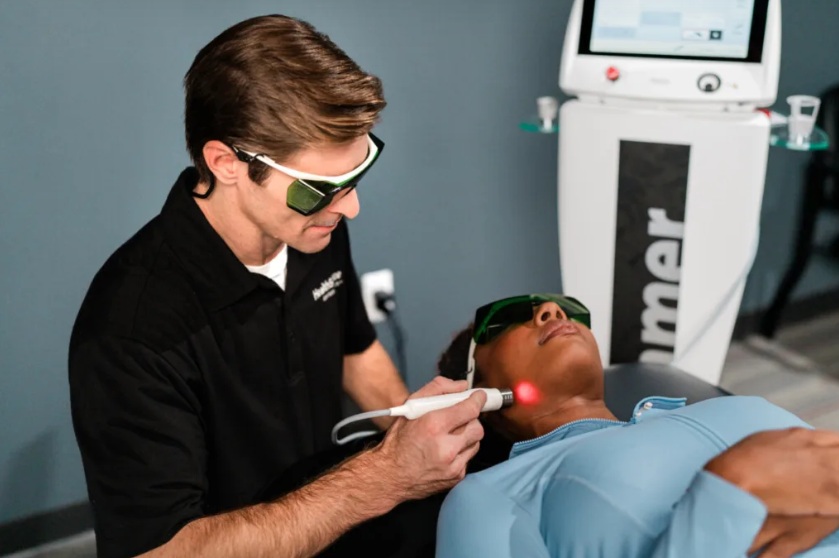
Laser therapy is often compared to treatments such as heat therapy, ice packs, and over-the-counter pain medications. While these comparisons are common, they aren’t always apples-to-apples. Many traditional treatments are designed primarily to manage symptoms, while therapeutic laser treatment is intended to support the body’s natural healing processes.
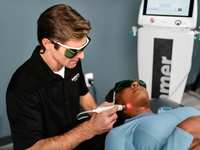
At HealthSource Chiropractic, we use Class IV laser therapy as part of a comprehensive, individualized care plan. If you’re new to the topic, our overview of laser therapy covers the basics. Here’s how laser therapy for pain compares to other common treatment options.
Class III vs. Class IV Laser Therapy: Cold vs. Hot Laser Therapy
Before comparing laser therapy to other treatments, it’s important to understand the different types of laser therapy available today.
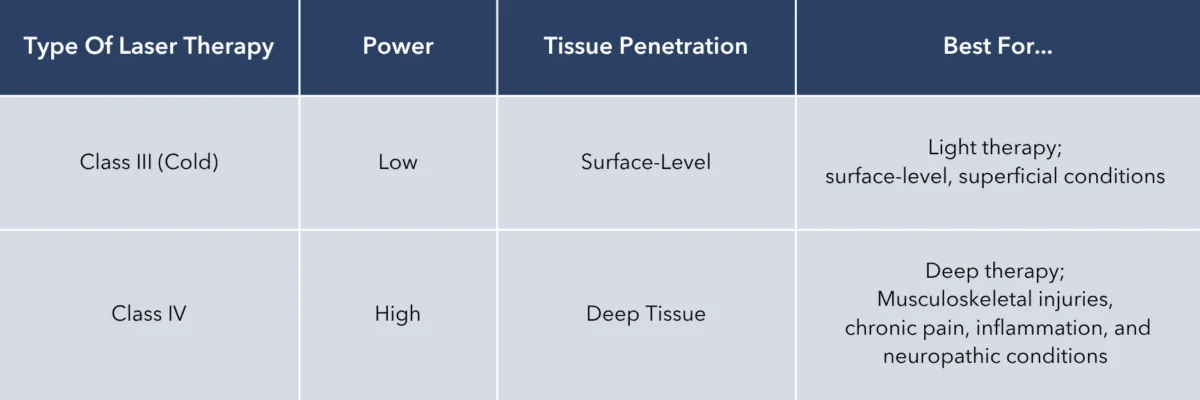
The two most common categories are Class III and Class IV laser therapy.
– Class III lasers, often called “cold lasers,” operate at lower power levels and do not generate significant tissue heating. Cold laser pain treatment is commonly used for superficial conditions and light therapy applications.
– Class IV lasers, sometimes referred to as “hot lasers” or therapeutic lasers, are a form of infrared lasers and deliver significantly higher power levels. This allows laser energy to penetrate deeper into muscles, joints, tendons, ligaments, and nerves. Class IV laser therapy is designed to increase circulation, reduce inflammation, stimulate cellular activity, and support tissue repair.
The distinction matters because the depth of penetration directly impacts which conditions can be effectively treated. While cold laser for pain may be appropriate for certain surface-level concerns, Class IV laser therapy has become a widely used option for musculoskeletal and neuropathic conditions due to its ability to reach deeper tissue structures.
Laser Therapy for Pain vs. Heat Therapy
Heat therapy is one of the most accessible tools for pain relief. Applying a heating pad to sore muscles or stiff joints increases local blood flow, relaxes muscle tension, and can ease discomfort. For short-term relief from minor soreness or stiffness, it’s a reasonable first step.
The limitation is that heat alone doesn’t address the underlying injury or condition. Traditional heat therapies work primarily at the surface level and cannot penetrate nearly as deep as a Class IV laser. While heat can temporarily relax muscles and soothe discomfort, it doesn’t stimulate cellular repair or reduce inflammation at the source of pain. For patients dealing with chronic pain, acute injuries, or nerve-related conditions, laser therapy offers a more targeted approach. By delivering therapeutic light energy deep into the tissue, Class IV laser therapy helps increase circulation, reduce inflammation, and support the body’s natural healing response.
Laser Therapy Pain Management vs. Traditional Pain Medication
For many people, over-the-counter medications such as ibuprofen or naproxen are the first line of defense against pain and inflammation. Prescription medications may be recommended for more severe conditions.
These medications have their place. The concern is what they don’t do. None of these medications stimulate tissue repair or address the structural cause of pain. Instead, they manage the experience of pain without treating what drives it. For patients who want to reduce their reliance on medication, or who haven’t found adequate relief through conventional routes, laser therapy pain management offers a different path.
How Laser Treatment for Pain and Inflammation Works
Our laser treatment for pain and inflammation works at the cellular level. Rather than masking discomfort, Class IV laser therapy increases microcirculation in damaged tissue and accelerates tissue repair. It is a non-invasive pain management option, and sessions are short and pain-free.
This is where the comparison to heat therapy or medication becomes clear:
- Heat therapy primarily affects tissue temperature and comfort.
- Pain medication primarily affects inflammation levels or pain perception.
- Laser therapy for pain targets the biological processes involved in tissue healing and recovery.
For a deeper look, see our laser therapy service page.
“By delivering therapeutic light energy deep into the tissue, Class IV laser therapy helps increase circulation, reduce inflammation, and support the body’s natural healing response.”
Laser Therapy as Part of Your HealthSource Care Plan
HealthSource chiropractors integrate Class IV laser therapy with chiropractic care, Progressive Rehab® and functional exercise to build care plans tailored to each patient. If you’re considering laser therapy for pain relief, our experienced team can evaluate your symptoms, identify potential underlying causes, and determine whether laser treatment for pain and inflammation may be an effective part of your treatment plan.
When you’re ready to take the next step, find a HealthSource clinic near you and schedule your first visit.