- Categories :
- More
Why You Don't See Businesses in The Woodlands Until You're Almost There
By:
 Southeast Texas Trees LLC
| Published 07/10/2026
Southeast Texas Trees LLC
| Published 07/10/2026


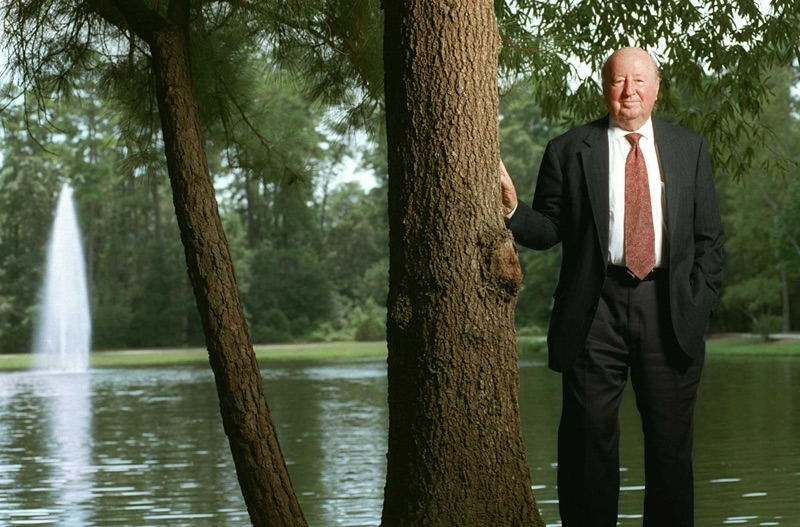
One of the first things people notice when they drive through The Woodlands is what they don't see.
Unlike most suburban communities filled with towering signs, endless parking lots, and buildings lining every major road, The Woodlands often feels like you're driving through a forest. Businesses seem to appear almost unexpectedly, tucked behind rows of towering pines and native hardwoods.
That wasn't an accident.
George Mitchell's Vision
When George Mitchell began developing The Woodlands in the early 1970s, he wanted to create something radically different from the typical American suburb.
Instead of clearing every tree for development, his planning team—working alongside renowned environmental planner Ian McHarg—designed the community around the existing forest. Nearly a quarter of the original land was permanently preserved as parks, forest preserves, greenbelts, lakes, and natural buffers.
The goal wasn't simply to save trees.
It was to make the forest the defining feature of the community.
Businesses Hidden in Plain Sight
One of the most unique design principles was requiring commercial developments to blend into their surroundings.
Large forested buffers were preserved along major roads, setbacks kept buildings farther from the street, and strict landscaping standards prevented endless rows of concrete from dominating the view. Instead of seeing shopping centers and office buildings, drivers would primarily see trees.
Even national chains had to adapt.
When McDonald's first came to The Woodlands, company executives reportedly worried customers wouldn't even be able to find the restaurant because they couldn't use their typical oversized signage. The restaurant ultimately became one of the highest-volume McDonald's locations in Texas—proving good businesses don't need to tower over the trees.
The Trees Came First
Many longtime residents repeat the story that no building was ever supposed to be taller than the surrounding trees. While that idea captures the spirit of George Mitchell's vision, the documented planning standards emphasize preserving the forest canopy through buffering, setbacks, landscaping, and careful placement of buildings rather than an official "tree height" rule.
The underlying philosophy was simple:
The trees were always meant to be the landmark—not the buildings.
Why It Still Matters Today
The Woodlands has grown tremendously since opening in 1974, but much of what makes it feel different from other communities comes from those original planning decisions.
The mature canopy helps reduce heat, supports wildlife, improves property values, softens road noise, and gives residents the feeling of living in a forest rather than a city.
It's also why proper tree care is so important.
Healthy, well-maintained trees aren't just beautiful—they're part of what makes The Woodlands one of the most recognizable master-planned communities in America.
At Southeast Texas Trees, we believe preserving that vision starts one tree at a time.