- Categories :
- More
Why Staging Still Moves the Needle on a Woodlands Home Sale
By:
 The Kink Team
| Published 10/19/2026


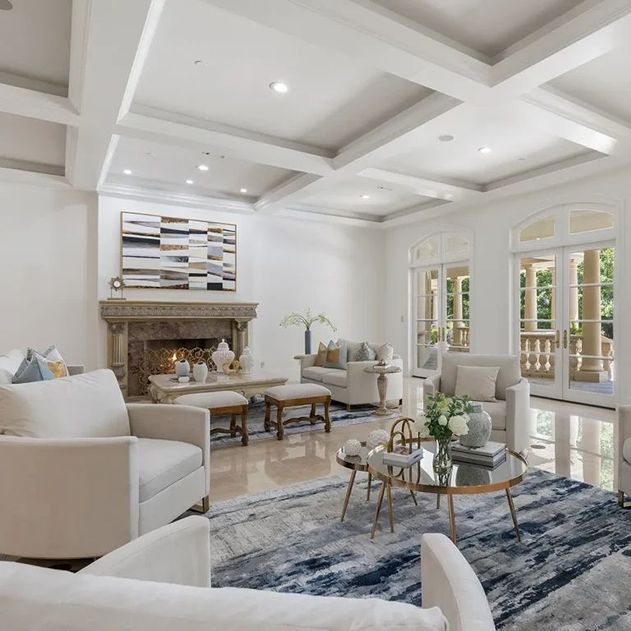
I have been selling homes in The Woodlands for twenty-eight years, and in that time I have watched a lot of advice about preparing a house for market come and go. Staging is not one of the fads. It has outlasted several market cycles, and the reason is simple: it is one of the few things a seller controls that reliably changes how a buyer feels in the first ninety seconds.
That matters more right now than it has in the past few years.
The market has quietly shifted under sellers
Through August of this year, homes listed across The Woodlands' four main ZIP codes were sitting an average of 39 to 44 days on the market, with asking prices ranging from roughly $391,500 in 77384 to $589,000 in 77380. In 77382 — Sterling Ridge, Alden Bridge and Carlton Woods — active inventory was up about 25% year over year.
The Woodlands remains a strong market with real demand. But they describe a different environment from 2021, when a seller could list almost anything and field competing offers by the weekend. Today there is choice. A buyer touring your home on a Saturday has four or five others on the list, and the ones they remember Monday morning are the ones that felt like somewhere they could live.
That is the entire argument for staging, and it has very little to do with decorating.
What staging is actually doing
The common misunderstanding is that staging is about making a house look nicer. It is not, or not only. Staging is about removing the small frictions that stop a buyer from imagining themselves in a space.
When a buyer walks into a room crowded with a family's furniture, photographs and accumulated life, a surprising amount of their attention goes to processing your household rather than picturing their own. Research from the National Association of Realtors has found consistently that the clearest benefit buyers' agents report from staging is exactly this — that it makes it easier for a buyer to visualize a property as a future home. Everything else follows from that.
In practice, in this market, a handful of things do most of the work:
- Edit before you decorate. The single highest-return step is removing roughly a third of what is in the room. Woodlands homes are generous, and most of them show smaller than they are because they are full. Empty floor space reads as square footage.
- Deal with the light. Our homes sit under a mature tree canopy, which is one of the best things about living here and one of the worst things about photographing a house. Interiors that feel cool and shaded in person often photograph muddy. Open every blind, replace dim bulbs with something brighter and consistent in color temperature, and clean the windows. This costs almost nothing and changes the listing photos more than any furniture decision.
- Make the first room count. Buyers form an opinion at the entry and spend the rest of the tour confirming it. If the budget only stretches to one room, it is the one they see first.
- Neutralize, do not sterilize. There is a version of staging that strips a house of any character and leaves it feeling like a hotel suite. That is a mistake, particularly in the custom-built parts of the market, where buyers are specifically looking for homes that are not interchangeable. The goal is to let the architecture speak, not to erase it.
- Do not forget the outside. In a community this invested in its landscaping, an unkempt front bed is a genuine signal to buyers about how the rest of the house has been maintained. Fresh mulch and a trimmed entry are among the cheapest credibility you can buy.
Where sellers get it wrong
Two patterns come up repeatedly.
The first is staging a home that is priced wrong. Presentation cannot fix a pricing problem. If a house is positioned above what the market will support, beautiful photographs will simply attract more people to come and decline it. Price and preparation work together, and price comes first — which is why I always want to have the valuation conversation before the staging conversation. If you are at that stage, a property-specific market analysis is the right starting point.
The second is spending money on the wrong things. Sellers will replace a serviceable kitchen countertop and leave a cluttered primary bedroom untouched. Renovation and staging are not the same decision. Staging is almost always the better return per dollar, because you are not betting on a buyer's taste in finishes — you are just getting out of their way.
Does every home need to be staged?
No, and I would not tell you otherwise.
A vacant home nearly always benefits, because empty rooms are genuinely hard for most people to read — they look smaller, and buyers struggle to judge whether their furniture will fit. A home at the top of the market usually benefits, because the buyer pool is small, often relocating from out of state, and frequently forming an opinion from photographs before they ever land at Bush Intercontinental.
An occupied, well-kept, sensibly furnished home in a strong price band may need nothing more than a thorough edit and a weekend of cleaning. Part of my job is telling sellers when that is the case rather than selling them a service they do not need.
What I would not do, in this market, is skip the question entirely. Inventory is up, buyers have options, and the homes that sell well are the ones that gave the buyer nothing to hold against them.
Diane Kink is the founder of The Kink Team, a Keller Williams team based in The Woodlands. She has worked in the Woodlands market for twenty-eight years, holds the Certified Luxury Home Marketing Specialist (CLHMS) designation, and is a member of REALM, the invitation-only global luxury network. The Kink Team is a RealTrends Verified Medium Team, ranked #1 in The Woodlands by 2025 sales volume. Learn more at thekinkteam.com.
Market figures cited are from Realtor.com Research residential listing inventory by ZIP code, August 2026, and reflect asking prices on active listings. Texas is a non-disclosure state, so sale prices are not public record.