- Categories :
- More
Renovate or Relocate? What To Know Before You Decide To Age in Place
By:
 The McClung Group
| Published 10/09/2026
The McClung Group
| Published 10/09/2026



Should you renovate your current home or relocate to a home that's better suited for aging in place?
The right choice depends on your home's accessibility, the cost of renovations, your available home equity, and the lifestyle you want in the years ahead. Whether you decide to stay or move to a 55+ community, understanding your options can help you make a more informed decision about your future.
You've spent years making your house feel like home. You've celebrated milestones, created memories, personalized every room, and built connections with the people around you.
But as you think about the next chapter of your life, you may find yourself asking an important question: Will your current home continue to meet your needs as you get older?
For some homeowners, renovating their existing property makes the most sense. For others, relocating to a home designed for easier everyday living offers a more practical solution.
If you're considering aging in place in The Woodlands or exploring 55+ communities in the Greater Houston area, here are some important factors to consider before making your decision.
What Does It Mean To Age in Place?
Aging in place means continuing to live in your current home as you get older rather than relocating to another property or community.
For many homeowners, this is an appealing option. Your home is familiar, you've invested years into making it your own, and moving may not be something you want to do.
However, staying in your current home doesn't necessarily mean everything can remain the same.
As your needs evolve, certain features of your home may become less convenient. Stairs, narrow doorways, traditional bathtubs, and raised entrances can present challenges that weren't concerns when you first purchased the property.
That's why it's important to evaluate whether your home is equipped for long-term accessibility and what modifications might be necessary.
Most Homes Aren't Designed for Aging in Place
One of the biggest considerations when deciding whether to renovate or relocate is how accessible your current home actually is.
According to the Joint Center for Housing Studies of Harvard University, fewer than 4% of U.S. homes have all three basic accessibility features:
- Single-floor living: Essential living spaces are located on one level.
- No-step entries: You can enter the home without navigating steps.
- Wide hallways and doorways: Interior spaces provide greater ease of movement.
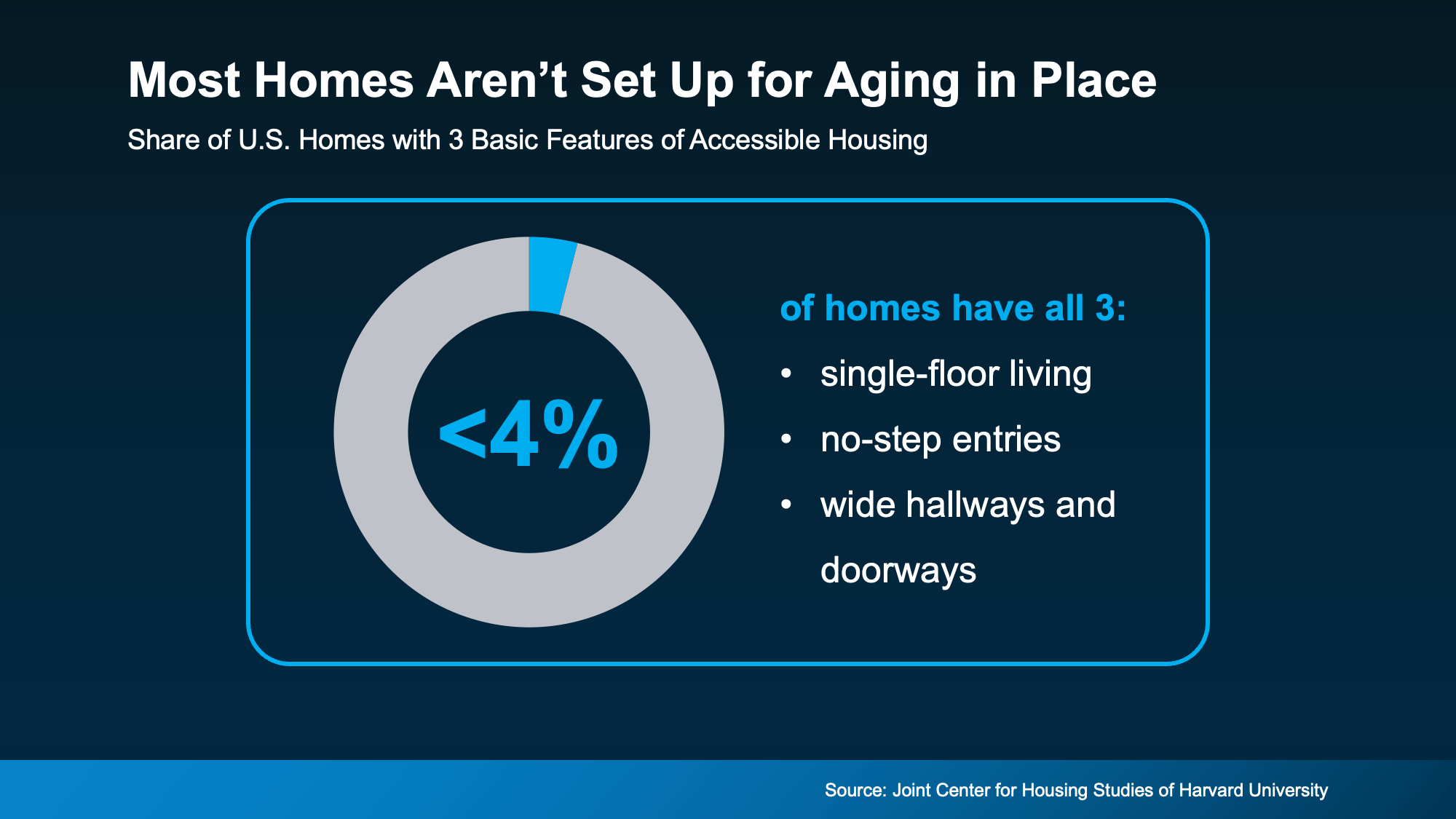
Source: Joint Center for Housing Studies of Harvard University
This means the overwhelming majority of homes lack at least one of these three basic features.
If your current home falls into that category, you may need to consider renovations to make everyday living more convenient as you age.
The important question becomes whether those renovations are practical for your property, budget, and long-term plans.
What Renovations Might Be Necessary To Stay in Your Home?
If you love your current home and want to remain there, renovating may be a worthwhile investment.
According to the National Association of Home Builders (NAHB), 56% of remodelers undertake aging-in-place projects.
Some of the most common improvements include:
1. Installing Grab Bars
Adding grab bars in bathrooms can provide additional support in areas where maintaining balance may become more challenging.
These updates are relatively straightforward compared with larger structural renovations.
2. Converting to Curbless Showers
Traditional showers often have a raised threshold that requires stepping over an edge.
A curbless shower eliminates that barrier, creating a more accessible entry.
This type of renovation can also give your bathroom a more open, updated appearance.
3. Widening Doorways
Narrow doorways can limit accessibility, particularly when additional mobility space is needed.
Widening doorways can improve movement throughout the home, although the complexity of the project depends on your property's existing layout.
4. Creating More Accessible Living Spaces
If your home has multiple floors, you'll want to think about how easily you can access the rooms you use most often.
Single-floor living is one of the three basic accessibility features identified in Harvard's research.
Depending on your home's layout, achieving this may require more substantial modifications.
Before committing to any renovation, it's important to consider not just what you need today, but what could make your home more functional in the future.
The Hidden Consideration: Living Through Renovations
Renovating your home may allow you to remain in a place you love, but the process itself deserves careful consideration.
Depending on the scope of the work, you may need to deal with construction noise, dust, scheduling changes, and interruptions to your daily routine.
You'll also need to coordinate project timelines and manage the different stages of construction.
For smaller improvements, those inconveniences may be manageable.
However, if your home requires several major modifications, the renovation process can become a significant undertaking.
Before deciding to stay, ask yourself:
- How many modifications does my home need?
- Am I comfortable living through construction?
- Will the renovations address my long-term needs?
- Would moving to a more accessible home be a simpler alternative?
There's no universal answer. What matters is finding a solution that works for your circumstances.
Your Home Equity Could Help Fund Your Next Move
If extensive renovations don't appeal to you, relocating may be worth exploring.
And here's something many longtime homeowners should consider: The equity you've built in your current home could help make your next move possible.
Home equity is the difference between your property's current market value and the amount you still owe on your mortgage.
Over time, making mortgage payments and experiencing increases in property value can help homeowners build equity.
For homeowners who have owned their properties for many years, that equity may represent a meaningful financial resource.
Jess Catorc, Co-Founder of Carry, explains that older homeowners may benefit from decades of mortgage payments and home-value growth, which can create a financial cushion.
If you decide to sell, the proceeds from your home could help fund the purchase of another property that better meets your needs.
Of course, the amount available depends on your home's selling price, outstanding mortgage balance, and transaction expenses.
That's why understanding your property's current market value is an important first step.
What Does This Mean for Homeowners in The Woodlands?
If you've owned your home in The Woodlands for several years, evaluating your equity can help you determine whether relocating is financially realistic.
Rather than immediately committing to renovations, you can compare the estimated cost of updating your existing property with the cost of purchasing a home that already offers the features you want.
At The McClung Group, we help homeowners understand their property's market position so they can evaluate their options with greater clarity.
You don't have to decide to sell before exploring what your home may be worth.
Why 55+ Communities Are Worth Considering
For homeowners who prefer to relocate rather than renovate, 55+ communities offer another option.
These communities are generally designed around the interests and lifestyle preferences of older adults, often combining residential properties with shared amenities and organized activities.
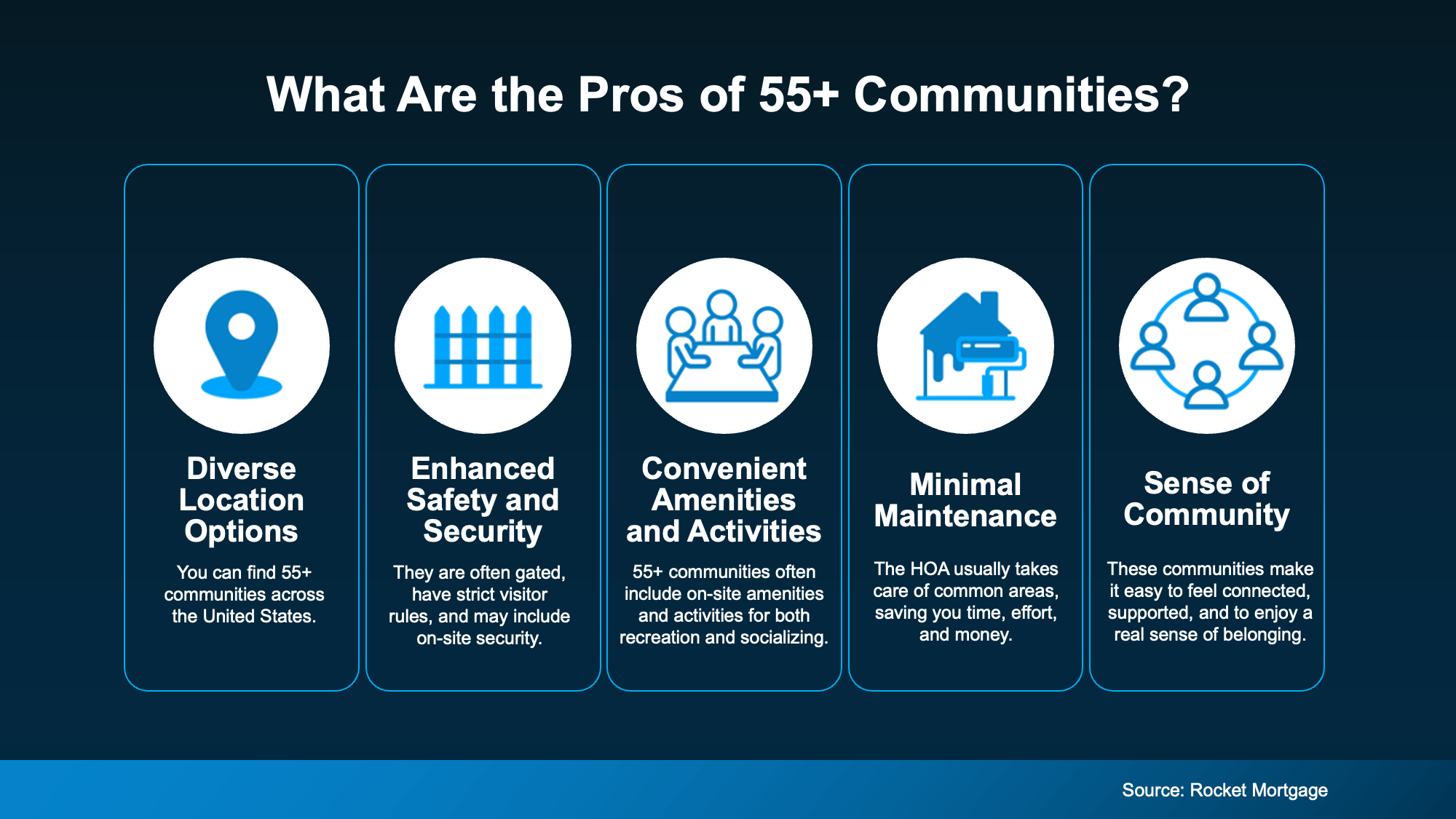
According to Rocket Mortgage, there are several potential advantages to choosing a 55+ community.
Source: Rocket Mortgage
1. A Variety of Location Options
55+ communities can be found throughout the United States, providing homeowners with choices when deciding where to spend their next chapter.
Whether you want to remain close to your current area or explore a different location, there may be communities worth considering.
2. Convenient Amenities and Activities
Many 55+ communities provide shared amenities and recreational opportunities.
Depending on the community, these may include gathering spaces, planned activities, and opportunities to participate in shared interests.
Having amenities nearby can make it easier to enjoy activities without traveling far from home.
3. Reduced Exterior Maintenance Responsibilities
One of the most appealing aspects of certain 55+ communities is the potential for reduced maintenance.
In some communities, homeowners' associations manage common areas and certain exterior maintenance responsibilities.
This can mean spending less time handling upkeep and more time enjoying your daily routine.
However, maintenance coverage varies by community, so it's important to review the HOA's responsibilities and fees before purchasing.
4. Opportunities for Social Connection
Moving into a community with shared amenities and organized activities can create opportunities to meet neighbors and participate in community events.
For homeowners who enjoy an active social calendar, this can be an attractive feature.
5. Community-Specific Access Features
Some 55+ communities have gated entrances, visitor access policies, or other community-managed features.
These arrangements vary by development, so reviewing each community's rules and amenities is an important part of comparing your options.
Renovate or Relocate: How Do You Decide?
When you're choosing between renovating your existing home and relocating, it's helpful to look beyond the immediate costs.
Consider how each option fits your lifestyle, daily routine, and long-term goals.
Renovating May Make Sense If:
- You love your current location and want to remain there.
- Your home needs only a few accessibility improvements.
- The necessary renovations fit comfortably within your budget.
- You're prepared to manage the remodeling process.
- Your current home's layout can accommodate your anticipated needs.
Relocating May Make Sense If:
- Your home requires extensive modifications.
- You'd prefer to avoid a major renovation.
- You're interested in a property with more accessible features already in place.
- You want to explore lower-maintenance living arrangements.
- Your available home equity could help support the purchase of another home.
Neither choice is automatically better.
The right decision depends on what you value most and how you want your home to support your lifestyle moving forward.
Thinking About 55+ Communities in The Woodlands and Greater Houston?
If you're considering relocating, it's worth exploring what different properties and communities have to offer.
Not every 55+ community provides the same floor plans, amenities, maintenance arrangements, or accessibility features.
Some homeowners may prefer a property within an age-restricted community, while others may find that a traditional single-story home offers everything they need.
As you compare your options, consider the following questions:
- Does the home provide convenient single-floor living?
- Are the entrances and interior spaces accessible?
- What maintenance responsibilities will you have?
- What amenities are included?
- Are there HOA fees or community restrictions?
- How does the total cost compare with renovating your existing home?
These questions can help you narrow your choices and focus on properties that align with your needs.
Working with a real estate team familiar with The Woodlands and the Greater Houston market can also help you evaluate available homes, compare features, and understand the selling process if you decide to move.
Final Takeaway: Choose the Home That Fits Your Next Chapter
Deciding whether to renovate or relocate isn't simply about your house. It's about how you want to live in the years ahead.
For some homeowners, making thoughtful improvements to their current property is the right solution. For others, selling and moving into a more accessible, lower-maintenance home may provide the flexibility they're looking for.
The important thing is to understand your options before making a commitment.
Whether you're considering aging in place, exploring 55+ communities, or wondering how much equity you've built in your home, having the right information can help you make a confident decision.
Ready To Explore Your Options? Connect With The McClung Group
If you're thinking about renovating or relocating in The Woodlands or the Greater Houston area, The McClung Group is here to help.
As local REALTORS®, we can help you understand your home's potential market value, explore available properties, and compare your options before you decide on your next move.
You may discover that staying in your current home is the best choice, or that selling could open the door to a property better suited to your needs.
Either way, we're here to provide the guidance and information you need.
Contact The McClung Group today to discuss your home's value and explore your next chapter.