- Categories :
- More
Daylight Saving Time ends this week, but the extra hour’s sleep may not be the best thing for you
By:
 Woodlands Online
| Published 10/30/2026


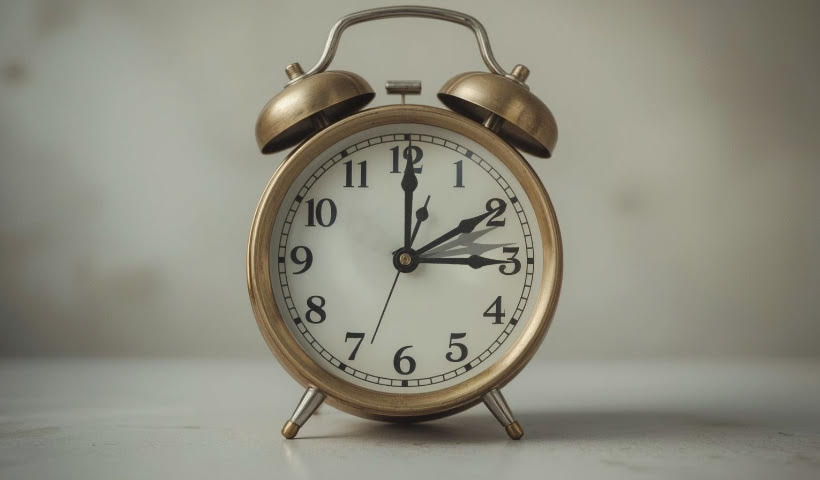
Daylight Saving Time ends this weekend on Sunday, November 1, 2026, at 2:00 a.m. local time (after most people go to bed Saturday night), at which time the clocks fall back one hour to 1:00 a.m. local standard time. As a result of returning to “normal” time, Texans will gain an extra hour of sleep overnight, mornings will have more natural light, and evenings will get dark earlier.
Smartphones, computers, and networked devices update automatically, while traditional clocks, car dashboards, and some appliances need to be adjusted manually. Woodlands Online strongly encourages families to pick a designated “clock checker” upon awakening Sunday morning so that no timekeepers are forgotten or doubled up on.
The Lone Star State Wants a Lone Time System
Only Hawaii, Arizona (except the Navajo Nation), and U.S. territories such as American Samoa, Guam, Northern Mariana Islands, Puerto Rico, and the U.S. Virgin Islands don’t observe Daylight Saving Time and do not change their clocks. Politically, Texas stands strongly in favor of making DST permanent, but state law is currently blocked by the federal government.
In June of last year, Governor Greg Abbott signed House Bill 1393 into law. Sponsored by local Representative Will Metcalf, this bipartisan bill passed the Texas Legislature to establish permanent year-round Daylight Saving Time for both the Central and Mountain time zones in the state, officially designating it as “Texas Time.” Under the federal Uniform Time Act of 1966, states are legally allowed to opt out of DST to stay on Standard Time year-round; however, states are strictly prohibited from adopting Daylight Saving Time year-round. Because of this, for “Texas Time” to actually go into effect, the federal government must pass the Sunshine Protection Act, a federal legislation that is currently stalled in the Senate Committee on Commerce, Science, and Transportation.
Texas is joined by eighteen other states in passing “trigger laws” to lock the clock on permanent daylight saving time the moment Congress gives its hopefully eventual federal authorization. Until then, the Lone Star State must continue to participate in the biannual clock changes
Body Clock Body Damage?
While many herald the ending of DST with its addition of an hour over the time change’s onset when people lose an hour’s sleep in March, the “fall back” shift still causes significant biological friction. The primary detriment is a sudden mismatch between your internal biological clock and the social clock, leading to early morning waking and evening fragmentation of sleep. Even though you technically “gain” an hour, your body cannot immediately adjust its internal 24-hour circadian rhythm to a sudden 60-minute shift.
With this “jet lag” effect, your body will naturally want to wake up at its usual biological time. If you normally wake up at 6:00 a.m., your body will feel ready to wake up at 5:00 a.m. standard time. Conversely, you will begin to feel fatigued an hour earlier than usual in the evening, making it difficult to stay awake for normal social or family activities. Studies show that during the week following the autumn time change, people experience a net loss of sleep quality. The disruption leads to more frequent tossing and turning and waking up during the night. Because your internal cues (like temperature and cortisol production) are out of sync with the clock on the wall, the sleep you do get feels less restorative for the first 3 to 7 days.
Additionally, sunlight regulates your sleep-wake cycle. When the sun sets an hour earlier, your brain begins producing melatonin – the sleep hormone – much earlier in the evening. The sudden loss of evening daylight reduces overall exposure to natural light, which can negatively impact mood and compound feelings of daytime fatigue or seasonal affective disorder (SAD).
Keep Your Brain in the Here and Now
To adjust your sleep schedule smoothly for the time change, gradually shift your bedtime and wake time by 15 minutes each night during the days leading up to the transition. This incremental approach allows your body's circadian rhythm to adapt without the shock of an abrupt one-hour shift. You can also move your meal times slightly later to align with your new bedtime schedule, and lower the lights in your home an hour before bed to prompt natural melatonin production.
This Saturday night, go ahead and change the clocks before you go to bed (again, ensuring that no one else decides to “help” and add yet another hour to the day), stick to the clock, and wake up at your usual time according to the new clock on Sunday morning. Then spend 15 to 30 minutes in direct sunlight right afterwards to anchor your internal clock.
Starting next Monday, avoid sleeping in. Resist the temptation to stay in bed longer, which can prolong jet-lag-like symptoms. Expect your body to take roughly one week to fully sync with the new standard time.
Woodlands Online encourages our readers to keep extra alert and vigilant when driving over the next week or so to get used to the sun being in a different position during your commutes, and be sure to let us know if you’re in favor of killing the time change in favor of a year-round system.