- Categories :
- More
What to Know About Milstead’s Towing Services Before You Actually Need Them
By:
 Milstead Automotive
| Published 11/04/2026


Nobody plans for a tow. That’s kind of the whole nature of it. You’re driving to work, or picking up your kids, or halfway through a road trip, and then suddenly you’re not going anywhere until someone shows up to help. It’s stressful, it’s usually inconvenient timing, and if you’ve never needed a tow before, you probably don’t know what to expect once you make that call.
This is worth reading before you’re standing on the shoulder of the road, not while you’re standing there. Knowing what a towing service actually does, what to have ready, and what separates a good experience from a bad one can make an already frustrating situation a lot more manageable.
More Than Just Hauling a Car Away
When people think “towing,” they usually picture one thing: a truck hooking up a disabled car and dragging it somewhere. That’s part of it, but roadside and towing services generally cover a lot more ground than that single image suggests.
A dead battery on a Tuesday morning doesn’t always need a tow at all, it might just need a jump. A flat tire in a parking lot might just need a spare put on. Running out of gas on a stretch of highway with no station in sight might just need a few gallons delivered. Locking your keys inside the car might need a lockout service rather than a full tow truck dispatch. Good roadside service starts by figuring out what’s actually wrong before assuming the answer is always “load it on the flatbed.”
That said, there are plenty of situations where towing genuinely is the right call: a car that won’t start no matter what, one that’s been in an accident and isn’t safe to drive, a transmission that’s failed, or a breakdown in a spot that’s not safe to work on roadside, like a busy highway shoulder. When that’s the case, a properly equipped tow truck and an experienced driver make a real difference in how smoothly the whole thing goes.
Why the Driver Matters as Much as the Truck
Here’s something people don’t think about until they’ve experienced it firsthand: towing a vehicle correctly takes real skill, not just a truck with a winch. Different vehicles need to be towed differently. All-wheel drive vehicles, for instance, often can’t just be pulled with the drive wheels on the ground the way a standard front-wheel drive car can, doing so can cause serious drivetrain damage. Low-clearance vehicles need careful loading to avoid scraping the front end. Vehicles that have been in a collision sometimes have compromised structural points that need to be identified before hooking up, so the tow itself doesn’t cause additional damage.
An experienced towing team knows how to assess these situations on the spot, at the roadside, often in less-than-ideal weather or lighting conditions, and make the right call. This is exactly the kind of work Milstead’s roadside team, including drivers like Walter and Menfil, handles regularly, bringing years of hands-on experience to situations that aren’t always straightforward.
Flatbed vs. Traditional Tow
Not all tows look the same, and the type of equipment used matters more than most people realize. A traditional tow, sometimes called a wheel-lift tow, lifts the drive wheels off the ground while the other set stays on the road, which works fine for many standard vehicles but isn’t appropriate for all-wheel drive or four-wheel drive vehicles, or for vehicles with certain types of damage.
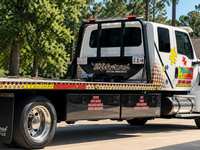
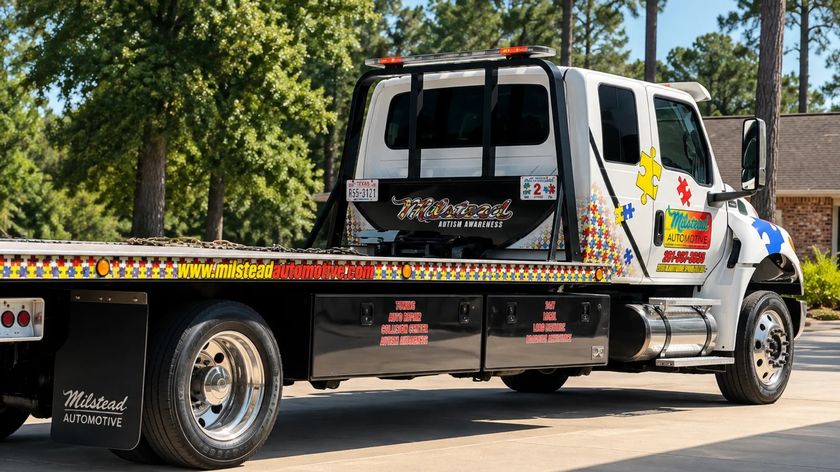
A flatbed tow lifts the entire vehicle off the ground onto a flat trailer bed, which is generally the safer option for most situations, particularly for all-wheel drive vehicles, lowered vehicles, or anything that’s been in a collision. It eliminates the risk of additional wear or damage that can come from partially towing a vehicle that isn’t suited for it. A knowledgeable towing team will know which method fits your specific vehicle rather than defaulting to whatever truck happens to be available.
What Towing Actually Costs (And Why It Varies)
One of the more common questions people have, understandably, is what a tow is going to cost before they agree to one. The honest answer is that it depends on a few factors: distance, time of day, vehicle type, and whether any special equipment or recovery work is needed beyond a standard hookup.
A short local tow to a nearby shop is generally going to cost less than a long-distance tow, and after-hours or emergency calls sometimes carry a different rate than daytime service, which is fairly standard across the towing industry given the staffing required to be available around the clock. A trustworthy towing company will be upfront about pricing before the truck ever leaves, rather than leaving you to find out once the vehicle’s already hooked up. If cost is a concern, it’s always reasonable to ask for an estimate over the phone before confirming.
Insurance and Roadside Assistance Coverage
Many drivers already have some form of towing coverage without realizing it, whether through their auto insurance policy, a manufacturer’s roadside assistance program that comes with a newer vehicle, or a credit card benefit. It’s worth checking your policy or vehicle documentation ahead of time, before you actually need it, so you know whether a tow might be partially or fully covered.
That said, coverage often comes with mileage limits or a cap on how many roadside calls are included per year, so it’s genuinely useful to know those details in advance rather than discovering a surprise bill after the fact. If you’re ever unsure whether your situation is covered, it doesn’t hurt to have both your insurance information and the towing company’s contact info on hand at the same time.
Common Situations Where People Wait Too Long to Call
There’s a pattern we see fairly often: someone notices a warning sign, decides to “just get it home first,” and ends up turning a manageable situation into a more serious one. A car that’s overheating, for example, can sometimes be driven a short distance safely, but continuing to push it once the temperature gauge is climbing risks real engine damage. Similarly, a tire that’s clearly damaged, not just low, but visibly compromised, isn’t worth risking a longer drive to save on a tow.
The general rule of thumb: if continuing to drive risks turning today’s problem into a bigger and more expensive one tomorrow, it’s worth making the call sooner rather than later. A tow is rarely the most expensive part of dealing with a breakdown. The damage caused by continuing to drive through a serious warning sign usually is.
What Actually Happens When You Call
If you’ve never called for a tow before, the process is more straightforward than people expect, but knowing the shape of it in advance takes a lot of the anxiety out of the moment.
You describe the situation. This includes your location, your vehicle’s make and model, and what happened, whether that’s a mechanical failure, an accident, a flat tire, or something else. The more specific you can be, the better the team can prepare for what they’ll need when they arrive.
You get an estimated arrival time. Towing companies generally can’t teleport across town instantly, but a reputable service gives you a realistic window rather than a vague “sometime soon.”
The driver assesses the vehicle on arrival. Even if you described the problem over the phone, the driver will take a look before deciding on the safest way to load and secure it, especially if there’s any question about drivetrain type or visible damage.
Your vehicle gets transported. Depending on the situation, that might mean straight to the Milstead shop for repair, or to a location of your choosing, like your home or a specific destination.
What to Have Ready Before You Call
A few details on hand before you dial speed things up considerably.
Your exact location. If you’re not sure of the street name, cross streets, mile markers, or nearby landmarks are genuinely useful, especially on highways where address-based navigation doesn’t always work cleanly.
Your vehicle’s make, model, and drivetrain type. If you know whether your car is front-wheel drive, rear-wheel drive, all-wheel drive, or four-wheel drive, share it. This affects how the vehicle needs to be loaded and secured.
A description of the problem. Even a rough description, “it just died at a red light” versus “I heard a loud bang and now it won’t move,” helps the driver anticipate what they’re dealing with.
Whether you’ll be waiting with the vehicle. For safety, especially on a busy road, it’s worth knowing in advance whether you should wait inside your car, outside it but at a safe distance, or somewhere entirely separate until the truck arrives.
Safety First, Always
If you break down somewhere that doesn’t feel safe, a highway shoulder with fast-moving traffic, an unlit area at night, or anywhere your gut tells you to be cautious, prioritize getting yourself to a safer spot over staying right next to the vehicle. Turn on hazard lights, and if you have flares or reflective triangles, use them to increase visibility. Your safety matters more than staying close to the car, and any towing team worth calling will tell you the same thing.
When Towing Overlaps With Collision Repair
One thing worth knowing specifically about Milstead: because the towing service and the collision repair shop operate under the same family of businesses, a tow after an accident doesn’t have to mean bouncing between multiple unfamiliar companies during an already stressful day. The vehicle can go straight from the roadside to a shop that’s equipped to handle the repair itself, with the same team having eyes on the vehicle from the moment it’s picked up. That continuity matters more than people expect when they’re already dealing with the aftermath of a collision.
Saving the Number Before You Need It
The single most useful piece of advice in all of this is the most boring one: save the number now, before you’re stranded and searching for it on a phone with 4% battery. Having 281-367-3535 already in your contacts means one less thing to figure out during a moment that’s already got enough going on.
Breakdowns and accidents happen on their own schedule, never a convenient one. Having a towing team you trust, one that knows how to handle your specific vehicle correctly and treats the situation with the urgency it deserves, turns a genuinely bad day into a manageable inconvenience instead.
If you’re ever stuck on the side of the road in the Spring area, give us a call at 281-367-3535. We’re happy to walk you through what to expect before you ever need us, too, so don’t hesitate to reach out with questions ahead of time.