- Categories :
- More
Commercial HVAC Trends Shaping North Houston Businesses in 2026
By:
 Country Air
| Published 06/01/2026
Country Air
| Published 06/01/2026


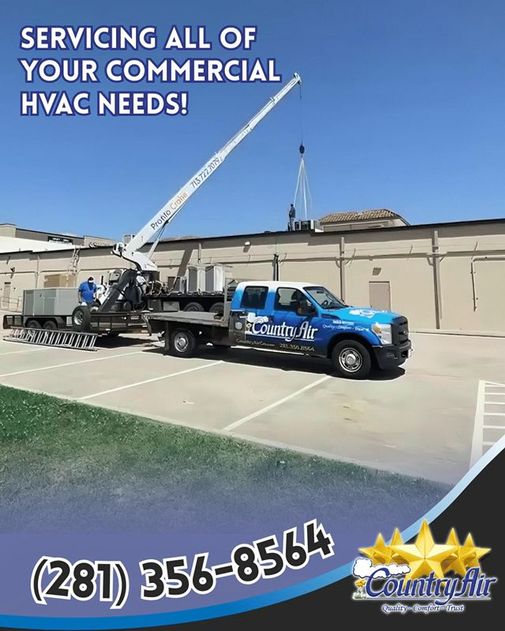
Commercial HVAC Trends Shaping North Houston Businesses in 2026
Commercial HVAC systems are undergoing significant changes as new technology, energy standards, and indoor air quality expectations reshape how businesses manage their buildings. Across North Houston, including The Woodlands, Spring, Conroe, Tomball, and Magnolia, property owners are increasingly focused on reducing operating costs while improving occupant comfort and building performance.
Industry experts note that commercial heating and cooling systems are becoming smarter, more efficient, and more connected than ever before. At the same time, business owners face challenges ranging from rising utility costs to evolving ventilation requirements and concerns about long-term equipment reliability.
If your company is planning a commercial HVAC replacement, expansion, or retrofit project, understanding today's trends can help you make a better investment.
Proper HVAC Sizing Is the Foundation of Efficiency
One of the most common mistakes made during commercial HVAC installation is selecting equipment that is either too large or too small for the building.
An oversized system may cool the space quickly, but it often fails to remove enough humidity from the air. Excess moisture can create comfort issues and negatively impact indoor air quality. Conversely, an undersized system may run continuously, increasing energy consumption and placing unnecessary stress on equipment components.
Professional load calculations are essential for determining the ideal system capacity. HVAC engineers evaluate far more than square footage when sizing a commercial system. Factors commonly considered include:
- Building orientation
- Local climate conditions
- Occupancy levels
- Window placement and glazing
- Insulation performance
- Roof construction
- Ventilation requirements
- Indoor air quality goals
- Ductwork design
- Technology and equipment loads
A properly sized system delivers better comfort, lower operating costs, and improved long-term reliability.
Commercial Buildings Across North Houston Present Unique Challenges
The commercial building inventory throughout North Houston varies widely.
The Woodlands features a large concentration of newer office buildings, healthcare facilities, retail centers, and mixed-use developments. Many of these properties were designed with modern HVAC standards in mind and can often accommodate advanced control systems and energy-efficient upgrades.
Other communities such as Spring, Tomball, Conroe, and portions of Magnolia contain a mix of newer developments alongside older commercial properties that may require more extensive HVAC modernization.
Older buildings frequently present challenges including:
- Aging ductwork
- Poor insulation
- Outdated control systems
- Reduced energy efficiency
- Refrigerants that are being phased out
- Ventilation limitations
Building age does not necessarily require a full replacement, but it can significantly influence maintenance costs and upgrade strategies.
Common Commercial HVAC Systems
Different building types require different HVAC solutions.
Rooftop Units (RTUs)
Rooftop systems remain one of the most popular options for shopping centers, restaurants, warehouses, and low-rise commercial buildings. They offer centralized climate control while preserving valuable indoor space.
Split Systems
Split systems are frequently installed in smaller office buildings, professional practices, and standalone commercial properties. They provide reliable performance while remaining relatively simple to maintain.
Variable Refrigerant Flow (VRF) Systems
VRF technology continues to gain popularity in North Houston's commercial market. These systems use a single outdoor unit connected to multiple indoor zones, allowing occupants to independently control temperatures in different areas of the building.
VRF systems are particularly attractive for offices, medical facilities, and multi-tenant properties seeking greater flexibility and efficiency.
Indoor Air Quality Is Becoming a Priority
Indoor air quality is no longer viewed as an optional upgrade. Employees, customers, and tenants increasingly expect cleaner indoor environments.
Modern commercial HVAC systems can improve indoor air quality through:
- Enhanced filtration
- Increased ventilation
- Humidity management
- Air purification technologies
- Smart monitoring systems
Businesses throughout The Woodlands and surrounding areas are paying closer attention to air quality because healthier indoor environments can contribute to employee comfort, customer satisfaction, and overall building performance.
Understanding Energy Efficiency Requirements
Energy efficiency standards continue to evolve throughout the HVAC industry.
Before purchasing new commercial equipment, building owners should understand applicable efficiency ratings, including:
- SEER2
- EER2
- IEER
- Energy Star certifications
Higher-efficiency systems often require a larger initial investment, but they frequently generate substantial savings through reduced energy consumption over the life of the equipment.
For many North Houston businesses, HVAC systems account for one of the largest monthly utility expenses. Improving efficiency can produce measurable savings year after year.
Evaluating Total Cost of Ownership
The purchase price of a commercial HVAC system tells only part of the story.
Business owners should evaluate total cost of ownership (TCO), which includes:
- Equipment costs
- Installation expenses
- Energy consumption
- Routine maintenance
- Future repairs
- Equipment lifespan
Consider a commercial system with a $15,000 installation cost. Over a 15-year period, energy expenses, maintenance services, and repairs can exceed the original equipment investment several times over.
When viewed from a long-term perspective, the most affordable system is not always the least expensive to purchase.
Smart HVAC Technology Is Expanding Rapidly
Smart building technology is becoming increasingly common throughout North Houston commercial properties.
Modern HVAC systems can now provide:
Predictive Maintenance
Advanced monitoring software can detect developing issues before equipment failures occur, reducing downtime and emergency repair costs.
Remote System Control
Facility managers can adjust temperatures, schedules, and operating parameters from virtually anywhere.
Building Analytics
Data-driven insights help identify inefficiencies and optimize system performance.
Automated Energy Management
Smart controls can automatically adjust HVAC operation based on weather conditions, occupancy patterns, and energy demand.
These technologies are helping businesses reduce operating expenses while improving comfort throughout their facilities.
Why Preventive Maintenance Still Matters
Even the most advanced HVAC equipment requires routine maintenance.
Commercial systems should typically be inspected twice annually, ideally before the cooling and heating seasons begin.
Preventive maintenance commonly includes:
- Electrical inspections
- Refrigerant checks
- Filter replacement
- Coil cleaning
- Airflow testing
- Thermostat calibration
- Belt and component inspections
Consistent maintenance can extend equipment life, reduce unexpected breakdowns, and help preserve manufacturer warranties.
Choosing a Commercial HVAC Partner
Selecting the right HVAC contractor is often as important as selecting the equipment itself.
Business owners should look for providers that offer:
- Commercial HVAC expertise
- Licensed and certified technicians
- Adequate insurance coverage
- Preventive maintenance programs
- Emergency service capabilities
- Strong local references
A reliable HVAC partner can help protect your investment, improve system efficiency, and reduce the likelihood of costly disruptions.
Frequently Asked Questions
How long does a commercial HVAC system typically last?
Most commercial HVAC systems provide between 15 and 20 years of service when properly maintained. Factors such as equipment type, operating conditions, maintenance frequency, and installation quality all influence longevity.
Can building owners perform their own HVAC maintenance?
Property managers can handle simple tasks such as monitoring filters and keeping equipment areas clean. However, most commercial HVAC maintenance should be performed by trained technicians to avoid warranty issues, safety concerns, and costly mistakes.
Are smart HVAC upgrades worth the investment?
For many commercial properties, smart controls can reduce energy consumption, improve occupant comfort, and provide valuable operational insights. The return on investment often depends on building size, energy usage patterns, and existing equipment capabilities.