- Categories :
- More
High-Oleic Sunflower Oil: How does it rank?
By:
 The Woodlands Institute for Health & Wellness - Mila McManus MD
| Published 12/10/2025
The Woodlands Institute for Health & Wellness - Mila McManus MD
| Published 12/10/2025


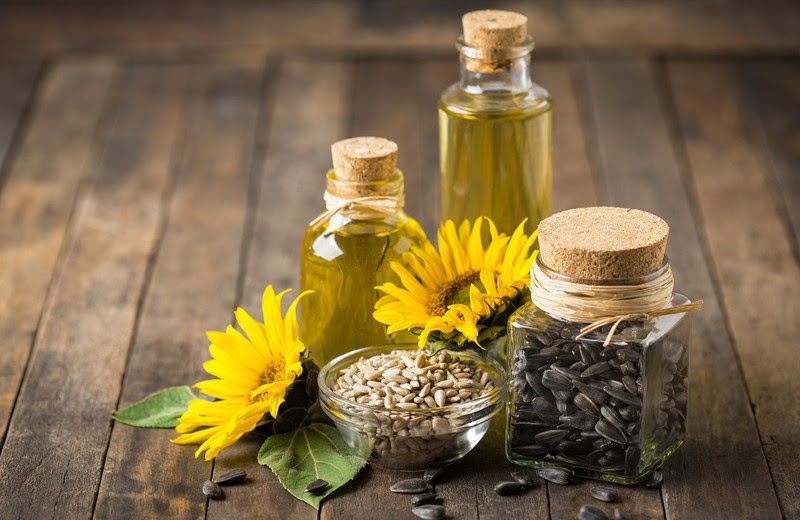
High-oleic sunflower oil has become increasingly popular in recent years, appearing in packaged foods, restaurants, and home kitchens as an alternative to industrial seed oils. While it comes from the same plant as conventional sunflower oil, its nutritional profile — and its behavior under heat — are quite different. These differences matter, especially as consumers grow more aware of how various seed oils affect metabolic health, inflammation, and oxidative stress. Understanding how high-oleic sunflower oil ranks with conventional sunflower oil and other widely used industrial seed oils, such as canola, soybean, and cottonseed oils, can help you make more informed choices.
What Makes High-Oleic Sunflower Oil Different?
Sunflower plants naturally produce seeds high in polyunsaturated fat, especially linoleic acid (omega-6). Conventional sunflower oil reflects this profile and typically contains very high linoleic acid (PUFA), making it highly prone to oxidation — especially when heated.
High-oleic sunflower oil, however, comes from sunflower varieties bred to produce a very different fat composition. Instead of being high in omega-6 polyunsaturated fat, high-oleic sunflower oil typically contains 70% or more oleic acid (a monounsaturated fatty acid, omega-9). This shift results in:
- Greater oxidative stability
- Higher heat tolerance (high smoke point)
- Less susceptibility to forming harmful oxidation byproducts
- Longer shelf life
These features make high-oleic sunflower oil a more stable and more predictable cooking oil and better in health ranking than conventional sunflower oil or industrial seed oils.
Health Considerations: High-oleic Sunflower Oil vs. Conventional Sunflower Oil
The radical reduction in polyunsaturated omega-6 fats is the primary health advantage. While omega-6 fats are essential in small amounts, most people consume far more than needed, often in the form of industrial seed oils. High levels of omega-6 — particularly from oils rich in linoleic acid — have raised concerns about oxidative stress, inflammation, and downstream metabolic effects. High-oleic sunflower oil, by contrast, lowers the proportion of polyunsaturated fat, reducing its potential to generate oxidation products during cooking and storage.
Moreover, diet patterns rich in monounsaturated fats (like oleic acid) have been associated with favorable effects on blood lipid profiles when replacing saturated fats. Early research indicated that monounsaturated-rich vegetable oils (like high-oleic oils) could help reduce LDL (“bad”) cholesterol without adversely affecting HDL/C or triglycerides.
How It Compares with Other Industrial Seed Oils
Most industrial seed oils share a similar nutritional profile: high in omega-6 polyunsaturated fat, often heavily refined, solvent-extracted, deodorized, and stabilized for shelf life, all of which gives them a very undesirable, unhealthy ranking. High-oleic sunflower oil, despite coming from a seed, behaves more like a monounsaturated-rich fruit oil — and avoids many of the health pitfalls associated with conventional seed oils.
Why High-Oleic Sunflower Oil Performs Better
Compared to the industrial seed oils, high-oleic sunflower oil offers several advantages:
- Monounsaturated-rich profile (~70–90% oleic acid) — this makes the oil oxidatively stable and heat-resistant.
- Reduced polyunsaturated fat (linoleic acid) — lower PUFA reduces the risk of oxidation and formation of harmful byproducts when heated or stored.
- Better performance for cooking and frying — high-oleic sunflower oil outperforms regular sunflower and other seed oils under high-heat/frying conditions and repeated use.
- Lower saturated fat (SFA) — many high-oleic seed oils maintain lower saturated fat levels than traditional oils of similar use.
In many ways, high-oleic sunflower oil occupies a middle ranking between olive oil (healthier overall due to polyphenols) and conventional seed oils. From our perspective, high-oleic sunflower oil might be a reasonable choice for an occasional stir-fry but should not be a “go-to” cooking oil. A lab-tested, high-polyphenol olive oil, grass-fed butter or ghee, or beef tallow would be better suited and healthier for these purposes. However, if you saw a bottled salad dressing in the grocery store, for example, that used high-oleic sunflower oil, it would be a better choice than any dressing with industrial seed oils. High-oleic sunflower oil is not the best choice, but it is not the worst either. It has some benefits and qualities that make it reasonable to occasionally allow in a healthy diet.
Selected References
- Muik, B., et al. “Oxidative and thermal stabilities of genetically modified high oleic sunflower oil.” Food Chemistry and Physics of Lipids, 2005. ScienceDirect+1
- De Leonardis, A., et al. “Frying stability of high oleic sunflower oils as affected by composition of tocopherol isomers and linoleic acid content.” Food Chemistry, 2013. ScienceDirect+1
- “Properties of High Oleic Seed Oils.” Extension Fact Sheet, Oklahoma State University. OSU Extension
- NutritionAdvance. “High Oleic Sunflower Oil: Nutrition Facts & Benefits.” Nutrition Advance
- Quality-characteristics study of high-oleic sunflower seeds (Friedt et al., 1994; Fernández-Martínez et al., 2004) — summarized in “Quality Characteristics of High-Oleic Sunflower Oil.” Is A Sunflower