- Categories :
- More
When Do You Need Revision Joint Replacement Surgery?
By:
 CommonSpirit - St. Luke's Hospital - The Woodlands
| Published 11/12/2026


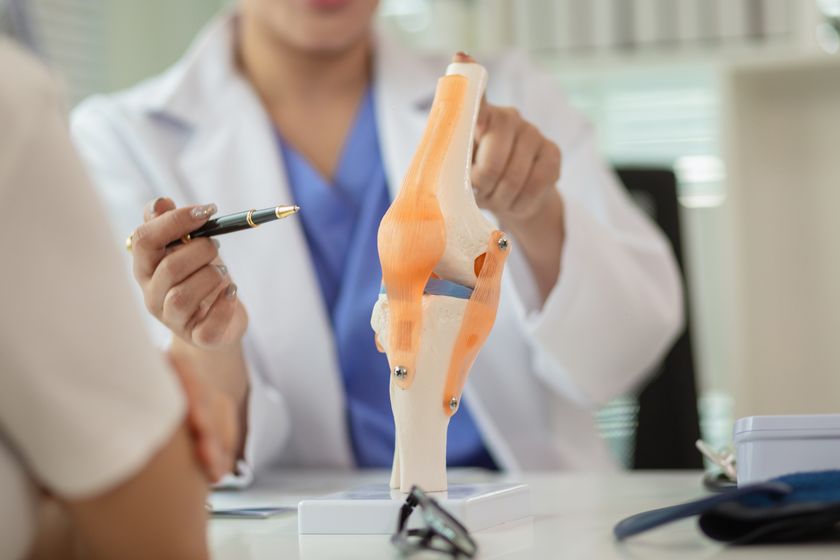
Joint replacement surgery (arthroplasty) is one of the most successful medical interventions in modern history. For thousands of patients, it restores mobility and eliminates the constant pain of arthritis. However, just like the mechanical parts of a car, artificial joints can eventually experience wear or other complications.
When a previous joint replacement needs to be modified or replaced, the procedure is called a revision joint replacement. If you are facing the possibility of a revision for your knee or hip, it is essential to understand the process and choose a surgical team with the expertise to handle these complex cases.
What is a Revision Joint Replacement?
In a primary joint replacement, a surgeon removes damaged bone and cartilage and replaces them with metal and plastic components.
In a revision surgery, the surgeon removes some or all of the original implants and replaces them with new, specialized components.
Revision surgeries are generally more complex than the original surgery because the surgeon must carefully navigate the existing scar tissue, bone loss and previously placed hardware.
Why and When Might You Need a Revision?
While modern implants are designed to last, there are several reasons why a revision might be necessary:
-
Aseptic loosening: Over time, the bond between the implant and your bone can weaken. This causes the implant to shift, leading to pain and instability.
-
Infection: Bacteria can adhere to the surface of an implant. If an infection occurs, the artificial joint often must be removed, treated and potentially revised.
-
Wear: The plastic liner in a hip or knee replacement can wear down over many years, potentially leading to metal debris or bone damage if left unaddressed.
-
Instability or dislocation: If the soft tissues around the joint are not balancing the implant correctly, the joint may feel loose or dislocate.
-
Periprosthetic fracture: A fall or injury can cause the bone around the implant to break, necessitating surgery to stabilize both the bone and the implant.
Schedule an evaluation if you experience new or worsening pain in your replaced joint, persistent swelling, a sensation that the joint is giving way or fever and chills.
Why Choose CommonSpirit - St. Luke’s Hospital - Lakeside?
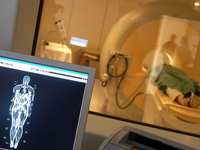
Revision surgery is not "routine." It requires a level of surgical precision, advanced imaging, and specialized technology that exceeds that of a standard primary replacement.
This is why CommonSpirit - St. Luke’s Hospital - Lakeside is the preferred destination for patients in need of complex orthopedic care.