- Categories :
- More
Confused by Home Price Headlines? Here's What's Really Happening in 2026
By:
 The McClung Group
| Published 10/21/2026


Are home prices falling or rising in 2026?
The answer depends on where you're looking. While national asking prices have eased in recent months, actual home price trends vary significantly by location. Understanding the difference between asking prices, selling prices, and long-term home values can help you make more informed real estate decisions.
If you've been following the housing market lately, you've probably noticed some conflicting headlines. One report says home prices are dropping. Another says they're still increasing.
So, which one should you believe?
The truth is, both can be accurate. What matters is understanding what the numbers actually measure and how they apply to your local market.
Whether you're buying, selling, or simply keeping an eye on your home's value in The Woodlands or Greater Houston, here's what you need to know about home prices in 2026.
Why Are Asking Prices Falling in 2026?
One reason home price headlines seem contradictory is that asking prices and actual selling prices aren't the same thing.
An asking price is what a seller hopes to receive when listing a property. A selling price is what a buyer ultimately agrees to pay.
Those numbers don't always move in the same direction.
According to HousingWire Data, the national median asking price declined from approximately $449,000 in early August to $435,000 by early October 2026.
That's a decrease of roughly $14,000, or about 3%, in just two months.
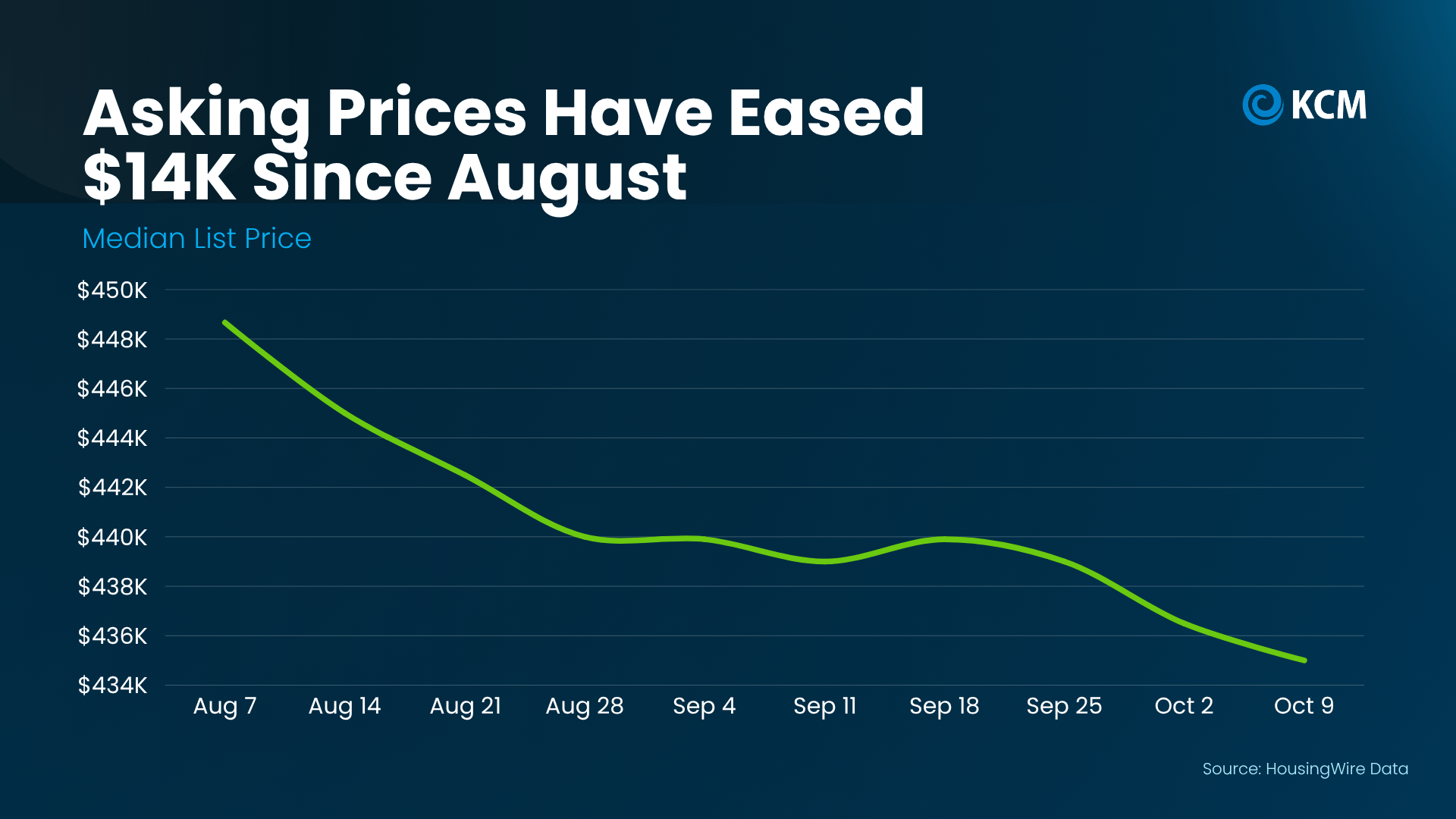
Source: HousingWire Data | Median national asking prices, August–October 2026.
At first glance, a $14,000 decline might sound concerning. But there's important context behind those numbers.
Much of this change reflects normal seasonal patterns in the housing market.
As the busy summer homebuying season ends, buyer activity typically slows. Sellers often respond by adjusting their asking prices to remain competitive.
This year, mortgage rates have also played a role.
With rates rising since spring, affordability has become an even greater consideration for buyers. Sellers who want to attract attention are increasingly recognizing the importance of pricing their properties realistically.
Another factor is housing inventory.
According to HousingWire Data, the number of homes available for sale has reached its highest level since November 2019.
With more properties to choose from, buyers may have additional opportunities to compare homes before making an offer.
For sellers, this means that pricing strategically from the beginning can make a meaningful difference.
However, a decline in national asking prices doesn't automatically mean homes in your neighborhood are losing value.
That's where local market data becomes essential.
Why Home Price Trends Depend on Where You Live
One of the biggest mistakes buyers and sellers can make is assuming national housing market trends apply equally everywhere.
Real estate is highly local.
Different cities, neighborhoods, property types, and price ranges can experience very different market conditions.
According to the S&P Cotality Case-Shiller Index, home price changes across major metropolitan areas demonstrate just how significant these differences can be.
Over the past year:
- Chicago experienced home price appreciation of nearly 7%.
- New York saw prices rise by almost 6%.
- Cleveland recorded gains of approximately 4%.
- Denver experienced a decline of around 1%.
- Seattle saw prices decrease by approximately 1.6%.
These differences highlight why a national headline can't tell the complete story.
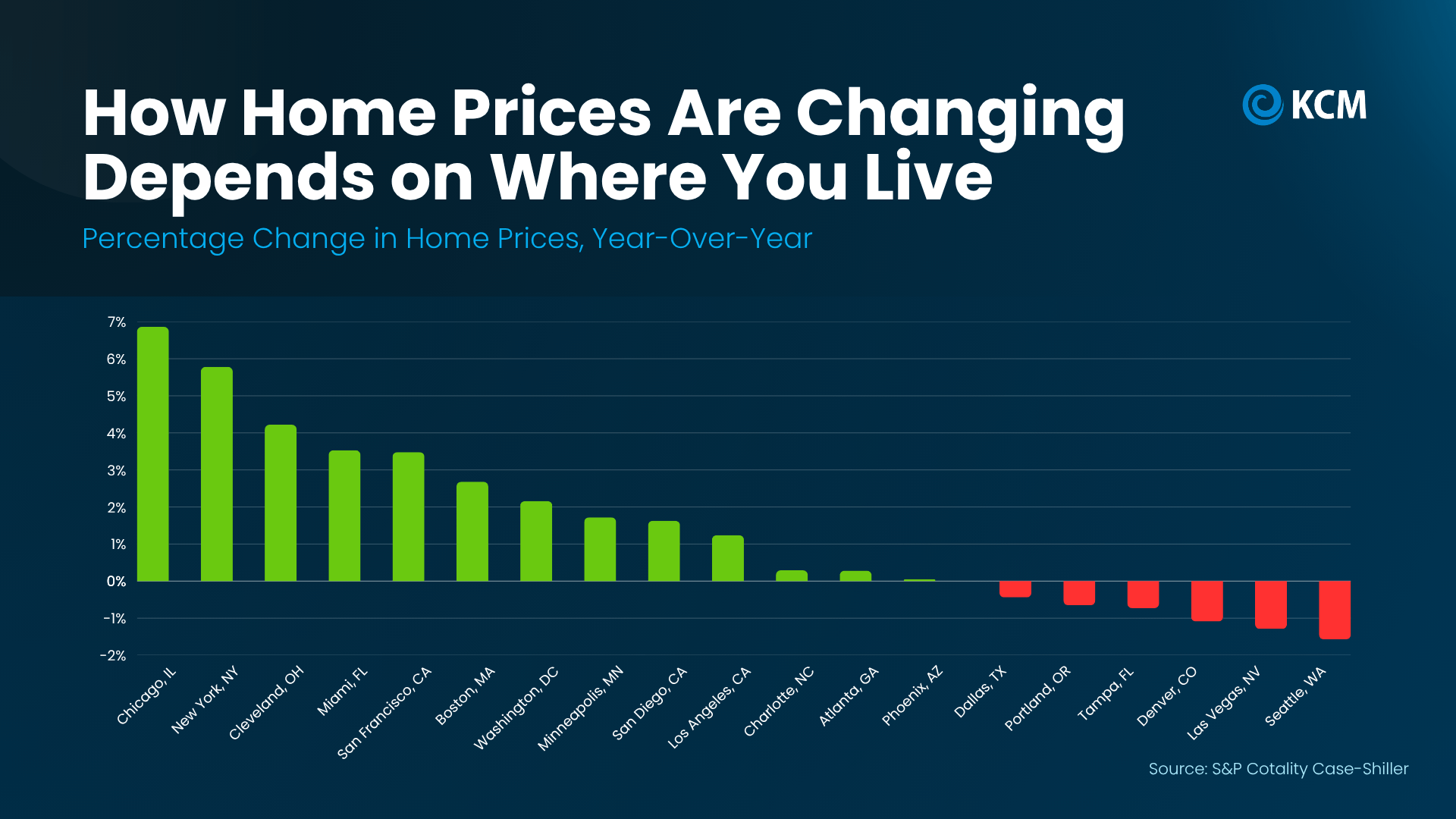
Source: S&P Cotality Case-Shiller Index | Year-over-year home price changes across selected major metropolitan areas.
Consider what these differences mean for buyers and sellers.
In markets where prices continue to rise, sellers may still benefit from relatively strong demand.
In markets experiencing modest price declines, buyers may find greater opportunities to negotiate.
Neither situation necessarily describes what's happening in The Woodlands or Greater Houston.
To understand our local market, you need to examine recent comparable sales, active listings, competing properties, and buyer activity.
The most useful real estate information isn't always the national average. It's what's happening in the neighborhoods and price ranges that matter to you.
What Do These Housing Market Trends Mean for The Woodlands and Greater Houston?
If you're considering buying or selling a home in The Woodlands, Conroe, Spring, Magnolia, or surrounding Greater Houston communities, national housing market reports can provide useful context.
But they shouldn't be the only information guiding your decisions.
Even within the same community, homes can perform differently depending on their location, condition, features, price range, and competition.
For example, two homes with similar square footage may attract different levels of buyer interest because of their updates, floor plans, or asking prices.
That's why it's important to evaluate your specific property rather than relying on a broad market headline.
If You're Thinking About Selling
Today's housing market reinforces the importance of a thoughtful pricing strategy.
With more homes available nationally and buyers paying close attention to affordability, an unrealistic asking price may make it harder for your listing to stand out.
Before listing your property, consider:
- Recent comparable sales: What have similar homes actually sold for?
- Current competition: How many comparable properties are available in your area?
- Property condition: How does your home compare with other listings buyers may consider?
- Buyer expectations: Are your home's features and asking price aligned with current demand?
- Marketing strategy: How will your property be presented to potential buyers?
Setting the right asking price doesn't necessarily mean pricing below market value.
It means understanding your home's position in the current market and choosing a strategy supported by relevant data.
At The McClung Group, we believe sellers benefit from understanding both the broader housing market and the specific conditions affecting their property.
If You're Planning To Buy
If you're shopping for a home in The Woodlands or Greater Houston, changing market conditions may create opportunities worth exploring.
National inventory has increased, and some sellers are adjusting their expectations to reflect affordability concerns.
Depending on the property and local market conditions, that could mean more choices or additional room for negotiation.
However, not every listing will offer the same opportunity.
A home that's newly listed and competitively priced may attract different buyer interest than one that's been available for several weeks.
Before making an offer, consider the property's asking price relative to recent sales, its time on the market, and the level of competition.
Rather than assuming every home is overpriced or every seller is willing to negotiate, focus on understanding the individual property.
That approach can help you make an offer that reflects both market conditions and your financial goals.
Are Falling Home Prices a Sign of a Housing Market Crash?
When headlines mention declining prices, it's natural to wonder whether the housing market is headed toward another major downturn.
But the available data tells a more measured story.
According to the S&P Cotality Case-Shiller figures provided, the major metropolitan areas experiencing year-over-year price declines have generally seen decreases of less than 2%.
That's very different from the widespread housing market downturn associated with 2008.
In fact, the same data shows more of the selected major metropolitan areas experiencing price increases than decreases.
This doesn't mean home prices can never decline further. Housing markets respond to economic conditions, mortgage rates, inventory, and buyer demand.
But a modest decline in some markets isn't the same as evidence of a nationwide housing crash.
It's also important to distinguish between short-term price adjustments and long-term home value trends.
A seller reducing an asking price doesn't necessarily mean the home's underlying market value has fallen by the same amount.
Similarly, a temporary decline in one metropolitan area doesn't establish what will happen across the country.
Understanding these differences can help you evaluate housing market news without reacting to every headline.
What Does History Tell Us About Long-Term Home Values?
While short-term housing market fluctuations often receive the most attention, long-term trends provide another important perspective.
According to the Federal Housing Finance Agency (FHFA), national home prices have increased year-over-year in every quarter since 2012.
Looking further back, the FHFA's historical data illustrates how home values have appreciated over several decades.
A home valued at $100,000 in 1991 would have an indexed value of approximately $436,000 today, based on the national appreciation trend shown in the data.
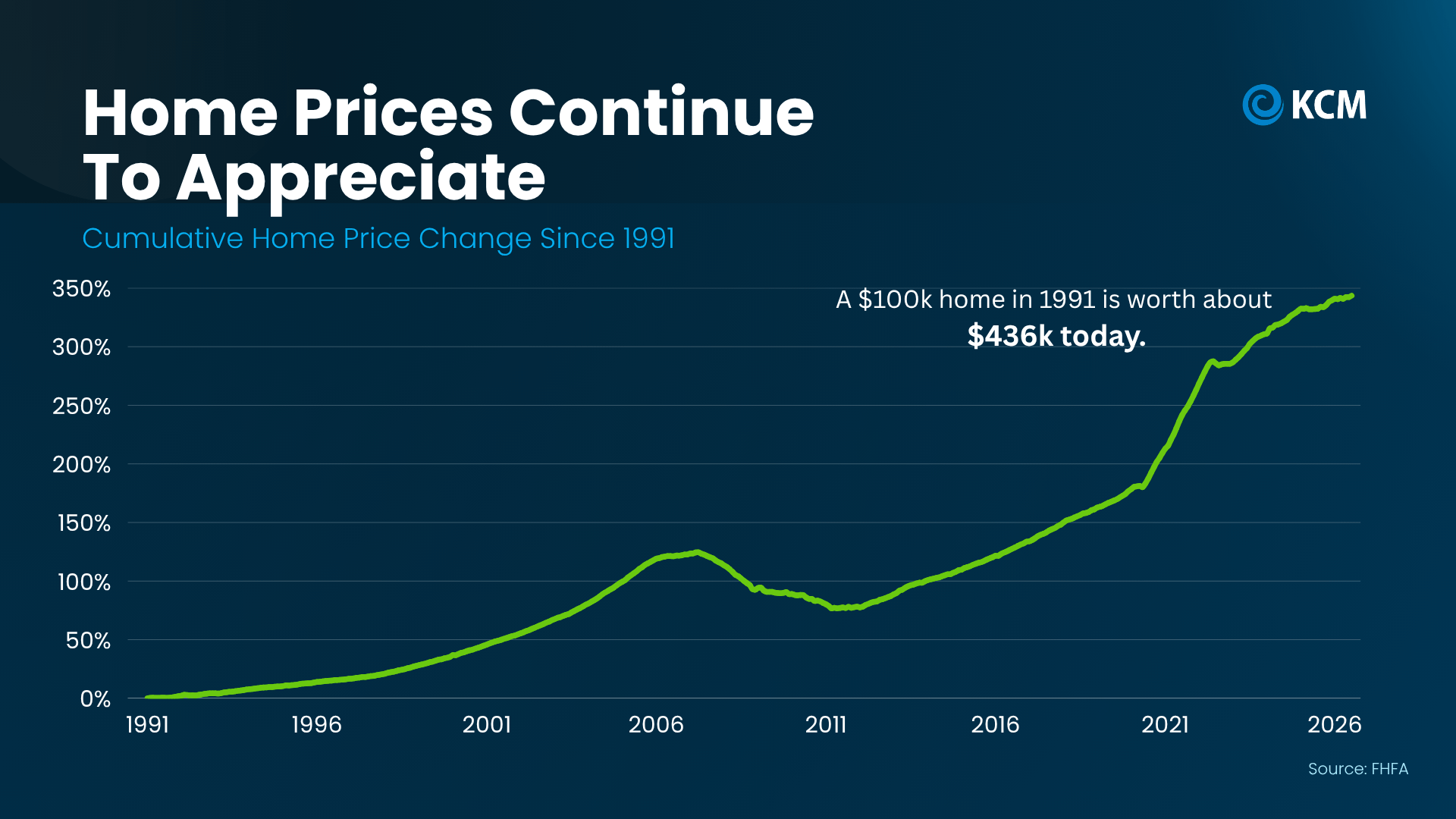
Source: Federal Housing Finance Agency | Cumulative national home price changes since 1991.
This historical growth includes periods of economic uncertainty and the housing market downturn of 2008.
The important takeaway is that real estate values have generally appreciated over extended periods, even though prices haven't increased consistently every year.
Of course, historical appreciation doesn't guarantee future results.
Individual properties and local markets can perform differently from national averages.
Homeownership also involves expenses, including maintenance, taxes, insurance, and transaction costs, which aren't reflected in a simple home price appreciation chart.
Still, the long-term data offers helpful perspective.
A short-term market adjustment doesn't erase decades of historical home price appreciation.
For homeowners, understanding long-term trends can help put current market conditions into context.
For buyers, it reinforces the importance of considering how a property fits your needs and financial plans rather than trying to predict the perfect moment to enter the market.
Why Local Real Estate Expertise Matters More Than National Headlines
National housing reports are valuable because they help explain broader economic and real estate trends.
But they can't tell you exactly what your home is worth or how much you should offer on a property.
Those decisions require more specific information.
For example, if you're selling a home in The Woodlands, you'll want to know how comparable properties have performed recently.
You'll also want to understand the competition your home will face when it enters the market.
If you're buying, you'll want to know whether a particular property is priced appropriately and what recent sales suggest about its market value.
The right information can help answer practical questions such as:
- Is this home priced competitively?
- How does it compare with recently sold properties?
- Are similar listings attracting buyer interest?
- Should a seller consider adjusting their asking price?
- Is there an opportunity for a buyer to negotiate?
These are questions that national statistics alone can't answer.
At The McClung Group, we help buyers and sellers throughout The Woodlands and Greater Houston understand their real estate options through market research, thoughtful guidance, and property-specific strategies.
Our goal is to help you make decisions based on relevant information, not confusing headlines.
The Bottom Line: Home Prices Are Changing, but Your Local Market Tells the Real Story
So, are home prices falling or rising in 2026?
The answer is more complicated than a single headline.
National asking prices have declined by approximately $14,000 since August, partly reflecting seasonal patterns and changing affordability conditions.
At the same time, actual home price appreciation varies significantly across metropolitan areas. Some markets continue to experience price growth, while others are seeing modest declines.
And despite these short-term differences, national home values have demonstrated substantial appreciation over the long term.
The most important takeaway is that national trends don't determine the value of your individual property.
Whether you're buying, selling, or evaluating your home's current value, understanding what's happening in your local market is the best place to start.
Wondering What Your Home Is Worth in Today's Market?
If you're thinking about buying or selling in The Woodlands, Conroe, Spring, Magnolia, or the Greater Houston area, The McClung Group is here to help you make sense of the numbers.
We'll help you review relevant market trends, evaluate comparable properties, and understand what today's conditions could mean for your next move.
Contact The McClung Group today for a personalized real estate market analysis.
Your next real estate decision deserves more than a national headline. It deserves a strategy built around your goals and your local market.
The McClung Group | Your REALTORS® for Life